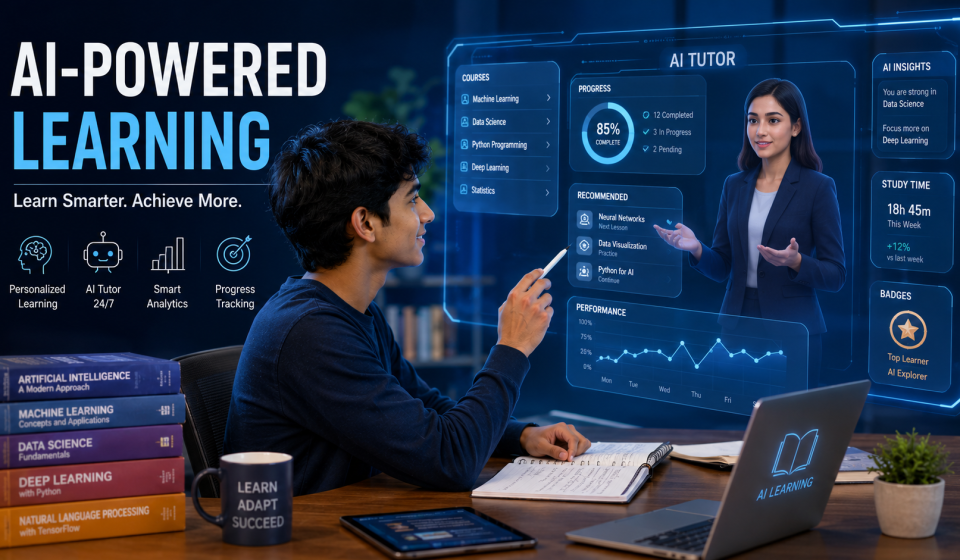

Explore the future of education with AI-powered learning. Discover how artificial intelligence is transforming classrooms, personalizing education, improving student outcomes, and shaping the future of learning in 2026 and beyond.
Education is undergoing a major transformation thanks to Artificial Intelligence (AI). From personalized learning experiences to intelligent tutoring systems, AI is changing how students learn and how educators teach. As technology continues to evolve, AI-powered learning is expected to become one of the most influential forces in education.
But what exactly is AI-powered learning, and how will it shape the future of education?
This guide explores the role of AI in modern education and explains why it is becoming an essential part of the learning process.
What Is AI-Powered Learning?
AI-powered learning refers to educational systems and tools that use Artificial Intelligence to enhance teaching and learning experiences.
AI can:
- Analyze student performance
- Personalize learning paths
- Provide instant feedback
- Automate administrative tasks
- Improve student engagement
- Identify learning gaps
Unlike traditional learning methods, AI can adapt content based on the needs of each learner.
Why AI Is Transforming Education
Traditional classrooms often use a one-size-fits-all approach. However, students learn at different speeds and have unique strengths and weaknesses.
AI helps solve this challenge by providing:
- Personalized education
- Flexible learning schedules
- Adaptive learning systems
- Data-driven insights
This allows students to receive support tailored to their individual learning needs.
Key Features of AI-Powered Learning
Personalized Learning
AI analyzes student performance and creates customized learning experiences.
Benefits include:
- Individual learning paths
- Personalized recommendations
- Targeted practice exercises
- Better learning outcomes
Intelligent Tutoring Systems
AI tutors can provide explanations, answer questions, and guide students through complex topics.
Advantages:
- 24/7 learning support
- Instant doubt resolution
- Self-paced learning
Real-Time Feedback
Students receive immediate feedback on assignments, quizzes, and assessments.
Benefits:
- Faster improvement
- Better understanding of mistakes
- Continuous learning progress
Adaptive Assessments
AI can adjust question difficulty based on student performance.
This helps create more accurate evaluations of student knowledge.
Benefits of AI-Powered Learning
Improved Student Performance
Personalized instruction helps students learn more effectively.
Increased Accessibility
Students can access educational resources anytime and anywhere.
Better Engagement
Interactive AI tools make learning more enjoyable and engaging.
Time Savings for Teachers
AI can automate grading, attendance tracking, and administrative tasks.
Enhanced Learning Analytics
Teachers can use AI-generated insights to identify struggling students and provide targeted support.
AI Tools Changing Education
Popular AI-powered educational tools include:
- ChatGPT
- Khanmigo
- Grammarly
- Quizlet
- Duolingo Max
- Notion AI
- Perplexity AI
- Wolfram Alpha
These tools help students improve learning efficiency and productivity.
AI in Classrooms
Modern classrooms are increasingly integrating AI technologies.
Examples include:
- Smart learning platforms
- Virtual tutors
- Automated assessments
- Learning analytics dashboards
- AI-assisted lesson planning
These innovations support both teachers and students.
Challenges of AI-Powered Learning
Despite its benefits, AI-powered learning also faces challenges.
Data Privacy Concerns
Educational platforms collect large amounts of student data.
Technology Dependence
Students may become overly reliant on AI tools.
Digital Divide
Not all students have equal access to technology and internet connectivity.
Limited Human Interaction
AI cannot fully replace the emotional support and mentorship provided by teachers.
Will AI Replace Teachers?
One of the most common concerns is whether AI will replace teachers.
The answer is no.
AI is designed to support educators rather than replace them.
Teachers provide:
- Emotional support
- Mentorship
- Classroom management
- Critical thinking development
- Human connection
The future of education will likely combine AI efficiency with human expertise.
Future Trends in AI Education
Several exciting developments are expected in the coming years.
Hyper-Personalized Learning
AI will create even more customized educational experiences.
Virtual Learning Assistants
Students may have AI assistants that support learning throughout their educational journey.
Smart Classrooms
AI-powered classrooms will provide real-time insights and adaptive learning environments.
Predictive Analytics
AI may identify students at risk of falling behind and recommend interventions early.
Immersive Learning Experiences
AI combined with virtual reality and augmented reality could create highly interactive educational environments.
How Students Can Benefit From AI Learning
Students can maximize AI benefits by:
- Using AI as a learning assistant
- Practicing independent thinking
- Verifying information from reliable sources
- Combining AI with traditional study methods
- Developing digital literacy skills
Responsible use of AI can significantly improve academic performance.
Sources
- OpenAI ChatGPT
- Khan Academy Khanmigo
- Google for Education
- Coursera
- edX
- UNESCO Education
- MIT OpenCourseWare
Conclusion
AI-powered learning is revolutionizing education by making learning more personalized, accessible, and effective. While challenges such as privacy concerns and technology dependence remain, the benefits of AI in education are undeniable. The future of education is not about replacing teachers but empowering them with intelligent tools that enhance learning experiences. Students who embrace AI responsibly will be better prepared for the rapidly changing world of tomorrow.
Frequently Asked Questions (FAQs)
What is AI-powered learning?
AI-powered learning uses artificial intelligence technologies to personalize education, provide feedback, and improve learning outcomes.
How does AI help students learn better?
AI provides personalized study plans, instant feedback, adaptive learning experiences, and intelligent tutoring support.
Can AI replace teachers?
No. AI supports teachers but cannot replace human mentorship, emotional intelligence, and classroom leadership.
What are the benefits of AI in education?
Benefits include personalized learning, increased accessibility, improved engagement, faster feedback, and better learning analytics.
What are the disadvantages of AI-powered learning?
Challenges include privacy concerns, technology dependence, limited human interaction, and unequal access to technology.
Which AI tools are useful for students?
Popular AI tools include ChatGPT, Khanmigo, Grammarly, Quizlet, Notion AI, Duolingo Max, and Perplexity AI.
Is AI-powered learning the future of education?
Yes. AI is expected to play a major role in creating personalized and efficient learning experiences.
How can teachers benefit from AI?
AI helps automate administrative tasks, generate insights, personalize instruction, and save time.
What is personalized learning?
Personalized learning adapts educational content and pace to meet the unique needs of each student.
How can students use AI responsibly?
Students should use AI as a learning aid, verify information, think critically, and avoid overdependence on technology.