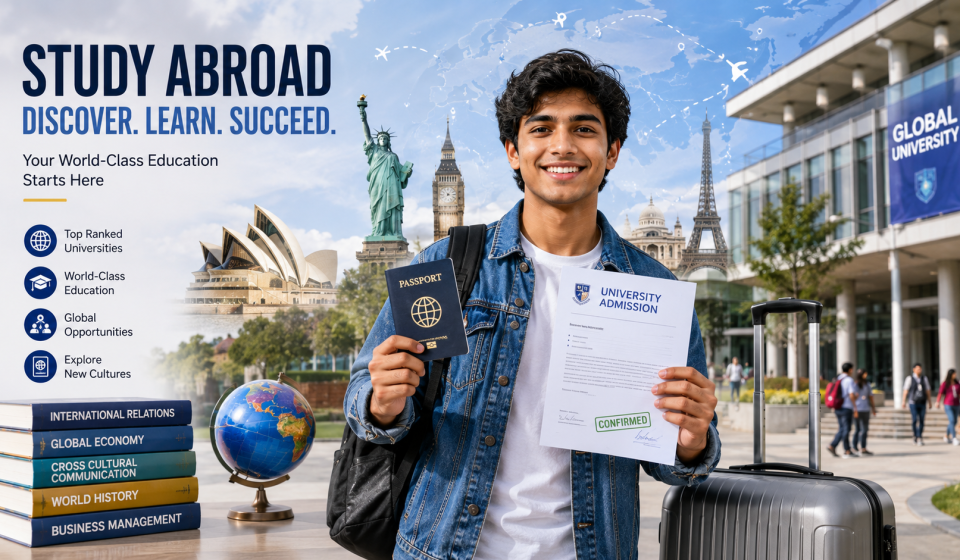

Planning to study abroad? Discover everything students need to know about studying abroad, including choosing a country, admissions, scholarships, visas, costs, accommodation, and career opportunities.
Studying abroad is a dream for millions of students worldwide. It offers the opportunity to receive a quality education, experience different cultures, build global networks, and improve career prospects. However, the process can seem overwhelming if you don’t know where to start.
This comprehensive study abroad guide covers everything students need to know before applying to international universities.
Why Study Abroad?
Studying abroad provides numerous personal, academic, and professional benefits.
Key advantages include:
- Access to world-class education
- Global career opportunities
- International exposure
- Personal growth and independence
- Better language skills
- Cultural experiences
- Expanded professional networks
Many employers value international education and global experience.
Choosing the Right Country
Selecting the right destination is one of the most important decisions.
Popular study abroad destinations include:
- United States
- Canada
- United Kingdom
- Australia
- Germany
- New Zealand
- Ireland
- Singapore
Consider factors such as:
- Education quality
- Tuition fees
- Cost of living
- Visa policies
- Career opportunities
- Language requirements
Choosing the Right Course
Your chosen course should align with your interests and career goals.
Questions to ask:
- What subjects do I enjoy?
- What career path do I want?
- What skills are in demand?
- Does the program offer internships?
Research course content carefully before applying.
Research Universities Thoroughly
Not every university is the right fit.
Evaluate:
- Global rankings
- Accreditation
- Faculty quality
- Campus facilities
- Student support services
- Placement records
- Internship opportunities
Compare multiple universities before making a decision.
Understand Admission Requirements
Admission requirements vary by institution and country.
Common requirements include:
- Academic transcripts
- Passport
- Statement of Purpose (SOP)
- Letters of Recommendation
- English proficiency scores
- Resume or CV
Always review official university guidelines carefully.
English Language Proficiency Tests
Most international universities require proof of English proficiency.
Popular tests include:
- IELTS
- TOEFL
- PTE Academic
- Duolingo English Test
Prepare early to achieve competitive scores.
Prepare a Strong Statement of Purpose (SOP)
Your SOP explains:
- Academic background
- Career goals
- Reasons for choosing the program
- Reasons for selecting the university
A well-written SOP can significantly improve admission chances.
Obtain Strong Recommendation Letters
Universities often request recommendation letters from:
- Teachers
- Professors
- Employers
- Mentors
Choose individuals who can genuinely highlight your strengths and achievements.
Apply for Scholarships
Scholarships help reduce financial burdens.
Types include:
- Merit-based scholarships
- Need-based scholarships
- Government scholarships
- University scholarships
- Private organization scholarships
Start researching scholarship opportunities early.
Understand Study Abroad Costs
Expenses typically include:
Tuition Fees
Costs vary depending on country and institution.
Accommodation
Options include:
- University dormitories
- Shared apartments
- Private rentals
Living Expenses
Consider:
- Food
- Transportation
- Utilities
- Internet
- Personal expenses
Create a realistic budget before departure.
Student Visa Process
Most countries require international students to obtain a student visa.
Common requirements include:
- Admission letter
- Financial proof
- Passport
- Visa application forms
- Medical documents
Apply as early as possible to avoid delays.
Health Insurance Requirements
Many countries require international students to have health insurance.
Benefits include:
- Medical coverage
- Emergency care
- Hospital services
- Health support
Always verify insurance requirements before travel.
Finding Accommodation
Students generally choose between:
On-Campus Housing
Benefits:
- Convenient location
- Easier social integration
- University support
Off-Campus Housing
Benefits:
- Greater independence
- More housing choices
- Potential cost savings
Research housing options carefully.
Preparing for Life Abroad
Moving to another country requires preparation.
Important considerations:
- Local culture
- Weather conditions
- Transportation systems
- Banking services
- Mobile connectivity
Learning basic information about your destination helps ease the transition.
Managing Finances Abroad
Financial management is essential.
Tips:
- Track expenses
- Use student discounts
- Create monthly budgets
- Avoid unnecessary spending
- Maintain emergency savings
Good financial habits reduce stress.
Balancing Studies and Part-Time Work
Many countries allow international students to work part-time.
Benefits include:
- Additional income
- Work experience
- Networking opportunities
- Skill development
Always follow visa regulations regarding employment.
Building Career Opportunities
Study abroad experiences often improve employability.
Ways to enhance career prospects:
- Participate in internships
- Join student organizations
- Attend networking events
- Build professional relationships
- Develop communication skills
Career preparation should begin early.
Common Mistakes Students Should Avoid
Avoid these common errors:
- Applying late
- Ignoring scholarship opportunities
- Poor financial planning
- Incomplete applications
- Choosing universities without research
- Missing visa deadlines
- Underestimating living costs
Careful planning helps avoid unnecessary problems.
Benefits of Studying Abroad
Students who study abroad often gain:
- International qualifications
- Global perspectives
- Strong communication skills
- Increased confidence
- Better career opportunities
- Personal independence
- Cross-cultural understanding
These advantages can provide lifelong benefits.
Sources
- EducationUSA
- British Council Study Abroad
- DAAD Germany
- Study in Australia
- Study in Canada
- QS Top Universities
- Times Higher Education
Conclusion
Studying abroad can be one of the most rewarding experiences of your life. While the process requires careful planning, research, and preparation, the opportunities it offers are immense. From choosing the right university and securing scholarships to obtaining a visa and adapting to a new culture, every step contributes to personal and academic growth. By staying organized and informed, students can successfully navigate the study abroad journey and build a brighter future.
Frequently Asked Questions (FAQs)
What are the benefits of studying abroad?
Studying abroad offers global exposure, quality education, career opportunities, cultural experiences, and personal growth.
Which country is best for studying abroad?
Popular destinations include the USA, Canada, UK, Australia, Germany, and New Zealand. The best choice depends on your goals and budget.
How much does studying abroad cost?
Costs vary based on country, university, course, accommodation, and lifestyle expenses.
Can I get a scholarship to study abroad?
Yes. Many universities, governments, and organizations offer scholarships for international students.
What documents are required for studying abroad?
Common documents include academic transcripts, passport, SOP, recommendation letters, and language proficiency scores.
Is IELTS mandatory for studying abroad?
Many universities require IELTS or equivalent English proficiency tests, though some institutions accept alternatives.
Can international students work while studying?
Many countries allow part-time work for international students, subject to visa regulations.
How long does the student visa process take?
Processing times vary by country, so students should apply well before their course start date.
What is a Statement of Purpose (SOP)?
An SOP is a document explaining your academic background, goals, and reasons for choosing a specific course and university.
Is studying abroad worth it?
For many students, studying abroad provides valuable education, international experience, and career opportunities that make it a worthwhile investment.