
Discover how AI-powered education is transforming learning in 2026. Explore personalized learning, intelligent tutoring, automated assessments, and the future of education driven by artificial intelligence.
Education is undergoing a remarkable transformation. Artificial Intelligence (AI) is revolutionizing how students learn, teachers teach, and educational institutions deliver knowledge. What once seemed like science fiction has become a reality, with AI-powered tools helping millions of students access personalized, efficient, and engaging learning experiences.
As technology continues to evolve, AI-powered education is shaping a new era of learning that is smarter, faster, and more accessible than ever before.
What Is AI-Powered Education?
AI-powered education refers to the use of artificial intelligence technologies to enhance teaching, learning, and educational management.
AI can help with:
- Personalized learning
- Intelligent tutoring
- Automated assessments
- Learning analytics
- Educational content creation
- Student support services
These technologies make learning more adaptive and effective.
Why AI Is Transforming Education
Traditional classrooms often use a one-size-fits-all approach. Every student learns differently, and AI helps address this challenge by creating customized learning experiences.
Benefits include:
- Individualized learning paths
- Faster feedback
- Improved engagement
- Better learning outcomes
- Increased accessibility
AI allows students to learn at their own pace while receiving personalized support.
1. Personalized Learning Experiences
One of the greatest advantages of AI in education is personalization.
AI systems can:
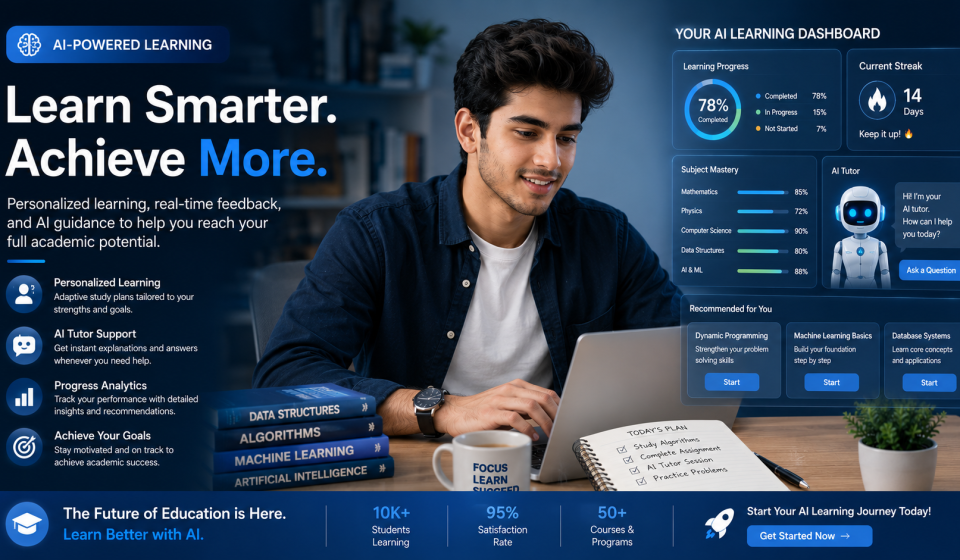
- Analyze student performance
- Identify strengths and weaknesses
- Recommend learning materials
- Adjust lesson difficulty
This ensures students receive support tailored to their specific needs.
2. Intelligent AI Tutors
AI-powered tutors are available 24/7 to help students learn.
These virtual assistants can:
- Answer questions
- Explain difficult concepts
- Generate practice exercises
- Provide instant feedback
Students receive learning support whenever they need it.
3. Faster and More Accurate Assessments
AI can automate grading and assessment processes.
Benefits include:
- Immediate feedback
- Reduced teacher workload
- Consistent evaluation
- Faster identification of learning gaps
Quick feedback helps students improve more efficiently.
4. Enhanced Student Engagement
Interactive AI tools make learning more engaging.
Examples include:
- Gamified learning platforms
- Adaptive quizzes
- Interactive simulations
- Virtual learning assistants
Engaged students are often more motivated and productive.
5. Better Learning Analytics
AI can analyze large amounts of educational data.
Insights may include:
- Learning progress
- Performance trends
- Attendance patterns
- Areas needing improvement
Teachers and students can make data-driven decisions to improve outcomes.
6. Improved Accessibility
AI-powered education helps make learning accessible to more people.
Features include:
- Speech-to-text tools
- Real-time translation
- Personalized support for learners with disabilities
- Remote learning options
Technology helps remove barriers to education.
7. Supporting Teachers
AI is not replacing teachers—it is empowering them.
Teachers can use AI to:
- Automate administrative tasks
- Create lesson plans
- Analyze student performance
- Provide personalized instruction
This allows educators to focus more on teaching and mentoring.
8. AI-Powered Study Tools
Modern students have access to numerous AI learning tools.
Popular examples include:
- ChatGPT
- Grammarly
- Notion AI
- Quizlet AI
- Google Gemini
These tools support research, writing, organization, and study planning.
9. Preparing Students for Future Careers
AI literacy is becoming an essential skill.
Students should learn:
- How AI works
- Responsible AI usage
- AI-assisted problem-solving
- Data analysis concepts
Understanding AI improves future career readiness.
10. Encouraging Lifelong Learning
AI makes continuous education easier and more accessible.
Students can:
- Access online courses
- Learn new skills
- Receive personalized recommendations
- Track learning progress
This supports lifelong personal and professional development.
Challenges of AI-Powered Education
While AI offers many benefits, there are challenges to consider.
These include:
- Data privacy concerns
- Overreliance on technology
- Digital accessibility gaps
- Need for responsible AI use
Balanced implementation is important for long-term success.
Best Practices for Students Using AI
Students should:
- Use AI as a learning assistant
- Verify information from reliable sources
- Continue developing critical thinking skills
- Avoid relying entirely on AI-generated answers
AI works best when combined with independent learning.
The Future of AI in Education
Experts predict that future educational systems may include:
- Fully personalized learning pathways
- AI-powered virtual classrooms
- Intelligent career guidance
- Predictive learning analytics
- Advanced educational simulations
These innovations will continue transforming how people learn.
Benefits of AI-Powered Education
Students who embrace AI-assisted learning may experience:
- Faster learning
- Better academic performance
- Personalized support
- Increased productivity
- Improved accessibility
- Enhanced career readiness
AI helps learners achieve more in less time.
Sources
- UNESCO Education and AI
- OpenAI ChatGPT
- Google for Education
- Coursera
- edX
- Khan Academy
- World Economic Forum
Conclusion
AI-powered education is ushering in a new era of learning that is personalized, accessible, and highly efficient. From intelligent tutoring and adaptive learning platforms to automated assessments and advanced analytics, artificial intelligence is helping students learn more effectively than ever before. While challenges remain, responsible use of AI can empower both students and educators to achieve better outcomes. As technology continues to evolve, AI-powered education will play an increasingly important role in shaping the future of learning.
Frequently Asked Questions (FAQs)
What is AI-powered education?
AI-powered education uses artificial intelligence technologies to improve teaching, learning, assessments, and educational management.
How does AI help students learn better?
AI provides personalized learning experiences, instant feedback, study assistance, and adaptive educational content.
Can AI replace teachers?
No. AI supports teachers by automating tasks and enhancing instruction, but human educators remain essential.
What are AI tutors?
AI tutors are virtual learning assistants that answer questions, explain concepts, and provide personalized learning support.
Is AI-powered learning effective?
Yes. When used properly, AI can improve engagement, learning efficiency, and academic performance.
What are the benefits of personalized learning?
Personalized learning adapts to individual needs, helping students learn at their own pace and focus on areas requiring improvement.
Are there risks associated with AI in education?
Potential risks include data privacy concerns, overreliance on technology, and misinformation if information is not verified.
Which AI tools are popular among students?
Popular tools include ChatGPT, Grammarly, Notion AI, Quizlet AI, and Google Gemini.
Why is AI literacy important?
AI literacy helps students understand and use artificial intelligence responsibly in education and future careers.
What is the future of AI in education?
The future includes adaptive learning systems, virtual classrooms, intelligent tutoring, and highly personalized educational experiences.