
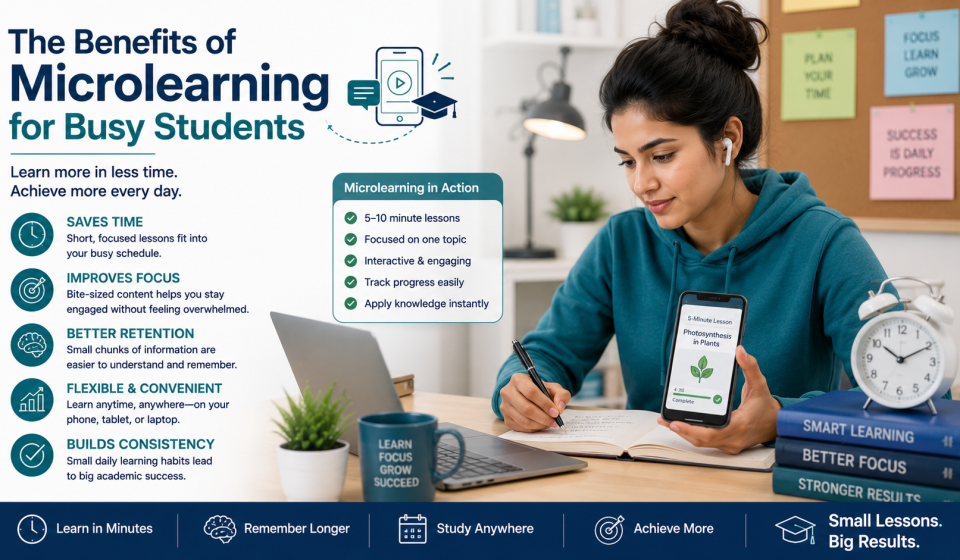

Discover the benefits of microlearning for busy students. Learn how short, focused lessons improve knowledge retention, save time, increase flexibility, and support academic success.
Today’s students often balance multiple responsibilities, including classes, assignments, part-time jobs, internships, extracurricular activities, and personal commitments. Finding enough time to study effectively can be challenging. As a result, many students struggle to keep up with their learning goals while managing busy schedules. This is where microlearning has emerged as a powerful and practical educational approach.
Microlearning focuses on delivering information in short, focused learning sessions that typically last a few minutes. Instead of spending hours studying large amounts of material at once, students learn through small, manageable lessons that fit easily into their daily routines. This modern learning method helps students improve retention, stay engaged, and make continuous progress without feeling overwhelmed.
What Is Microlearning?
Microlearning is an educational strategy that breaks complex topics into smaller, easy-to-understand learning units. These lessons are designed to focus on one concept or skill at a time, making learning more effective and less stressful.
Microlearning content may include:
- Short videos
- Interactive quizzes
- Flashcards
- Infographics
- Brief articles
- Audio lessons
- Mobile learning modules
Because each lesson is concise, students can complete learning activities during short breaks, commutes, or between classes.
Why Microlearning Is Becoming Popular
Modern students live in a fast-paced digital world where attention spans are often limited. Traditional study methods sometimes require long periods of concentration, which may not fit into busy schedules.
Microlearning has become increasingly popular because it offers:
- Flexibility
- Convenience
- Better engagement
- Faster knowledge acquisition
- Improved retention
- Mobile accessibility
Educational institutions and online learning platforms are increasingly adopting microlearning techniques to support student success.
Improves Knowledge Retention
One of the biggest benefits of microlearning is improved knowledge retention. Research has shown that students remember information better when it is delivered in smaller portions rather than large amounts all at once.
When students focus on one concept at a time, their brains can process and store information more effectively. Frequent review of short lessons also strengthens memory and reduces forgetting.
Benefits for retention include:
- Easier information processing
- Better long-term memory
- Reduced cognitive overload
- Improved understanding of concepts
- More effective revision
This helps students perform better during exams and assignments.
Saves Valuable Time
Busy students often struggle to find long study sessions during the day. Microlearning solves this problem by allowing students to learn in short periods of time.
A lesson may take only:
- 5 minutes
- 10 minutes
- 15 minutes
Students can study while:
- Waiting for class
- Traveling
- Taking breaks
- Between meetings
- During lunch periods
These small learning moments add up over time and contribute significantly to academic progress.
Reduces Learning Stress
Large study sessions can sometimes feel overwhelming, especially when students face multiple deadlines. Microlearning reduces this pressure by presenting information in smaller, manageable chunks.
Students often feel:
- Less anxious
- More motivated
- More confident
- Better organized
Breaking learning into smaller steps creates a sense of accomplishment that encourages continued progress.
Increases Student Engagement
Engagement is essential for successful learning. Microlearning lessons are often interactive, visually appealing, and designed to maintain attention.
Common engagement features include:
- Interactive quizzes
- Short educational videos
- Gamified learning activities
- Instant feedback
- Progress tracking
These elements make learning more enjoyable and encourage students to stay actively involved in their education.
Supports Mobile Learning
Modern students rely heavily on smartphones, tablets, and laptops. Microlearning is highly compatible with mobile devices, allowing students to learn anytime and anywhere.
Mobile learning benefits include:
- Flexible access
- Learning on the go
- Easy review sessions
- Convenient study habits
- Increased learning opportunities
This accessibility helps students make productive use of spare moments throughout the day.
Encourages Continuous Learning
Traditional studying often occurs only before exams or assignment deadlines. Microlearning promotes consistent daily learning habits.
Students can:
- Review lessons regularly
- Practice new skills frequently
- Build knowledge gradually
- Reinforce previous learning
Continuous learning improves understanding and prevents last-minute cramming.
Improves Focus and Concentration
Long study sessions can lead to fatigue and reduced concentration. Microlearning minimizes distractions by keeping lessons short and focused.
Benefits include:
- Better attention span
- Improved concentration
- Reduced mental fatigue
- More efficient learning
Students remain focused because each lesson has a clear objective and limited content.
Supports Different Learning Styles
Every student learns differently. Some prefer visual content, while others learn better through reading, listening, or hands-on activities.
Microlearning can accommodate various learning styles through:
- Videos for visual learners
- Podcasts for auditory learners
- Interactive exercises for active learners
- Articles for reading-focused learners
This flexibility helps students learn in ways that suit their preferences.
Makes Complex Topics Easier to Understand
Many academic subjects contain complex concepts that require careful study. Microlearning breaks these topics into smaller sections, making them easier to understand.
For example, instead of studying an entire chapter at once, students can learn:
- One formula
- One theory
- One process
- One concept
at a time.
This step-by-step approach improves comprehension and builds confidence.
Enhances Exam Preparation
Microlearning is especially useful during exam preparation. Students can quickly review key concepts without spending hours reading lengthy materials.
Effective exam revision methods include:
- Flashcards
- Quick quizzes
- Summary videos
- Concept reviews
- Practice questions
These tools help reinforce important information and improve exam performance.
Builds Self-Discipline and Study Habits
Because microlearning encourages daily learning, students often develop stronger study habits over time.
Benefits include:
- Better time management
- Increased responsibility
- Consistent learning routines
- Improved productivity
Small daily learning sessions are often easier to maintain than long, irregular study periods.
Supports Lifelong Learning
The benefits of microlearning extend beyond school and college. Students who develop microlearning habits are more likely to continue learning throughout their careers and personal lives.
In today’s rapidly changing world, continuous learning is essential for:
- Career growth
- Skill development
- Professional advancement
- Personal improvement
Microlearning provides an effective way to keep learning throughout life.
Source Links
- https://elearningindustry.com
- https://www.coursera.org
- https://www.edx.org
- https://www.khanacademy.org
Conclusion
Microlearning has transformed the way busy students approach education. By delivering information in short, focused lessons, it helps students save time, improve retention, stay engaged, and reduce learning stress. Its flexibility makes it ideal for modern learners who must balance academic responsibilities with other commitments.
As education continues to evolve, microlearning will play an increasingly important role in helping students achieve academic success. Whether preparing for exams, learning new skills, or improving daily study habits, microlearning offers a practical and effective solution for today’s fast-paced learning environment.
Frequently Asked Questions (FAQs)
1. What is microlearning?
Microlearning is a learning method that delivers information in short, focused lessons designed to teach one concept or skill at a time.
2. How long does a microlearning lesson usually take?
Most microlearning lessons take between 5 and 15 minutes to complete.
3. Why is microlearning effective?
Microlearning improves retention, reduces cognitive overload, increases engagement, and allows students to learn more efficiently.
4. Can microlearning help with exam preparation?
Yes. Microlearning supports quick revision through flashcards, quizzes, summary videos, and focused review sessions.
5. Is microlearning suitable for all subjects?
Yes. Microlearning can be applied to academic subjects, professional training, language learning, and skill development.
6. How does microlearning improve memory?
It presents information in small chunks, making it easier for the brain to process, store, and recall later.
7. Can students use microlearning on mobile devices?
Yes. Most microlearning content is designed for smartphones, tablets, and laptops.
8. Does microlearning reduce study stress?
Yes. Short lessons make learning more manageable and less overwhelming for students.
9. How often should students use microlearning?
Daily learning sessions are recommended for the best results and long-term retention.
10. What are the main benefits of microlearning?
The main benefits include better retention, flexibility, time savings, improved focus, increased engagement, and stronger study habits.


