
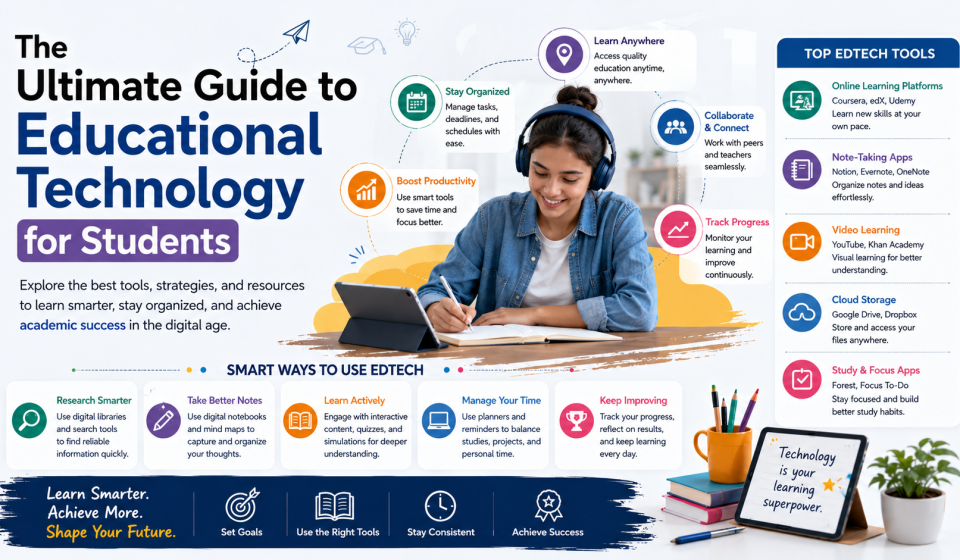

Discover the ultimate guide to educational technology for students. Learn about digital learning tools, online resources, AI-powered platforms, productivity apps, and strategies to improve academic success.
Educational technology has transformed the way students learn, making education more interactive, accessible, and engaging than ever before. From online learning platforms and digital classrooms to artificial intelligence tools and educational apps, technology provides students with countless opportunities to improve their knowledge and develop essential skills. Whether studying in school, college, or through online courses, educational technology helps learners access quality resources anytime and anywhere.
As technology continues to evolve, students need to understand how to use digital tools effectively to enhance their academic performance. Educational technology not only simplifies learning but also promotes collaboration, creativity, critical thinking, and independent study. By selecting the right tools and developing responsible digital habits, students can maximize their learning experience and prepare for future academic and career success.
What Is Educational Technology?
Educational technology refers to the use of digital tools, software, devices, and online resources to improve teaching and learning.
Examples include:
- Learning management systems
- Educational apps
- Online courses
- Digital textbooks
- AI learning platforms
- Virtual classrooms
- Educational videos
- Interactive quizzes
These technologies make learning more flexible and personalized.
Why Educational Technology Matters
Technology has become an essential part of modern education.
Its benefits include:
- Easier access to learning materials
- Flexible learning schedules
- Interactive lessons
- Better student engagement
- Improved collaboration
- Personalized learning experiences
Educational technology helps students learn at their own pace.
Online Learning Platforms
Online learning platforms provide structured courses across many subjects.
Popular features include:
- Video lessons
- Practice exercises
- Assignments
- Progress tracking
- Certificates of completion
These platforms support both classroom learning and self-paced education.
Artificial Intelligence in Education
AI-powered tools are changing how students study and solve academic challenges.
AI can help with:
- Explaining difficult concepts
- Practice questions
- Writing assistance
- Language learning
- Study planning
- Personalized recommendations
Students should use AI as a learning assistant while continuing to develop their own understanding and critical thinking skills.
Digital Note-Taking Tools
Digital note-taking makes studying more organized and efficient.
Benefits include:
- Easy organization
- Quick search features
- Cloud storage
- Multimedia support
- Simple editing
Digital notes reduce paper use and improve accessibility.
Productivity Apps for Students
Productivity tools help students manage their academic responsibilities.
Useful features include:
- Task management
- Calendar scheduling
- Study reminders
- Goal tracking
- Project organization
Good organization reduces stress and improves academic performance.
Educational Videos and Interactive Learning
Visual learning helps many students understand complex topics more easily.
Educational videos provide:
- Step-by-step explanations
- Visual demonstrations
- Practical examples
- Interactive lessons
- Better concept retention
Interactive learning increases engagement and participation.
Collaboration Tools
Many educational technologies support teamwork and group learning.
Collaboration tools allow students to:
- Share documents
- Work on group projects
- Communicate online
- Exchange ideas
- Receive peer feedback
Collaboration prepares students for future workplace environments.
Online Research Resources
Reliable online resources improve the quality of academic work.
Students should use:
- Digital libraries
- Academic journals
- Educational websites
- Government publications
- University resources
Using credible sources strengthens research and assignments.
Time Management Through Technology
Technology can help students develop effective study habits.
Helpful strategies include:
- Setting reminders
- Creating study schedules
- Tracking deadlines
- Breaking large tasks into smaller goals
- Monitoring study progress
Good time management improves productivity.
Digital Safety and Responsible Technology Use
Students should practice responsible digital behavior while using educational technology.
Important habits include:
- Protecting personal information
- Creating strong passwords
- Avoiding unreliable websites
- Respecting copyright rules
- Maintaining a healthy balance between screen time and offline activities
Responsible technology use creates a safer learning environment.
Tips for Using Educational Technology Effectively
Students can maximize learning by following these best practices:
- Set clear study goals.
- Choose reliable educational resources.
- Organize digital files.
- Limit distractions during study sessions.
- Review lessons regularly.
- Balance technology with traditional study methods.
- Ask teachers for guidance when needed.
Consistent study habits lead to better academic results.
Benefits of Educational Technology
Educational technology offers numerous advantages.
These include:
- Flexible learning opportunities
- Better student engagement
- Improved academic performance
- Access to global learning resources
- Personalized education
- Enhanced collaboration
- Better organization
- Increased digital literacy
- Greater learning independence
- Preparation for future careers
Source Links
- https://www.unesco.org
- https://www.edutopia.org
- https://www.khanacademy.org
- https://www.coursera.org
Conclusion
Educational technology has become an essential part of modern learning by providing students with flexible, engaging, and personalized educational experiences. From AI-powered learning assistants and online courses to productivity apps and digital collaboration tools, technology offers countless ways to improve academic performance and develop valuable lifelong skills. When used responsibly, these tools help students become more organized, confident, and independent learners.
As education continues to evolve, students who embrace educational technology while maintaining strong study habits will be better prepared for future academic and career opportunities. By combining reliable digital resources with critical thinking and continuous learning, students can achieve greater success both inside and outside the classroom.
Frequently Asked Questions (FAQs)
1. What is educational technology?
Educational technology is the use of digital tools, software, and online resources to improve teaching and learning experiences.
2. Why is educational technology important for students?
It provides flexible learning, improves engagement, supports collaboration, and helps students access educational resources from anywhere.
3. What are examples of educational technology?
Examples include online learning platforms, educational apps, AI learning tools, digital textbooks, virtual classrooms, and productivity applications.
4. How does AI help students learn?
AI can explain concepts, generate practice questions, assist with writing, create study plans, and provide personalized learning support.
5. Can educational technology improve academic performance?
Yes. When used effectively, educational technology helps students stay organized, practice regularly, and better understand complex topics.
6. How can students use technology responsibly?
Students should protect personal information, use trusted educational resources, avoid distractions, and maintain a healthy balance between screen time and offline study.
7. What are the benefits of online learning platforms?
They offer flexible schedules, interactive lessons, progress tracking, and access to a wide variety of subjects.
8. Why are productivity apps useful for students?
Productivity apps help manage assignments, organize schedules, track deadlines, and improve time management.
9. How can students find reliable online research sources?
Students should use university websites, government publications, academic journals, digital libraries, and trusted educational organizations.
10. What are the long-term benefits of educational technology?
Educational technology improves digital literacy, supports lifelong learning, strengthens problem-solving skills, and prepares students for future careers.


