
Learn how to prepare for campus placements from your first year with practical tips on building skills, gaining experience, improving your CV, and increasing your career opportunities.
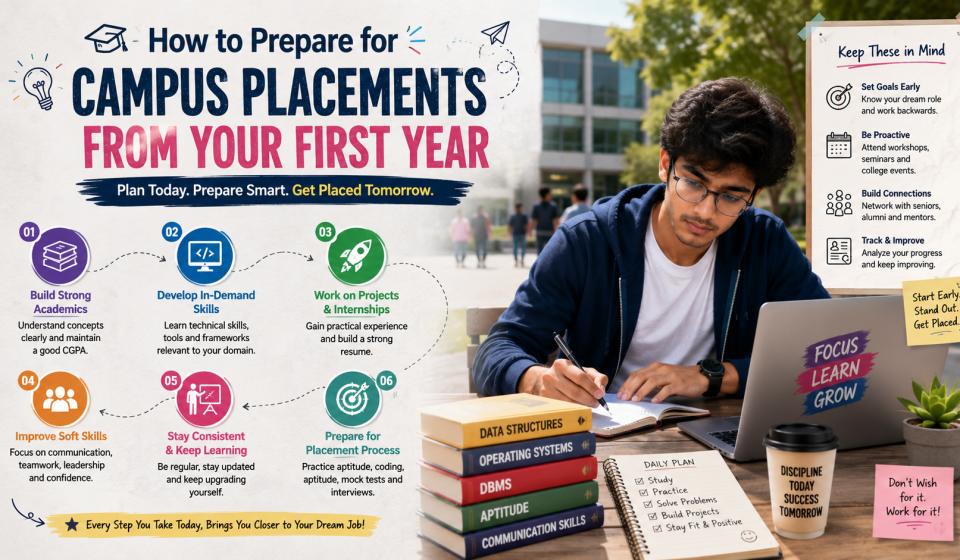
Campus placements provide students with an excellent opportunity to begin their professional careers before graduating. While many students only start preparing during their final year, beginning your preparation from the first year gives you a significant advantage. Early preparation allows you to build valuable skills, improve your academic performance, and gain practical experience that employers look for.
Preparing for campus placements is not just about securing a job—it is about developing the knowledge, confidence, and professional qualities needed to succeed in interviews and the workplace. By taking consistent steps throughout your college journey, you can increase your chances of receiving attractive job offers when placement season arrives.
Why Early Placement Preparation Matters
Starting early provides enough time to strengthen both technical and soft skills without unnecessary pressure.
Benefits include:
- Better career planning
- Stronger academic performance
- More internship opportunities
- Improved communication skills
- Greater interview confidence
- A stronger CV
- Increased employability
Consistent preparation often leads to better placement outcomes.
Understand the Campus Placement Process
Every college follows a slightly different placement process, but most include several recruitment stages.
Common stages include:
- Online application
- Aptitude tests
- Technical assessments
- Group discussions
- Technical interviews
- Human Resources (HR) interviews
- Final selection
Understanding the process helps you prepare effectively for each stage.
Focus on Academic Performance
Many companies include minimum academic requirements during recruitment.
To maintain strong academic results:
- Attend classes regularly
- Complete assignments on time
- Prepare consistently for examinations
- Clarify doubts with professors
- Revise subjects regularly
Good academic performance demonstrates discipline and commitment.
Build Strong Communication Skills
Communication plays an important role in placement interviews.
Work on improving:
- Spoken English
- Public speaking
- Active listening
- Presentation skills
- Professional writing
- Interview communication
Practising regularly helps build confidence.
Strengthen Technical Skills
Technical knowledge is essential for many placement opportunities.
Focus on:
- Core subjects related to your course
- Programming languages (if applicable)
- Software tools
- Industry fundamentals
- Practical problem-solving
- Technical projects
Building strong technical foundations from the first year makes later preparation easier.
Develop Problem-Solving and Aptitude Skills
Many companies assess logical thinking during recruitment.
Practise topics such as:
- Quantitative aptitude
- Logical reasoning
- Verbal ability
- Analytical thinking
- Data interpretation
- Basic mathematics
Regular practice improves speed and accuracy.
Participate in College Activities
Extracurricular activities help develop leadership and teamwork.
Consider joining:
- Student clubs
- Technical societies
- Cultural events
- Sports activities
- Volunteer programmes
- Event organising committees
Employers often value well-rounded candidates.
Gain Practical Experience
Real-world experience strengthens your profile.
Useful opportunities include:
- Internships
- Freelance work
- Personal projects
- Hackathons
- Research programmes
- Open-source contributions
Practical experience demonstrates initiative and application of knowledge.
Build an Impressive CV
Your CV creates the first impression with recruiters.
Include:
- Educational qualifications
- Technical skills
- Projects
- Internships
- Certifications
- Achievements
- Leadership roles
- Relevant extracurricular activities
Keep your CV clear, accurate, and regularly updated.
Earn Professional Certifications
Online certifications help expand your knowledge and improve employability.
Popular certification areas include:
- Programming
- Data analysis
- Artificial intelligence
- Digital marketing
- Cloud computing
- Project management
- Cybersecurity
- Business communication
Choose certifications that align with your career goals.
Develop Professional Networking Skills
Networking helps students learn from professionals and discover career opportunities.
Ways to build your network include:
- Attending career fairs
- Joining alumni events
- Connecting with professionals online
- Participating in workshops
- Seeking mentorship from professors
- Engaging in industry seminars
Strong professional relationships can support future career growth.
Practise Interview Skills
Interview preparation should begin well before placement season.
Practise:
- Self-introduction
- Common interview questions
- Technical discussions
- HR interview scenarios
- Group discussions
- Mock interviews
Regular practice reduces nervousness and improves confidence.
Stay Updated with Industry Trends
Recruiters appreciate candidates who understand current industry developments.
Stay informed by:
- Reading industry news
- Following technology trends
- Learning about major companies
- Exploring emerging career opportunities
- Understanding workplace skills
Continuous learning helps you remain competitive.
Practical Tips for Students
Students can improve placement readiness by:
- Setting career goals early
- Studying consistently
- Improving communication daily
- Building practical projects
- Completing internships
- Learning new technical skills
- Updating their CV regularly
- Practising aptitude and interview questions
Small improvements made consistently can produce significant results by the final year.
Sources
- https://www.ncs.gov.in
- https://www.aicte-india.org
- https://www.indeed.com
- https://www.linkedin.com
- https://www.coursera.org
Conclusion
Preparing for campus placements from your first year gives you valuable time to develop the academic, technical, and professional skills that employers seek. By focusing on continuous learning, gaining practical experience, and improving communication, you can gradually build a strong profile that stands out during recruitment.
Campus placement success is achieved through consistent effort rather than last-minute preparation. Students who invest in their personal and professional development throughout their college years are often better prepared to face interviews confidently and begin successful careers after graduation.
Frequently Asked Questions (FAQs)
1. Why should I prepare for campus placements from the first year?
Starting early gives you enough time to build technical skills, improve communication, maintain strong academic performance, gain internships, and prepare confidently for placement interviews.
2. What skills are most important for campus placements?
Important skills include communication, problem-solving, aptitude, technical knowledge, teamwork, leadership, time management, and interview confidence.
3. Do first-year students need internships?
Although internships are not always necessary in the first year, gaining practical experience through projects, volunteering, or short internships can strengthen your profile over time.
4. How important are academic marks during placements?
Many companies set minimum academic requirements. Maintaining consistent academic performance increases your eligibility for a wider range of placement opportunities.
5. How can I improve my interview skills?
Practise mock interviews, prepare a clear self-introduction, review technical subjects, answer common HR questions, and seek feedback from professors or mentors.
6. Should I complete online certifications?
Yes. Relevant certifications demonstrate continuous learning and can improve your knowledge, technical skills, and employability, especially when they match your career goals.
7. What should I include in my placement CV?
Include your educational qualifications, technical skills, projects, internships, certifications, achievements, leadership roles, extracurricular activities, and relevant experience.
8. Can extracurricular activities improve placement opportunities?
Yes. Participation in clubs, competitions, volunteering, sports, and leadership activities helps develop teamwork, communication, problem-solving, and organisational skills that employers value.