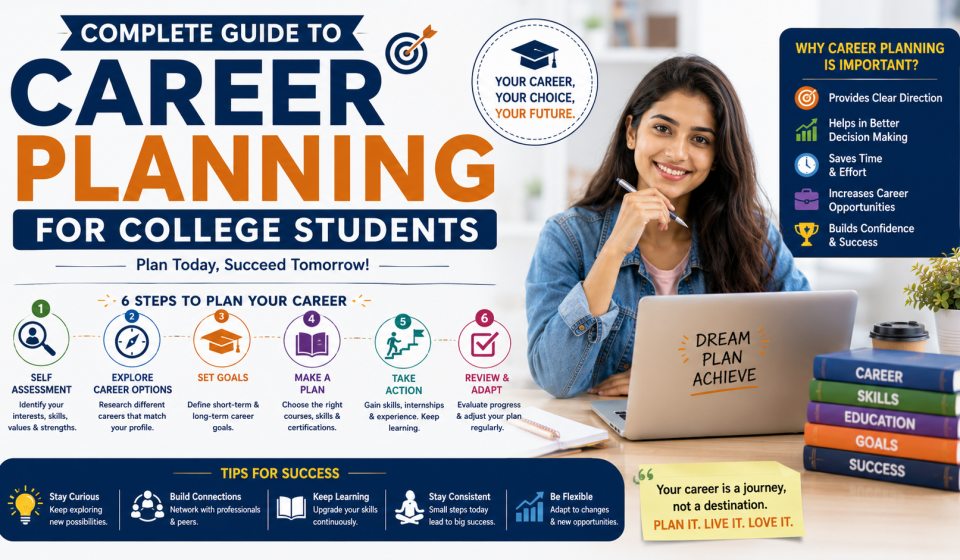

Learn the complete guide to career planning for college students. Discover how to identify career goals, build skills, gain experience, and prepare for a successful future.
Career planning is an essential part of a student’s educational journey. While earning a degree provides valuable knowledge, planning for a future career helps students develop the skills, experience, and confidence needed to succeed in today’s competitive job market. Starting early allows students to make informed decisions about their education, internships, and professional development.
Understanding career planning for college students helps individuals identify their strengths, explore career opportunities, and prepare for long-term success. A well-planned career path can lead to better employment opportunities, higher job satisfaction, and continuous professional growth.
This guide explains the importance of career planning, practical steps to build a successful career, and strategies that can help college students achieve their professional goals.
What Is Career Planning?
Career planning is the process of identifying career goals and creating a structured plan to achieve them. It involves understanding personal interests, evaluating skills, exploring career options, and making informed educational and professional decisions.
Career planning helps students:
- Identify suitable career paths
- Set short-term and long-term goals
- Develop relevant skills
- Gain practical experience
- Prepare for employment
A clear career plan provides direction throughout college and beyond.
Why Career Planning Is Important
Many students begin thinking about their careers only after graduation. However, early career planning allows them to make better academic and professional choices throughout their studies.
Benefits of career planning include:
- Clear career direction
- Better academic decisions
- Improved employability
- Increased confidence
- Greater job satisfaction
- Stronger professional development
- Better long-term career growth
Planning ahead helps students take advantage of opportunities while they are still in college.
Assess Your Interests and Strengths
The first step in career planning is understanding yourself. Identifying your interests, strengths, and values can help you choose a career that matches your abilities and aspirations.
Consider:
- Subjects you enjoy studying
- Skills you perform well
- Personal interests
- Work preferences
- Long-term ambitions
Self-assessment provides a strong foundation for choosing the right career path.
Research Different Career Options
After identifying your interests, explore careers related to your field of study and personal strengths.
Research areas such as:
- Job responsibilities
- Required qualifications
- Career progression
- Industry demand
- Average salaries
- Work environment
Learning about different professions helps students make informed career decisions.
Set Clear Career Goals
Successful career planning involves setting realistic and measurable goals.
Examples include:
- Completing your degree with strong academic results
- Securing an internship
- Learning a new technical skill
- Building a professional network
- Obtaining industry certifications
- Applying for graduate programmes
Breaking large goals into smaller steps makes them easier to achieve.
Develop Relevant Skills
Employers look for candidates who possess both technical knowledge and transferable skills.
Important skills include:
- Communication
- Teamwork
- Problem-solving
- Time management
- Leadership
- Critical thinking
- Digital literacy
- Adaptability
Developing these skills during college improves future employment opportunities.
Gain Practical Experience
Practical experience helps students apply classroom knowledge in real-world situations.
Ways to gain experience include:
- Internships
- Part-time jobs
- Volunteer work
- Research projects
- Freelance work
- Campus leadership roles
Employers often value practical experience alongside academic qualifications.
Build a Strong CV
A professional CV highlights your education, skills, achievements, and work experience.
Include:
- Contact information
- Educational background
- Relevant skills
- Internship experience
- Projects
- Certifications
- Volunteer work
- Awards and achievements
Keep your CV clear, accurate, and regularly updated.
Create a Professional Online Presence
Many employers review online profiles before inviting candidates for interviews.
Students can build a professional presence by:
- Creating a well-written LinkedIn profile
- Showcasing academic projects
- Sharing professional achievements
- Connecting with industry professionals
- Following organisations in their field
A professional online profile can improve networking and job opportunities.
Network with Professionals
Networking helps students learn from experienced professionals and discover career opportunities.
Networking opportunities include:
- Career fairs
- Industry conferences
- College events
- Alumni networks
- Professional associations
- Online networking platforms
Building professional relationships can lead to valuable advice and future employment opportunities.
Improve Interview Skills
Interview preparation is an important part of career planning.
Students should practise:
- Introducing themselves confidently
- Answering common interview questions
- Explaining their achievements
- Discussing career goals
- Asking thoughtful questions
Regular practice helps improve confidence during interviews.
Continue Learning
Learning should continue beyond classroom education.
Students can improve their knowledge through:
- Online courses
- Professional certifications
- Workshops
- Industry seminars
- Webinars
- Technical training
Continuous learning helps students remain competitive in a changing job market.
Manage Your Time Effectively
Balancing academics, internships, extracurricular activities, and personal responsibilities requires good time management.
Helpful strategies include:
- Creating study schedules
- Setting priorities
- Meeting deadlines
- Avoiding procrastination
- Reviewing progress regularly
Effective time management supports both academic success and career development.
Stay Updated with Industry Trends
Industries continue to evolve with new technologies and changing workplace demands.
Students should stay informed by:
- Reading industry news
- Following professional organisations
- Attending webinars
- Joining student associations
- Monitoring job market trends
Keeping up to date helps students prepare for future career opportunities.
Common Career Planning Mistakes to Avoid
Students should avoid mistakes that may limit future opportunities.
Common mistakes include:
- Waiting until graduation to plan a career
- Ignoring skill development
- Not gaining practical experience
- Failing to network
- Using an outdated CV
- Applying for jobs without preparation
- Avoiding career guidance services
Taking proactive steps early can improve career outcomes.
Sources
- https://www.careeronestop.org
- https://www.naceweb.org
- https://www.prospects.ac.uk
- https://nationalcareers.service.gov.uk
- https://www.indeed.com/career-advice
Conclusion
Career planning is an ongoing process that helps college students prepare for successful and rewarding professional lives. By understanding their interests, setting clear goals, developing practical skills, gaining work experience, and building professional networks, students can improve their employability and make informed career decisions.
Starting early provides valuable time to explore opportunities, strengthen qualifications, and prepare for the changing job market. With careful planning, continuous learning, and consistent effort, college students can confidently build a strong foundation for long-term career success.
Frequently Asked Questions (FAQs)
1. What is career planning for college students?
Career planning is the process of identifying career goals, exploring suitable professions, developing relevant skills, and preparing for future employment through education, practical experience, and professional development.
2. Why should college students start career planning early?
Starting early gives students time to build skills, gain internships, improve their CV, develop professional networks, and make informed career decisions before graduation.
3. How can I choose the right career?
Consider your interests, strengths, values, educational background, and long-term goals. Research different professions and seek advice from career counsellors, mentors, and industry professionals.
4. What skills do employers value most?
Employers often seek communication, teamwork, problem-solving, leadership, adaptability, time management, critical thinking, digital literacy, and professional behaviour.
5. Are internships important for career planning?
Yes. Internships provide practical experience, help students develop workplace skills, expand professional networks, and improve employability after graduation.
6. How can I improve my chances of getting a job after college?
Maintain strong academic performance, develop relevant skills, complete internships, build a professional CV, prepare for interviews, and actively network with employers and professionals.
7. Should I continue learning after completing my degree?
Yes. Continuous learning through certifications, workshops, online courses, and industry training helps professionals stay competitive and adapt to changing workplace requirements.
8. What is the biggest mistake students make in career planning?
One of the most common mistakes is delaying career planning until the final year of college. Starting early allows students to gain experience, build valuable skills, and prepare more effectively for future career opportunities.