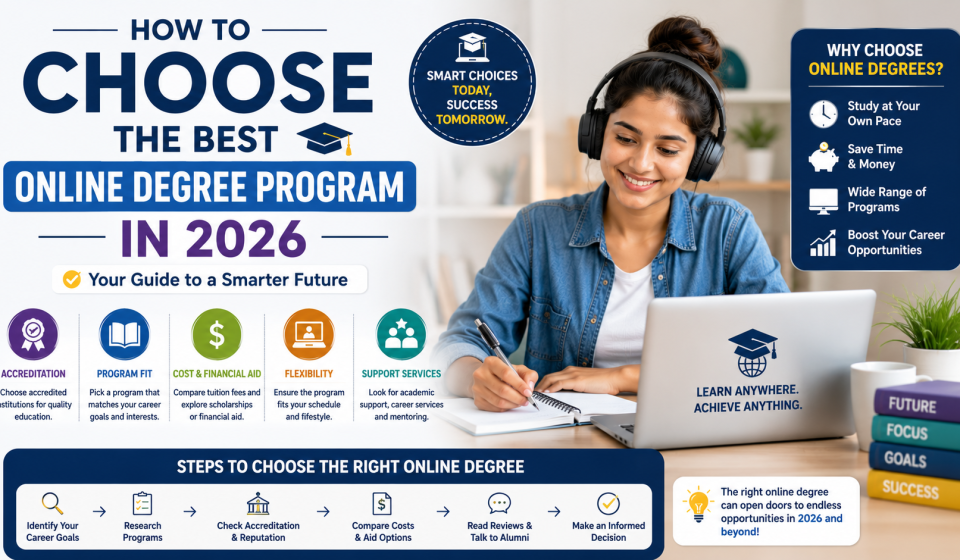

Learn how to choose the best online degree program in 2026 by comparing accreditation, course quality, flexibility, costs, career opportunities, and student support.
Online degree programmes have become an increasingly popular choice for students seeking flexibility, affordability, and career advancement. Whether you are a recent school leaver, a working professional, or someone looking to change careers, an online degree can provide access to quality education without requiring full-time attendance on campus.
With hundreds of universities now offering online programmes, choosing the right one can feel overwhelming. Understanding how to choose the best online degree program in 2026 will help you compare universities, evaluate course quality, and select a programme that supports your academic and career goals. In many countries, recognised online degrees now carry the same academic value as on-campus qualifications when offered by properly accredited institutions.
This guide explains the key factors to consider before enrolling, helping you make an informed decision and invest in a degree that offers long-term value.
Why Choose an Online Degree?
Online learning offers flexibility that traditional classroom education may not provide. Students can often study from anywhere while balancing work, family responsibilities, or other commitments.
Benefits of online degrees include:
- Flexible study schedules
- Lower travel expenses
- Access to universities worldwide
- Ability to continue working while studying
- Self-paced learning options
- Wide range of degree programmes
For many learners, online education provides a practical pathway to gaining recognised qualifications.
Define Your Career Goals
Before comparing universities, identify what you want to achieve.
Ask yourself:
- What career do I want?
- Do I need a bachelor’s or master’s degree?
- Will this qualification help me progress professionally?
- Do I plan to study further later?
Choosing a degree that aligns with your long-term goals increases its value after graduation.
Check Accreditation and Recognition
Accreditation is one of the most important factors when selecting an online degree.
Ensure the university is recognised by the appropriate education authorities and that the programme is officially approved. Accredited programmes are more widely accepted by employers, universities, and professional organisations. (University of Pittsburgh Online)
Before enrolling, verify:
- University recognition
- Programme accreditation
- National education approval
- Professional accreditation where required
Avoid institutions that cannot clearly demonstrate official recognition.
Review the Curriculum
A strong curriculum should provide relevant knowledge and practical skills for your chosen career.
Look for programmes that include:
- Updated course content
- Practical assignments
- Industry-relevant topics
- Research opportunities
- Project-based learning
- Internship options where available
Reviewing the syllabus helps you understand what you will actually learn.
Evaluate Learning Flexibility
Not all online programmes operate in the same way.
Some offer:
- Live online lectures
- Recorded classes
- Self-paced learning
- Scheduled assessments
- Interactive discussion forums
Choose a learning format that matches your schedule and preferred learning style.
Compare Tuition Fees and Overall Costs
Cost is an important consideration when selecting an online degree.
Look beyond tuition fees and consider:
- Registration fees
- Examination fees
- Technology requirements
- Study materials
- Graduation fees
Compare the total cost of completing the programme rather than focusing only on annual tuition.
Look for Student Support Services
Good online universities provide comprehensive support throughout your studies.
Useful student services include:
- Academic advisors
- Technical support
- Career guidance
- Online library access
- Tutoring services
- Mental wellbeing support
Strong support services can improve both your learning experience and academic success.
Research Faculty Qualifications
Experienced lecturers contribute significantly to the quality of an online programme.
Consider whether instructors have:
- Relevant academic qualifications
- Industry experience
- Research expertise
- Professional certifications
Learning from experienced professionals can improve both theoretical knowledge and practical understanding.
Examine Assessment Methods
Assessment methods vary between universities.
Common assessment formats include:
- Online examinations
- Coursework
- Essays
- Group projects
- Presentations
- Practical assignments
Choose a programme with assessment methods that suit your learning strengths and career objectives.
Consider Technology and Learning Platforms
A reliable online learning platform makes studying easier and more engaging.
Look for features such as:
- Easy navigation
- Mobile access
- Recorded lectures
- Assignment submission tools
- Interactive discussion boards
- Progress tracking
A well-designed virtual learning environment supports a smoother educational experience.
Review Graduate Career Outcomes
A degree should support your future career ambitions.
Research information about:
- Graduate employment rates
- Employer partnerships
- Internship opportunities
- Career services
- Alumni success stories
Programmes with strong career support may offer additional value beyond academic learning.
Read Student Reviews Carefully
Current and former students can provide useful insights into programme quality.
When reading reviews, consider comments about:
- Teaching quality
- Student support
- Learning resources
- Assessment fairness
- Technical platform reliability
Look for consistent feedback across multiple sources rather than relying on a single review.
Check Admission Requirements
Every university has different admission criteria.
Common requirements include:
- Academic qualifications
- Identity documents
- English language proficiency where applicable
- Personal statement
- Recommendation letters
- Work experience for some postgraduate programmes
Preparing documents early helps avoid delays during admission.
Questions to Ask Before Enrolling
Before making your final decision, consider asking:
- Is the degree officially recognised?
- What support services are available?
- Are classes live or recorded?
- What are the graduation requirements?
- Are internships available?
- What technology will I need?
- What are the total programme costs?
Having clear answers will help you compare different universities more effectively.
Common Mistakes to Avoid
Many students make avoidable mistakes when selecting an online degree.
Avoid:
- Choosing a programme based only on price
- Ignoring accreditation
- Not reviewing the curriculum
- Overlooking student support services
- Failing to research career outcomes
- Missing application deadlines
- Not comparing multiple universities
Taking time to research thoroughly can prevent costly decisions.
Sources
- https://www.coursera.org/articles/online-degrees
- https://www.coursera.org/in/articles/online-bachelors-degrees
- https://www.online.pitt.edu/2026/05/05/how-to-choose-the-right-online-graduate-program-a-complete-guide-for-working-professionals/
- https://www.careers360.com/article/184439
- https://www.geteducated.com/online-degrees/
Conclusion
Choosing the best online degree programme in 2026 requires careful research and thoughtful planning. Accreditation, curriculum quality, flexibility, costs, student support, faculty expertise, and career outcomes should all be considered before making a decision. Selecting a recognised programme that aligns with your career goals can provide long-term educational and professional benefits.
As online education continues to expand, students have more opportunities than ever to earn respected qualifications while studying from anywhere. By comparing universities carefully, preparing your application thoroughly, and selecting a programme that meets your individual needs, you can confidently begin your online learning journey and invest in your future. (Coursera)
Frequently Asked Questions (FAQs)
1. Are online degree programmes recognised in 2026?
Yes. Online degrees from accredited and officially recognised universities are generally accepted for employment and further study. Always verify the institution’s accreditation before enrolling.
2. How do I know if an online degree is legitimate?
Check whether the university and programme are approved by the relevant education authorities or accreditation bodies in the country where they operate.
3. What should I look for when choosing an online degree?
Important factors include accreditation, course content, tuition fees, flexibility, faculty qualifications, student support, career services, and graduate outcomes.
4. Are online degrees suitable for working professionals?
Yes. Many online programmes are specifically designed for working adults, offering flexible schedules, recorded lectures, and part-time study options.
5. Can I study an online degree from another country?
Yes. Many universities accept international students into online programmes, although admission requirements and tuition fees may vary.
6. How much do online degree programmes cost?
Costs vary depending on the university, country, degree level, and programme. Students should compare the total cost, including tuition, examination fees, and other expenses.
7. What documents are usually required for admission?
Common requirements include academic transcripts, identity documents, personal statements, English language test results where applicable, and recommendation letters for some programmes.
8. Is an online degree as valuable as a campus degree?
In many cases, yes. When awarded by an accredited institution, an online degree is generally recognised in the same way as the equivalent on-campus qualification, although professional licensing requirements may differ by field and country.