
Discover the essential skills that help fresh graduates get hired faster. Learn which technical and professional skills employers value and how to improve your job readiness.
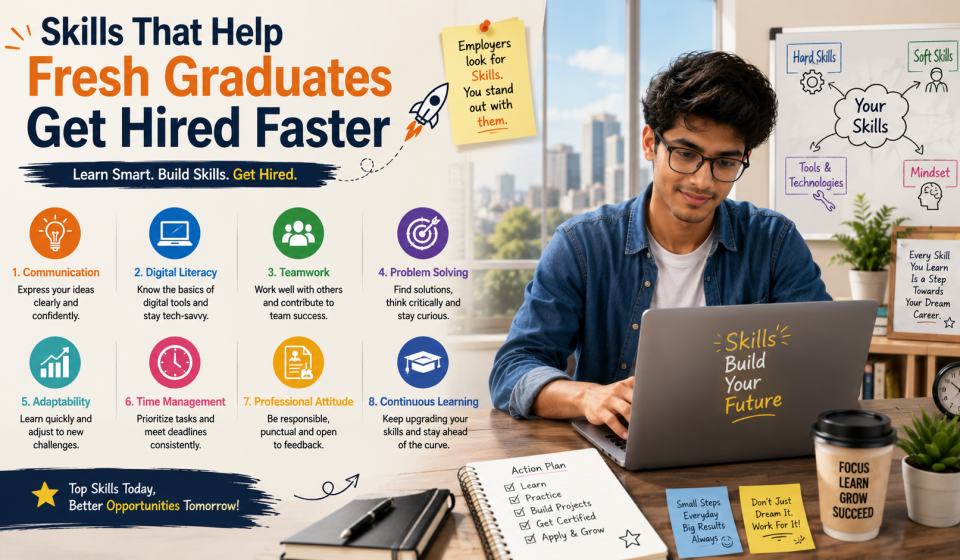
Graduating from college is an exciting milestone, but securing your first job often requires more than a degree. Employers today look for candidates who possess a combination of technical knowledge, practical experience, and professional skills. Fresh graduates who invest time in developing these abilities are often better prepared to meet workplace expectations and stand out during recruitment.
Building the right skills before entering the job market can increase your confidence, improve your employability, and open doors to a wider range of career opportunities. Whether you are preparing for campus placements or applying for jobs independently, focusing on the skills employers value can help you start your career on the right path.
Why Skills Matter for Fresh Graduates
Employers want graduates who can adapt quickly, solve problems, and contribute effectively from the beginning.
Developing relevant skills can help you:
- Improve employability
- Perform better in interviews
- Adapt to workplace environments
- Increase career opportunities
- Build professional confidence
- Support long-term career growth
- Stand out from other applicants
Strong skills complement your academic qualifications.
Communication Skills
Effective communication is one of the most valuable workplace skills.
Graduates should develop:
- Verbal communication
- Written communication
- Active listening
- Presentation skills
- Professional email writing
- Public speaking
Clear communication helps build positive relationships with colleagues and clients.
Problem-Solving Skills
Every workplace values employees who can analyse situations and find practical solutions.
Ways to strengthen problem-solving include:
- Solving case studies
- Participating in projects
- Practising logical reasoning
- Learning analytical thinking
- Evaluating different solutions
Problem-solving demonstrates initiative and critical thinking.
Digital Skills
Technology is used across almost every industry.
Useful digital skills include:
- Microsoft Office
- Google Workspace
- Spreadsheet management
- Online collaboration tools
- Basic data analysis
- Digital communication platforms
Digital literacy improves productivity and workplace efficiency.
Technical Skills
Technical skills depend on your chosen career field but are highly valued by employers.
Examples include:
- Programming languages
- Graphic design
- Accounting software
- Digital marketing
- Data analytics
- Cloud computing
- Cybersecurity
- Web development
Keeping technical knowledge up to date increases career opportunities.
Teamwork and Collaboration
Most organisations rely on employees who work well with others.
Good teamwork involves:
- Respecting different opinions
- Sharing responsibilities
- Supporting colleagues
- Communicating openly
- Solving problems together
- Achieving shared goals
Employers value candidates who contribute positively to team success.
Time Management
Managing time effectively helps graduates stay organised and meet deadlines.
Helpful habits include:
- Planning daily tasks
- Prioritising responsibilities
- Setting realistic goals
- Avoiding procrastination
- Managing multiple assignments
- Completing work on schedule
Strong time management improves productivity and reliability.
Adaptability and Willingness to Learn
Workplaces continue to evolve with new technologies and changing business needs.
Graduates should be willing to:
- Learn new software
- Accept constructive feedback
- Develop new skills
- Adapt to changing responsibilities
- Stay informed about industry trends
A learning mindset supports long-term career development.
Professionalism
Professional behaviour creates a positive impression during recruitment and employment.
Professional qualities include:
- Punctuality
- Responsibility
- Honesty
- Respectful communication
- Positive attitude
- Ethical behaviour
Professionalism builds trust with employers and colleagues.
Leadership Skills
Leadership is valuable even in entry-level positions.
Students can develop leadership through:
- Student organisations
- Group projects
- Volunteering
- Event management
- Team coordination
Leadership experience demonstrates initiative and responsibility.
Networking Skills
Professional networking helps graduates discover opportunities and learn from experienced professionals.
Networking opportunities include:
- Career fairs
- Alumni events
- Industry seminars
- Professional networking platforms
- Workshops
- Internship programmes
Building relationships can support future career growth.
Interview Skills
A strong interview performance often determines whether a candidate receives a job offer.
Prepare by practising:
- Self-introductions
- Common interview questions
- Technical discussions
- HR interview scenarios
- Body language
- Professional communication
Confidence improves with regular practice.
Practical Experience
Employers appreciate graduates who have applied their knowledge in real-world situations.
Practical experience may include:
- Internships
- Freelance projects
- Personal projects
- Research work
- Volunteering
- Part-time employment
Experience demonstrates initiative and workplace readiness.
Continuous Learning
Learning should continue even after graduation.
Graduates can expand their knowledge through:
- Online courses
- Professional certifications
- Industry webinars
- Books
- Workshops
- Professional communities
Continuous learning keeps your skills relevant in a competitive job market.
Practical Tips for Fresh Graduates
Fresh graduates can improve employability by:
- Updating their CV regularly
- Building a professional online profile
- Completing internships
- Learning new technical skills
- Practising interview questions
- Expanding their professional network
- Improving communication daily
- Staying informed about industry developments
Consistent improvement helps create a strong foundation for career success.
Sources
- https://www.indeed.com
- https://www.linkedin.com
- https://www.coursera.org
- https://www.ncs.gov.in
- https://www.aicte-india.org
Conclusion
Developing the right skills is one of the most effective ways for fresh graduates to improve their chances of getting hired quickly. While academic qualifications remain important, employers also seek candidates who demonstrate strong communication, technical knowledge, problem-solving abilities, professionalism, and adaptability.
By investing in continuous learning, gaining practical experience, and building both technical and interpersonal skills, graduates can prepare themselves for a successful transition into the workplace. Consistent effort and a willingness to grow will help create lasting career opportunities and support long-term professional success.
Frequently Asked Questions (FAQs)
1. Which skills are most important for fresh graduates?
Employers commonly value communication, teamwork, problem-solving, technical knowledge, digital literacy, adaptability, time management, professionalism, and a willingness to learn.
2. Why are communication skills important during recruitment?
Communication skills help graduates perform well in interviews, work effectively with colleagues, present ideas clearly, and build professional relationships in the workplace.
3. Do employers expect fresh graduates to have work experience?
Not always. Internships, academic projects, volunteering, freelance work, and extracurricular activities can demonstrate practical experience and workplace readiness.
4. How can I improve my technical skills?
You can improve technical skills by completing online courses, earning certifications, practising regularly, working on projects, and staying updated with industry developments.
5. How important is networking for fresh graduates?
Networking helps graduates connect with professionals, learn about job opportunities, receive career advice, and build relationships that may support future employment.
6. Should I continue learning after graduation?
Yes. Continuous learning helps you keep your knowledge current, adapt to changing technologies, improve employability, and prepare for career advancement.
7. What makes a graduate stand out during interviews?
Strong communication, confidence, relevant skills, practical experience, professionalism, thoughtful answers, and a genuine willingness to learn can make a positive impression on employers.
8. Can online certifications improve employment opportunities?
Yes. Relevant certifications demonstrate commitment to learning, strengthen technical knowledge, and may help employers recognise your interest in professional development.