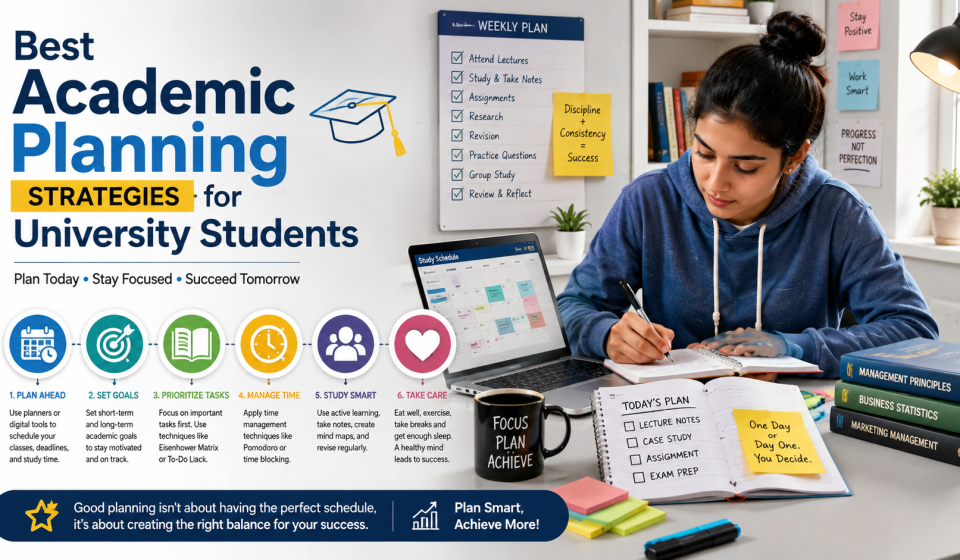

Discover the best academic planning strategies for university students. Learn how to manage your studies, set goals, improve productivity, and achieve long-term academic success.
Academic success at university requires more than attending lectures and completing assignments. Effective academic planning helps students organise their workload, manage time efficiently, and stay focused on both short-term and long-term goals. With a clear plan, students can reduce stress, improve performance, and make the most of their university experience.
Whether you are beginning your first semester or preparing for graduation, developing strong academic planning habits can help you stay organised and achieve consistent progress. By creating realistic schedules, setting priorities, and monitoring your achievements, you can build a solid foundation for future academic and career success.
Why Academic Planning Is Important
A well-structured academic plan helps students stay organised throughout their university journey.
Benefits include:
- Better time management
- Improved academic performance
- Reduced stress
- Higher productivity
- Clear educational goals
- Better work-life balance
- Increased confidence
Good planning supports consistent progress and long-term success.
Set Clear Academic Goals
Defining specific goals helps you stay motivated and focused.
Your goals may include:
- Improving grades
- Completing assignments on time
- Learning new skills
- Participating in research
- Earning certifications
- Securing internships
Review your goals regularly and adjust them as your priorities change.
Create a Semester Study Plan
Planning your semester helps you prepare for important academic deadlines.
Include:
- Class schedules
- Assignment due dates
- Examination dates
- Project milestones
- Study sessions
- Revision periods
A semester plan helps prevent last-minute pressure.
Manage Your Time Effectively
Time management is essential for balancing university responsibilities.
Helpful strategies include:
- Using a daily planner
- Prioritising important tasks
- Breaking large projects into smaller steps
- Setting realistic deadlines
- Avoiding procrastination
- Reviewing progress regularly
Consistent time management improves productivity.
Organise Study Materials
Keeping study resources organised saves time and improves learning.
Organise:
- Lecture notes
- Textbooks
- Digital files
- Research papers
- Assignment materials
- Course resources
Well-organised materials make revision more efficient.
Develop Effective Study Habits
Good study habits contribute to better understanding and retention.
Consider:
- Studying consistently
- Reviewing notes after class
- Taking regular breaks
- Practising active learning
- Using revision techniques
- Studying in a distraction-free environment
Regular study sessions are often more effective than last-minute preparation.
Balance Academics and Personal Life
Maintaining a healthy balance supports overall wellbeing.
Make time for:
- Exercise
- Sleep
- Healthy meals
- Family
- Friends
- Hobbies
A balanced lifestyle can improve concentration and reduce academic stress.
Seek Academic Support When Needed
Asking for help can improve your understanding and confidence.
Support may come from:
- Professors
- Academic advisers
- Tutors
- Study groups
- University learning centres
- Library services
Seeking assistance early can prevent small challenges from becoming larger problems.
Use Technology to Stay Organised
Digital tools can simplify academic planning.
Helpful tools include:
- Calendar apps
- Task management applications
- Note-taking software
- Cloud storage
- Reminder apps
- Online learning platforms
Technology helps students manage deadlines more effectively.
Participate in University Activities
Extracurricular involvement helps develop valuable skills beyond the classroom.
Consider joining:
- Student clubs
- Academic societies
- Volunteer programmes
- Research projects
- Workshops
- Career events
These activities support both personal and professional development.
Monitor Your Academic Progress
Regularly reviewing your performance helps you identify areas for improvement.
Track:
- Grades
- Assignment feedback
- Attendance
- Study hours
- Goal completion
- Skill development
Monitoring progress helps you stay on track throughout the academic year.
Prepare Early for Examinations
Early preparation reduces stress and improves confidence.
Effective revision strategies include:
- Creating revision timetables
- Reviewing notes regularly
- Solving practice questions
- Joining study groups
- Revising difficult topics first
- Taking mock tests
Starting early allows enough time to understand challenging subjects.
Build Skills Beyond Academics
University is also an opportunity to prepare for your future career.
Focus on developing:
- Communication skills
- Leadership
- Teamwork
- Problem-solving
- Digital literacy
- Professional networking
These skills complement your academic achievements.
Practical Tips for University Students
Students can improve academic planning by:
- Setting weekly study goals
- Following a structured timetable
- Updating their academic calendar
- Completing assignments early
- Limiting distractions while studying
- Reviewing progress every week
- Maintaining healthy routines
- Staying motivated through consistent learning
Small daily improvements often lead to significant academic success.
Sources
- https://www.aicte-india.org
- https://www.ncs.gov.in
- https://www.coursera.org
- https://www.edx.org
- https://www.indeed.com
Conclusion
Effective academic planning helps university students stay organised, manage responsibilities, and achieve their educational goals with greater confidence. By setting clear objectives, managing time wisely, developing productive study habits, and seeking support when needed, students can improve both their academic performance and overall university experience.
Academic success is built through consistent effort rather than last-minute preparation. Students who plan ahead, stay organised, and continue developing both academic and personal skills are better prepared for graduation and future career opportunities.
Frequently Asked Questions (FAQs)
1. Why is academic planning important for university students?
Academic planning helps students organise their workload, manage time efficiently, reduce stress, improve academic performance, and achieve long-term educational goals.
2. How can I create an effective study plan?
Start by listing your class schedule, assignment deadlines, examination dates, and revision sessions. Set realistic goals and review your plan regularly.
3. What are the best time management strategies for students?
Using planners, prioritising important tasks, breaking projects into smaller steps, avoiding procrastination, and maintaining a daily routine are effective strategies.
4. How can technology improve academic planning?
Digital calendars, task management apps, note-taking software, reminder tools, and cloud storage help students organise schedules, manage deadlines, and access study materials easily.
5. How often should I review my academic progress?
Reviewing your progress weekly allows you to monitor grades, identify challenges, adjust study strategies, and stay on track with your academic goals.
6. Why is balancing academics and personal life important?
Maintaining a healthy balance supports mental wellbeing, improves concentration, reduces stress, and helps students remain motivated throughout their studies.
7. Should university students participate in extracurricular activities?
Yes. Clubs, volunteering, research projects, and leadership opportunities help students develop communication, teamwork, leadership, and professional skills alongside academic knowledge.
8. How can I prepare effectively for university examinations?
Begin revision early, create a study timetable, practise past questions, review notes regularly, focus on difficult topics first, and maintain healthy study habits.