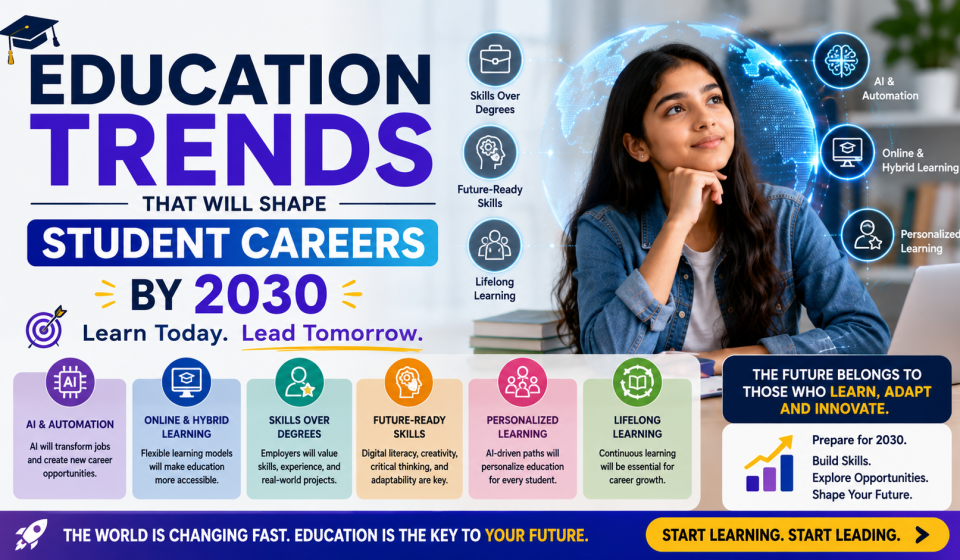

Discover the education trends that will shape student careers by 2030. Learn how technology, digital skills, lifelong learning, and evolving workplaces are influencing future career opportunities.
Education is changing rapidly as technology, global industries, and workplace expectations continue to evolve. Students today are preparing for careers that may look very different from those available just a few years ago. To remain competitive, educational institutions are increasingly focusing on practical skills, digital literacy, and flexible learning methods alongside traditional academic knowledge.
Understanding education trends that will shape student careers by 2030 helps students prepare for future opportunities and make informed decisions about their studies. By recognising these emerging trends, learners can develop the knowledge and skills that employers are likely to value in the years ahead.
This guide explores the major education trends expected to influence student careers and explains how students can prepare for an evolving job market.
Why Education Is Changing
Advances in technology, changing business needs, and global economic developments are transforming the way people learn and work.
Several factors driving educational change include:
- Rapid technological innovation
- Increased digital learning
- Growing demand for specialised skills
- Global collaboration
- Flexible work environments
- Continuous professional development
These changes encourage students to develop both academic knowledge and practical workplace skills.
Greater Focus on Digital Skills
Digital skills are becoming essential across nearly every profession.
Students are increasingly expected to understand:
- Digital communication
- Online collaboration
- Data literacy
- Cloud-based tools
- Digital productivity software
- Information management
Strong digital skills can improve employability across a wide range of industries.
Growth of Artificial Intelligence in Education
Artificial intelligence is changing both learning and the workplace.
Educational institutions are beginning to use AI to:
- Personalise learning experiences
- Provide intelligent tutoring support
- Improve student feedback
- Assist with administrative tasks
- Support adaptive learning
Students who understand how to work alongside AI tools may be better prepared for future careers.
Lifelong Learning Will Become Essential
Learning is no longer limited to school or university. As industries continue to evolve, professionals will need to update their knowledge throughout their careers.
Lifelong learning may include:
- Professional certifications
- Online courses
- Industry workshops
- Short-term training programmes
- Skills development courses
Continuous learning helps individuals remain competitive in changing job markets.
Increased Demand for Soft Skills
Technical knowledge alone is often not enough for career success.
Employers increasingly value skills such as:
- Communication
- Teamwork
- Leadership
- Problem-solving
- Critical thinking
- Adaptability
- Emotional intelligence
Developing these abilities alongside technical expertise supports long-term career growth.
Flexible and Online Learning
Online education continues to expand, providing students with greater flexibility and access to learning opportunities.
Benefits include:
- Learning from anywhere
- Flexible study schedules
- Access to international courses
- Self-paced learning
- Lower travel costs
Blended learning, which combines online and classroom teaching, is also becoming more common.
Skills-Based Hiring
Many employers are placing greater emphasis on practical abilities alongside formal qualifications.
Recruitment processes increasingly consider:
- Demonstrated skills
- Professional portfolios
- Industry certifications
- Practical projects
- Internship experience
Students who develop practical experience may improve their employment prospects.
Greater Importance of Internships
Practical workplace experience is becoming an increasingly valuable part of education.
Internships help students:
- Apply classroom knowledge
- Develop professional skills
- Build industry connections
- Explore career interests
- Improve employability
Many employers value candidates with relevant work experience.
Personalised Learning Experiences
Educational technology allows learning to become more personalised.
Students may benefit from:
- Adaptive learning platforms
- Individual learning pathways
- Personalised feedback
- Flexible course selection
- Customised learning resources
Personalised education supports different learning styles and abilities.
Increased Use of Project-Based Learning
Many educational institutions are introducing more practical learning experiences.
Project-based learning encourages students to:
- Solve real-world problems
- Work in teams
- Develop research skills
- Improve communication
- Apply theoretical knowledge
These experiences help prepare students for workplace challenges.
Global Learning Opportunities
Students now have greater access to international educational experiences.
Examples include:
- Virtual exchange programmes
- International online courses
- Global research collaborations
- Cross-cultural projects
- International internships
Exposure to global perspectives supports both academic and professional development.
Greater Focus on Career Readiness
Educational institutions are increasingly preparing students for employment alongside academic success.
Career readiness initiatives may include:
- Career counselling
- Resume writing workshops
- Interview preparation
- Internship programmes
- Professional networking events
- Employability skills training
These services help students transition more successfully into the workforce.
Sustainability and Social Responsibility
Many educational programmes now include topics related to sustainability and responsible decision-making.
Students may learn about:
- Environmental awareness
- Sustainable business practices
- Ethical leadership
- Social responsibility
- Community engagement
These topics are becoming increasingly relevant across many industries.
Importance of Data Literacy
Understanding data is becoming valuable in a wide variety of careers.
Students may benefit from learning:
- Basic data analysis
- Data interpretation
- Spreadsheet skills
- Data visualisation
- Evidence-based decision-making
Data literacy supports informed decision-making in many professions.
How Students Can Prepare for 2030
Students can begin preparing today by developing both academic knowledge and practical skills.
Helpful strategies include:
- Continue learning beyond the classroom.
- Develop digital skills.
- Gain internship experience.
- Build a professional portfolio.
- Improve communication skills.
- Stay informed about industry trends.
- Earn relevant certifications.
- Build a professional network.
Taking proactive steps can help students adapt to future career opportunities.
Common Mistakes to Avoid
Students should avoid habits that may limit future career development.
Avoid:
- Relying only on academic qualifications
- Ignoring digital skills
- Avoiding internships
- Failing to develop communication skills
- Not updating your knowledge
- Ignoring industry trends
- Delaying career planning
Preparing early can improve long-term career success.
Sources
- https://www.unesco.org
- https://www.oecd.org
- https://www.weforum.org
- https://www.edx.org
- https://www.coursera.org
Conclusion
Education is evolving to meet the changing needs of modern workplaces. By 2030, digital literacy, artificial intelligence, lifelong learning, practical experience, and strong interpersonal skills are expected to play an increasingly important role in career success. Students who embrace these trends can position themselves more effectively for future opportunities.
While no one can predict every future workplace change, developing adaptable skills, gaining practical experience, and maintaining a commitment to continuous learning will help students remain prepared for a wide range of careers. Investing in both personal and professional development today can create a strong foundation for success in the years ahead.
Frequently Asked Questions (FAQs)
1. Why are education trends changing?
Education is evolving because of technological advances, changing workplace requirements, global collaboration, and the growing demand for practical skills that prepare students for modern careers.
2. What skills will be most important by 2030?
Digital literacy, communication, critical thinking, adaptability, teamwork, problem-solving, data literacy, and the ability to learn continuously are expected to remain highly valuable across many industries.
3. Will artificial intelligence replace traditional learning?
Artificial intelligence is expected to support learning by providing personalised resources and assistance, but teachers, practical experiences, and critical thinking will continue to play an important role in education.
4. Why are internships becoming more important?
Internships help students gain practical experience, develop workplace skills, build professional networks, and demonstrate their abilities to potential employers before graduation.
5. Is lifelong learning necessary for future careers?
Yes. As industries and technologies continue to change, ongoing learning through courses, certifications, and professional development can help individuals keep their knowledge and skills up to date.
6. How can students prepare for future careers?
Students can prepare by developing technical and soft skills, gaining internship experience, building professional portfolios, earning relevant certifications, and staying informed about industry developments.
7. Will online learning continue to grow?
Online and blended learning are expected to remain important because they provide flexible access to education, allowing students to learn from different locations and balance their studies with other responsibilities.
8. Do academic qualifications still matter by 2030?
Yes. Academic qualifications are likely to remain important, but many employers are also expected to value practical skills, professional experience, portfolios, and continuous learning alongside formal education.