
Learn how students can build industry-relevant experience before graduation through internships, projects, volunteering, networking, freelancing, certifications, and practical learning.
Graduation is an important milestone, but a degree alone may not always be enough to demonstrate workplace readiness. Employers often look for candidates who can apply academic knowledge to practical situations, communicate effectively, solve problems, work with others, and understand how their chosen industry operates. Building industry-relevant experience before graduation can therefore give students a valuable advantage when they begin applying for internships and jobs.
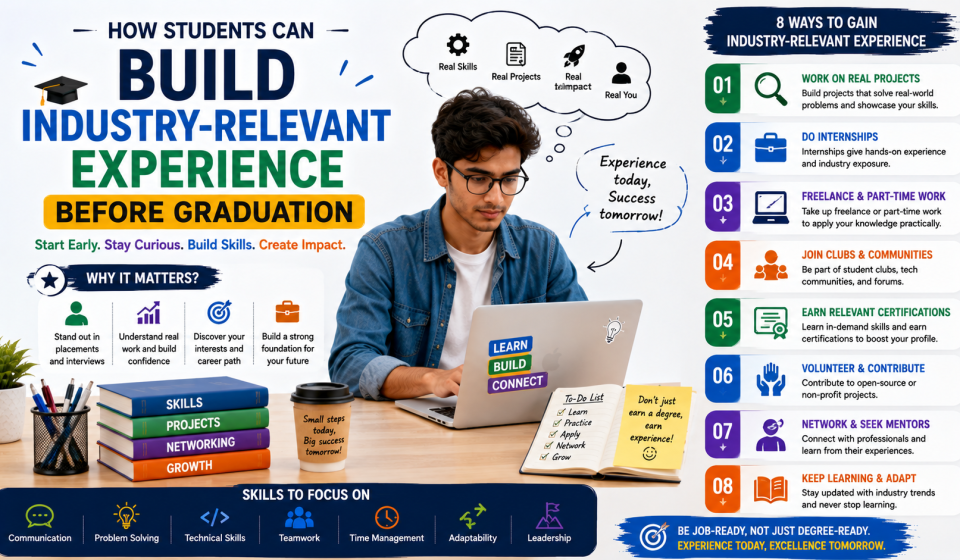
Students do not need to wait for their first full-time job to gain professional experience. Internships, academic projects, volunteering, freelancing, student organizations, competitions, research, networking, and industry-focused certifications can all provide opportunities to develop useful skills. The key is to choose experiences that connect with your career goals and provide evidence of what you can actually do.
Understand What Industry-Relevant Experience Means
Industry-relevant experience is any practical activity that helps you develop skills, knowledge, or understanding related to your intended career.
It can include:
- Internships.
- Academic projects.
- Freelance work.
- Volunteering.
- Part-time employment.
- Research.
- Competitions.
- Industry events.
- Student organizations.
- Professional certifications.
- Personal projects.
Experience does not always need to come from a formal company position. What matters is whether the activity helps you develop and demonstrate relevant abilities.
Start With Your Career Goal
Before searching for opportunities, identify the type of career you want to explore.
Ask yourself:
- Which industry interests me?
- What job roles am I considering?
- What skills do those roles require?
- Which skills do I already have?
- What skills do I need to develop?
- What type of experience would strengthen my resume?
For example, a student interested in web development may prioritize programming projects and internships, while someone interested in marketing may focus on content creation, social media projects, market research, and campaign analysis.
Build Skills Through Academic Projects
College assignments can become valuable career evidence when approached strategically.
Instead of completing a project only to receive a grade, think about how it could demonstrate industry-relevant skills.
For example, a technology student could create:
- A website.
- A mobile application.
- A database project.
- A data analysis dashboard.
- A software prototype.
A business student might create a market research report or business plan.
Document what you contributed, the tools you used, challenges you encountered, and the final outcome.
Look for Internships
Internships are one of the most direct ways to gain exposure to professional environments.
Start searching early because competitive opportunities may have application deadlines months before the internship begins.
Look for opportunities through:
- College career centers.
- Company career pages.
- Professional networking platforms.
- Industry organizations.
- Faculty recommendations.
- Career fairs.
- Internship portals.
Do not apply only to positions with impressive titles. Focus on whether the internship provides meaningful learning and practical responsibilities.
Make the Most of an Internship
Simply completing an internship is not enough. Try to actively learn from the experience.
During an internship:
- Ask thoughtful questions.
- Keep notes about what you learn.
- Request feedback.
- Volunteer for appropriate tasks.
- Observe how teams communicate.
- Learn the tools used by the organization.
- Document achievements.
At the end, you should be able to explain what you actually did rather than simply saying that you completed an internship.
Create Personal Projects
Personal projects can be especially valuable when formal work experience is limited.
Choose a project that solves a realistic problem or demonstrates a relevant skill.
For example, a student interested in data analysis could analyze a public dataset and create a report. A graphic design student could create a branding project for an imaginary company.
The project should demonstrate your ability to apply knowledge rather than simply repeat tutorial instructions.
Build a Professional Portfolio
A portfolio provides evidence of your work.
Depending on your field, it might contain:
- Software projects.
- Websites.
- Writing samples.
- Research papers.
- Designs.
- Presentations.
- Data reports.
- Marketing campaigns.
- Video or media work.
For each project, explain:
What was the goal?
What did you do?
Which tools did you use?
What challenge did you solve?
What was the result?
This gives employers more context than a project title alone.
Try Freelancing
Freelancing can provide practical experience while you are still studying.
Students with useful skills can explore small projects involving:
- Graphic design.
- Web development.
- Content writing.
- Video editing.
- Social media management.
- Data entry.
- Translation.
- Digital marketing.
Start with projects that match your skill level. Be clear about deadlines, deliverables, payment terms, and expectations.
Only include genuine work on your resume and portfolio.
Volunteer Your Skills
Volunteering can provide experience while contributing to a useful cause.
Students might help organizations with:
- Website development.
- Event organization.
- Social media.
- Research.
- Administrative work.
- Graphic design.
- Community programs.
Volunteering can demonstrate initiative, teamwork, responsibility, and practical skills.
Join Student Organizations
Student clubs and organizations can provide opportunities to develop transferable skills.
You might gain experience in:
- Event planning.
- Team leadership.
- Communication.
- Budget management.
- Marketing.
- Public speaking.
- Project coordination.
If you take a leadership role, keep track of what you accomplished. For example, instead of writing “Member of student club,” describe a specific contribution or project when appropriate.
Participate in Competitions
Competitions can simulate real-world challenges and encourage problem-solving.
Depending on your field, consider:
- Hackathons.
- Case competitions.
- Business challenges.
- Design competitions.
- Coding contests.
- Research competitions.
- Entrepreneurship events.
Even if you do not win, the process can help you practice teamwork, deadlines, presentations, and problem-solving.
Develop Industry-Relevant Certifications
Certifications can supplement practical experience when they are relevant to your career goal.
For example, students may explore certifications related to:
- Cloud technologies.
- Data analysis.
- Project management.
- Digital marketing.
- Cybersecurity.
- Accounting.
- Design software.
Before choosing a certification, check the provider’s credibility, assessment requirements, cost, and relevance to your target roles.
A certification should support practical learning rather than replace it.
Attend Career Fairs and Industry Events
Career fairs provide opportunities to meet employers and learn about available roles.
Before attending, research participating organizations and prepare a short introduction.
You can ask employers:
- What skills do you look for in students?
- What internship opportunities are available?
- What projects would strengthen a student’s profile?
- What entry-level roles do you typically offer?
These conversations can provide useful information about industry expectations.
Network With Professionals
Networking can help students learn about career paths and opportunities that may not be widely advertised.
Connect with:
- Alumni.
- Professors.
- Industry professionals.
- Internship supervisors.
- Career advisors.
- Professional associations.
Networking should be based on genuine interest rather than immediately asking for employment.
Ask professionals about their career journeys, required skills, industry challenges, and advice for students.
Use LinkedIn Professionally
A professional online profile can make your skills and projects easier to discover.
Include:
- Education.
- Relevant skills.
- Projects.
- Internships.
- Certifications.
- Achievements.
- Career interests.
Share meaningful updates about projects, competitions, courses, or professional learning when appropriate.
Keep your information accurate and professional.
Learn From Industry Professionals
Students can learn a great deal from people already working in their target field.
Attend webinars, professional talks, workshops, and conferences. Pay attention to the skills employers and professionals repeatedly mention.
This can help you identify gaps between what you learn academically and what is expected in the workplace.
Improve Communication Skills
Industry experience involves more than technical ability.
Employers may expect students to communicate with teammates, supervisors, customers, and other stakeholders.
Develop skills in:
- Professional email writing.
- Presentations.
- Public speaking.
- Active listening.
- Group discussions.
- Report writing.
- Explaining technical concepts clearly.
Strong communication can make your technical knowledge easier for others to understand and use.
Develop Problem-Solving Skills
Workplace problems are often different from textbook questions.
To strengthen problem-solving skills, practice:
- Identifying the problem.
- Gathering relevant information.
- Breaking the issue into smaller parts.
- Developing possible solutions.
- Evaluating alternatives.
- Testing the best option.
- Reviewing the result.
Use real projects and competitions to practice this process.
Learn to Use Professional Tools
Industry experience becomes more meaningful when you understand tools commonly used in your field.
Depending on your career, these might include:
- Spreadsheet software.
- Project management platforms.
- Design tools.
- Programming environments.
- Database systems.
- Analytics platforms.
- Collaboration tools.
Do not try to learn every tool. Focus on those that are relevant to your target roles.
Keep an Experience Record
Students often forget important details of their projects and internships.
Maintain a simple record of:
- Projects completed.
- Responsibilities.
- Skills developed.
- Tools used.
- Problems solved.
- Results achieved.
- Feedback received.
This information can make resume writing and interview preparation much easier.
Turn Experience Into Measurable Achievements
When possible, describe outcomes rather than responsibilities.
Instead of:
“Worked on a college website.”
You could write:
“Developed a responsive college event website as part of a four-member project team.”
If you have a measurable result that is accurate, include it.
Specific descriptions help employers understand what you contributed.
Avoid Waiting for the Perfect Opportunity
Students sometimes reject opportunities because they are not exactly what they imagined.
Your first experience does not need to be perfect. A small project can help you develop skills that lead to a larger opportunity later.
Focus on learning, responsibility, and relevance.
Create an Experience-Building Plan
Students can create a simple plan for each academic year.
Early Stage
Explore career interests and build foundational skills.
Development Stage
Complete projects, participate in competitions, and join relevant organizations.
Experience Stage
Apply for internships, volunteering opportunities, freelance work, or research projects.
Preparation Stage
Build your resume, portfolio, professional profile, and interview skills.
This approach can help you gradually build experience instead of trying to do everything immediately before graduation.
Common Mistakes to Avoid
Collecting Certificates Without Practice
Certificates are less meaningful when you cannot demonstrate the skills they represent.
Copying Projects
Projects copied entirely from tutorials provide limited evidence of independent problem-solving.
Ignoring Communication
Technical ability without communication can limit workplace effectiveness.
Waiting Until the Final Year
Starting early gives you more time to experiment, make mistakes, and improve.
Adding False Experience
Never invent internships, projects, responsibilities, or achievements. Employers may verify claims or ask detailed questions during interviews.
Source Links
https://www.oecd.org/education
Conclusion
Students can build industry-relevant experience long before graduation by combining academic learning with practical activities. Internships, personal projects, volunteering, freelancing, competitions, student organizations, research, certifications, and networking can all help develop skills that employers value.
The most important step is to choose experiences that connect with your career goals. Rather than collecting activities simply to make a resume longer, focus on opportunities that allow you to solve problems, work with others, use professional tools, communicate ideas, and produce meaningful results.
Start with one practical project or opportunity and build from there. By consistently developing skills and documenting your achievements throughout college, you can graduate with more than a qualification—you can also have practical evidence of what you are capable of doing.
Frequently Asked Questions (FAQs)
1. How can students gain industry experience before graduation?
Students can gain experience through internships, academic projects, freelancing, volunteering, research, competitions, student organizations, and personal projects. The best opportunities are those connected to their intended career.
2. Are internships necessary for students?
Internships are not the only way to gain experience, but they can provide valuable exposure to professional environments. Projects, volunteering, research, and other practical activities can also develop relevant skills.
3. Can personal projects count as experience?
Personal projects can demonstrate practical skills, especially when formal employment experience is limited. Students should clearly explain what they created, the tools they used, the problems they solved, and the results.
4. How can I get experience if I cannot find an internship?
Consider personal projects, volunteering, student organizations, competitions, freelance work, research opportunities, and networking with professionals. These activities can help you develop relevant experience while continuing to search for internships.
5. Should students do certifications before graduation?
Relevant certifications can supplement practical experience and demonstrate focused learning. Choose certifications based on your career goals and prioritize those from credible providers.
6. How important are projects on a student resume?
Projects can be very useful because they demonstrate how you apply knowledge. They can provide concrete examples to discuss during interviews and showcase skills that may not be obvious from academic qualifications alone.
7. How can students make their experience more valuable?
Focus on meaningful responsibilities and outcomes. Keep track of the tools you use, problems you solve, skills you develop, and results you achieve so you can communicate the experience clearly.
8. Can volunteering help build a career?
Yes. Volunteering can provide opportunities to develop teamwork, communication, organization, leadership, and technical skills. Relevant volunteering can also demonstrate initiative and responsibility.
9. Should students create a portfolio?
A portfolio can be particularly useful for students in fields such as technology, design, writing, marketing, research, and media. It provides direct evidence of work and can complement a resume.
10. When should students start building industry experience?
Students can start as early as their first year by exploring careers, developing foundational skills, and completing small projects. Starting early provides more time to gain experience and improve before graduation.