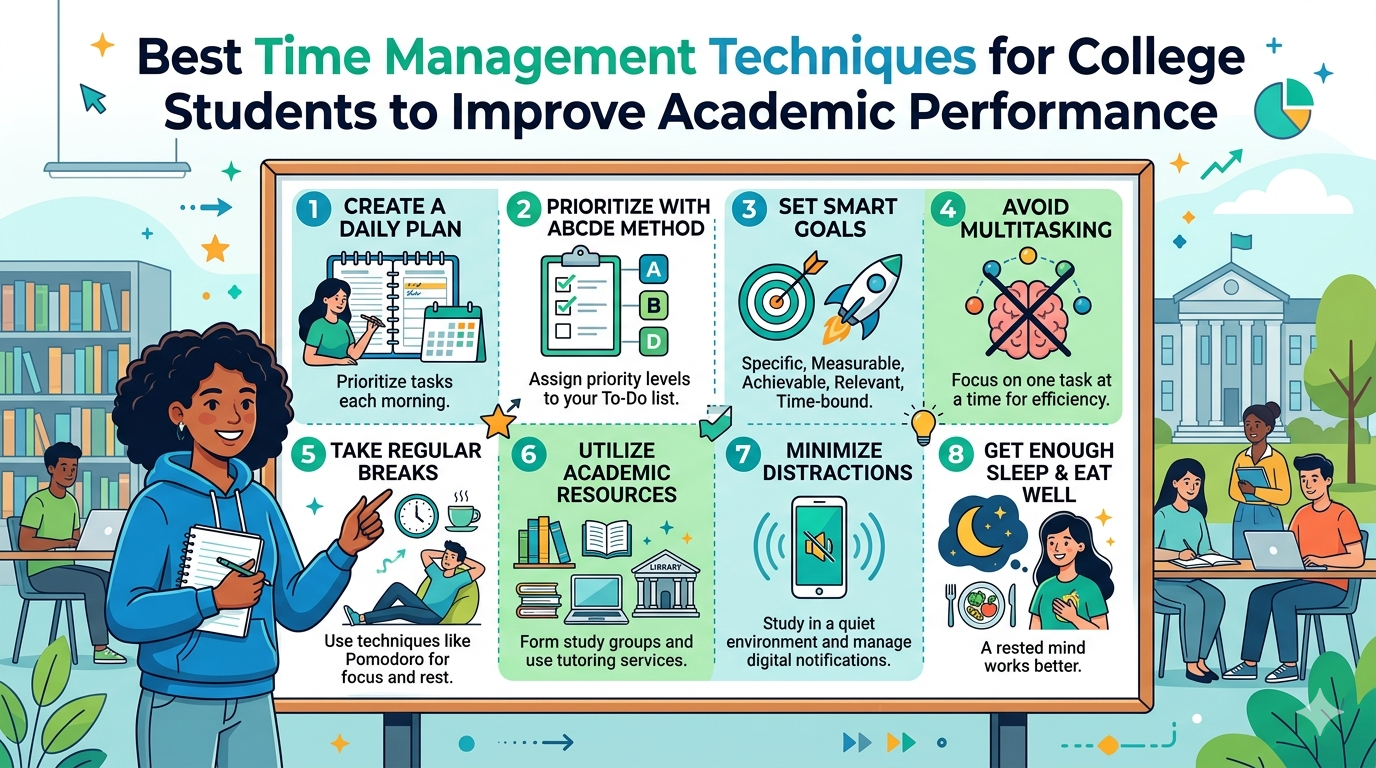

Discover the best time management techniques for college students to boost productivity, reduce stress, and improve academic performance. Learn practical strategies, tools, and habits for success.
Time management is one of the most critical skills a college student can develop. With lectures, assignments, exams, extracurricular activities, and personal commitments competing for attention, it’s easy to feel overwhelmed. Poor time management often leads to missed deadlines, last-minute cramming, stress, and declining academic performance.
On the other hand, mastering time management can transform your college experience. It helps you stay organized, maintain a healthy study-life balance, and achieve better results without burnout. This article explores the most effective time management techniques that college students can use to improve academic performance and overall productivity.
1. Set Clear Goals and Priorities
The foundation of effective time management begins with setting clear, achievable goals. Without direction, it becomes difficult to allocate time properly.
Start by identifying:
- Short-term goals: Completing assignments, preparing for quizzes
- Long-term goals: Achieving a target GPA, mastering a subject
Once goals are set, prioritize tasks using the importance vs urgency method:
- Urgent & important → Do immediately
- Important but not urgent → Schedule
- Urgent but not important → Delegate or minimize
- Neither → Avoid
This approach ensures that your time is spent on tasks that truly impact your academic success.
2. Create a Structured Study Schedule
A well-planned schedule helps you stay consistent and avoid procrastination. Instead of studying randomly, allocate fixed time slots for each subject.
Tips for effective scheduling:
- Use a planner or digital calendar
- Break study sessions into 45–60 minute blocks
- Include breaks between sessions
- Schedule difficult subjects during peak focus hours
Consistency is key. Following a structured routine trains your brain to focus better during study hours.
3. Use the Pomodoro Technique
The Pomodoro Technique is a highly effective time management method that improves focus and reduces fatigue.
How it works:
- Study for 25 minutes
- Take a 5-minute break
- Repeat 4 times
- Take a longer break (15–30 minutes)
This method prevents burnout and keeps your mind fresh. It’s especially useful when tackling complex or boring subjects.
4. Avoid Multitasking
Many students believe multitasking increases productivity, but in reality, it reduces efficiency and increases errors.
For example:
- Studying while checking social media
- Watching videos while doing assignments
Instead, practice single-tasking:
- Focus on one subject at a time
- Complete one task before moving to another
This improves concentration and helps you retain information more effectively.
5. Eliminate Distractions
Distractions are one of the biggest obstacles to effective time management.
Common distractions include:
- Smartphones
- Social media
- Noise
- Unplanned interruptions
To minimize distractions:
- Turn off notifications
- Use apps that block distracting websites
- Study in a quiet environment
- Inform others of your study time
Creating a distraction-free environment can significantly boost productivity.
6. Break Tasks into Smaller Steps
Large tasks can feel overwhelming, leading to procrastination. Breaking them into smaller, manageable steps makes them easier to handle.
For example:
Instead of “Write assignment,” break it into:
- Research topic
- Create outline
- Write introduction
- Complete body
- Proofread
This approach not only reduces stress but also provides a sense of accomplishment as you complete each step.
7. Learn to Say No
College life often includes social events, clubs, and activities. While these are important, overcommitting can harm your academic performance.
It’s essential to:
- Recognize your limits
- Prioritize academics
- Politely decline unnecessary commitments
Saying no to distractions allows you to say yes to your goals.
8. Use Productivity Tools
Technology can be a powerful ally in managing time effectively.
Useful tools include:
- Calendar apps for scheduling
- Task management apps (like to-do lists)
- Note-taking apps
- Focus timers
These tools help you stay organized, track progress, and manage deadlines efficiently.
9. Review and Adjust Your Plan Regularly
Time management is not a one-size-fits-all system. What works today may not work tomorrow.
Make it a habit to:
- Review your schedule weekly
- Identify what worked and what didn’t
- Adjust your strategy accordingly
Continuous improvement ensures that your time management system remains effective.
10. Get Enough Rest and Maintain Balance
Many students sacrifice sleep to study more, but this often backfires. Lack of sleep reduces concentration, memory, and overall performance.
Healthy habits include:
- Sleeping 7–8 hours daily
- Taking regular breaks
- Eating nutritious food
- Exercising regularly
A well-rested mind is far more productive than an exhausted one.
11. Start Early and Avoid Procrastination
Procrastination is one of the biggest enemies of academic success. Delaying tasks leads to stress and rushed work.
To overcome procrastination:
- Start tasks as soon as they are assigned
- Set personal deadlines before actual ones
- Use the “2-minute rule” (if it takes less than 2 minutes, do it immediately)
Starting early gives you enough time to produce quality work and revise it properly.
12. Practice Active Learning
Time management isn’t just about managing hours—it’s about using them effectively.
Instead of passive reading, try:
- Summarizing concepts
- Teaching others
- Practicing problems
- Using flashcards
Active learning helps you understand and retain information faster, saving time in the long run.
13. Stay Organized
An organized workspace and study material save valuable time.
Tips:
- Keep notes व्यवस्थित
- Use folders (physical or digital)
- Label important documents
- Maintain a clean study area
When everything is in place, you spend less time searching and more time studying.
14. Reward Yourself
Motivation plays a key role in time management. Rewarding yourself after completing tasks can boost productivity.
Examples:
- Watch a movie after finishing an assignment
- Take a short outing after exams
- Enjoy your favorite snack
Rewards create positive reinforcement and make studying less stressful.
15. Build Consistent Habits
Consistency is more important than intensity. Studying a little every day is more effective than cramming before exams.
Develop habits like:
- Daily revision
- Fixed study hours
- Weekly planning
Over time, these habits become automatic and require less effort.
Conclusion
Effective time management is a powerful skill that can significantly improve a college student’s academic performance. By setting clear goals, creating structured schedules, avoiding distractions, and maintaining a healthy balance, students can maximize productivity and reduce stress.
The key is consistency and self-discipline. Start with small changes, experiment with different techniques, and find what works best for you. Remember, time management is not about doing more—it’s about doing the right things efficiently. With the right strategies, you can achieve academic success while still enjoying your college life.
FAQs
1. What is the best time management technique for students?
The best technique varies by individual, but the Pomodoro Technique and structured scheduling are highly effective for most students.
2. How can I avoid procrastination while studying?
Start tasks early, break them into smaller steps, and set personal deadlines to stay on track.
3. How many hours should a college student study daily?
On average, 3–5 focused study hours per day are sufficient, depending on course difficulty and workload.
4. Are digital tools helpful for time management?
Yes, tools like calendars, task managers, and focus apps help organize tasks and improve productivity.
5. Can time management reduce academic stress?
Absolutely. Proper planning and organization reduce last-minute pressure and improve confidence.