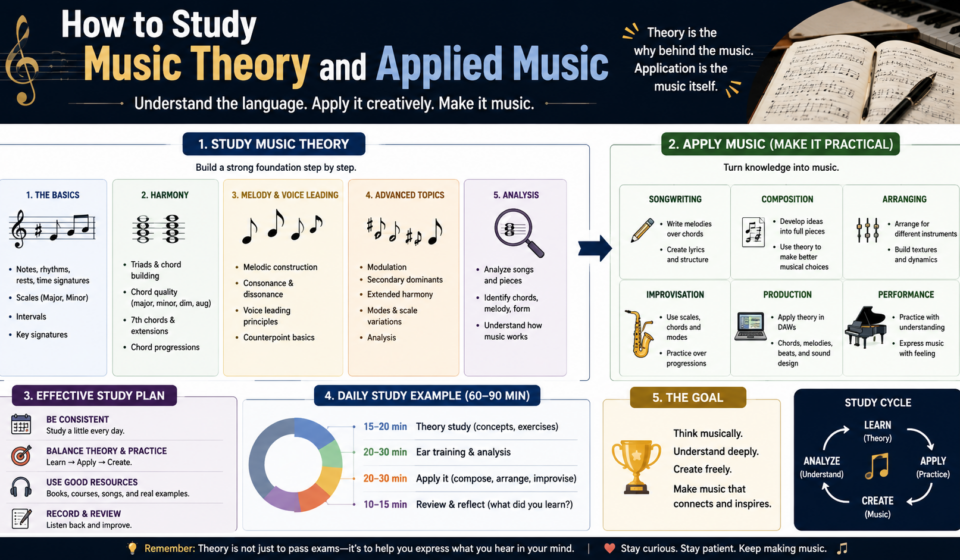

Whether you’re a student just getting started or someone looking to level up your academic performance, understanding how to study music theory is one of the most valuable skills you can develop. This comprehensive guide breaks down everything you need to know to approach this topic with confidence, clarity, and a proven system that gets results. Learning is a skill — and like any skill, the right approach makes all the difference.
Why Study Music Theory and Applied Music Matters
In today’s fast-moving academic and professional world, the ability to how to study music theory is more valuable than ever. Students who master this skill consistently outperform their peers, not because they’re smarter, but because they’re more strategic. The good news is that strategy can be learned. You don’t need special talent — just the right approach and consistent practice.
Building a Strong Foundation
Before diving into advanced techniques, make sure your fundamentals are in order. Create a dedicated study space free from distractions. Set clear, achievable daily goals. Use a planner to track your progress. These basics might seem obvious, but students who consistently apply them outperform those who rely on motivation and effort alone. Foundation matters in every skill — studying is no exception.
Proven Strategies That Work
The most effective students don’t just work hard — they work smart. Apply active recall by testing yourself rather than rereading. Use spaced repetition to review material at optimal intervals. Practice regularly, seek feedback, and adjust your approach based on results. These evidence-based strategies are backed by decades of cognitive science research and consistently produce better outcomes than traditional methods.
Common Mistakes and How to Avoid Them
Many students make the same avoidable mistakes: starting too late, studying passively, avoiding difficult material, and neglecting self-care. Be aware of these pitfalls and actively work to avoid them. If you find yourself just going through the motions, stop and ask: am I actually learning, or am I just spending time? Effectiveness requires honest self-assessment and the willingness to change what isn’t working.
Conclusion
Mastering how to study music theory is a journey, not a destination. Every step you take — every strategy you apply, every habit you build — moves you closer to your academic goals. Start with one technique from this guide, practice it consistently, and build from there. The students who succeed aren’t those who know the most techniques; they’re the ones who apply the right ones consistently. That can be you.
Frequently Asked Questions
Q1: What is the most important thing to know about how to study music theory?
A: Consistency and active engagement are the most important factors. Showing up regularly and practicing deliberately beats occasional intense effort.
Q2: How long does it take to see results?
A: Most students notice meaningful improvements within 2-4 weeks of applying new strategies consistently. Long-term mastery builds over months.
Q3: Can anyone develop this skill?
A: Yes. These skills are learnable at any age and level. The key is consistent, deliberate practice and a willingness to adjust your approach.
Q4: What should I do if I feel overwhelmed?
A: Break your goal into smaller steps. Focus on just the next action, not the entire journey. Ask for help when needed and take breaks to recharge.
Q5: Are there any free resources to support learning?
A: Absolutely. Khan Academy, YouTube, public libraries, and free apps like Anki provide excellent no-cost support for nearly any study goal.