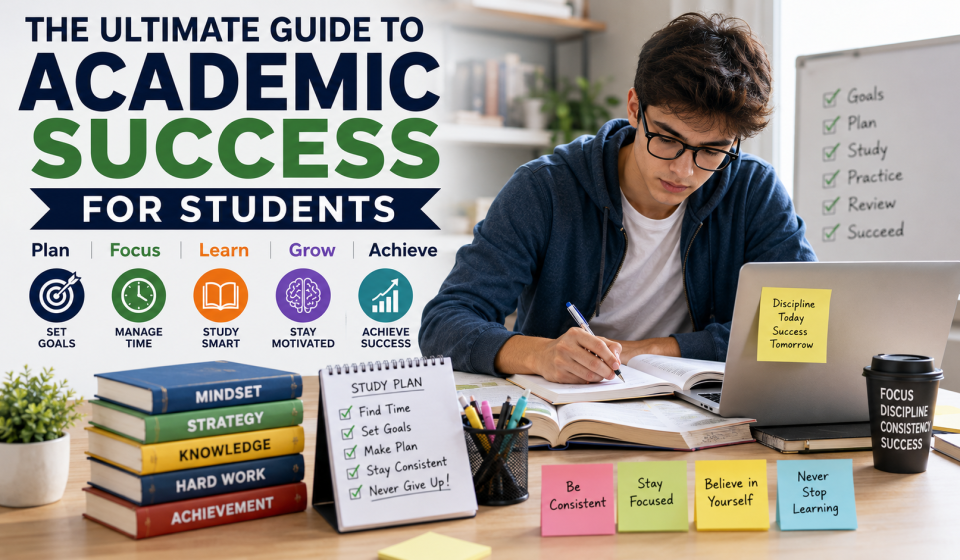

Discover the ultimate guide to academic success for students. Learn proven study strategies, time management skills, goal-setting techniques, productivity tips, and habits that help students achieve better grades and long-term success.
Academic success is more than earning good grades. It involves developing effective study habits, managing time wisely, staying motivated, and maintaining a healthy balance between academics and personal life. In today’s competitive educational environment, students need smart strategies to achieve their goals and unlock their full potential.
This ultimate guide explores practical techniques that can help students improve performance, boost confidence, and build a strong foundation for lifelong learning.
What Is Academic Success?
Academic success refers to achieving educational goals through consistent effort, effective learning strategies, and personal growth. It includes:
- Strong academic performance
- Effective time management
- Continuous learning
- Personal development
- Goal achievement
- Critical thinking skills
Success in academics is not solely measured by grades but also by knowledge, skills, and the ability to apply what you learn.
Why Academic Success Matters
Academic achievement offers several benefits:
Better Career Opportunities
Strong academic performance can open doors to scholarships, internships, and career opportunities.
Increased Confidence
Achieving educational goals boosts self-esteem and motivation.
Improved Problem-Solving Skills
Learning helps students develop analytical and critical thinking abilities.
Lifelong Learning Habits
Successful students develop habits that benefit them throughout life.
10 Essential Habits of Successful Students
1. Set Clear Goals
Define short-term and long-term academic objectives.
2. Create a Study Schedule
A structured timetable helps students stay organized and productive.
3. Attend Classes Regularly
Consistent attendance improves understanding and engagement.
4. Take Effective Notes
Summarize key concepts using organized notes and mind maps.
5. Stay Organized
Keep study materials, assignments, and deadlines properly managed.
6. Practice Active Learning
Participate in discussions, solve problems, and test your knowledge regularly.
7. Manage Time Wisely
Prioritize important tasks and avoid procrastination.
8. Seek Help When Needed
Ask teachers, mentors, or classmates for support.
9. Maintain Healthy Habits
Exercise, sleep, and proper nutrition support academic performance.
10. Stay Consistent
Consistency often produces better results than occasional intense effort.
Effective Study Techniques for Academic Success
Active Recall
Test yourself instead of simply rereading notes.
Spaced Repetition
Review information periodically to strengthen memory.
Pomodoro Technique
Study for 25 minutes followed by a short break.
Mind Mapping
Visualize information through diagrams and connections.
Practice Tests
Solve previous exam papers and quizzes to improve preparation.
Time Management Strategies
Time management is a critical factor in academic achievement.
Prioritize Tasks
Focus on high-priority assignments first.
Use a Planner
Track deadlines, exams, and study sessions.
Avoid Multitasking
Concentrate on one task at a time.
Break Large Projects Into Smaller Tasks
Small steps make challenging projects more manageable.
How to Stay Motivated as a Student
Maintaining motivation can be challenging, but these strategies can help:
- Celebrate small achievements.
- Set realistic goals.
- Surround yourself with positive influences.
- Visualize your future success.
- Track your progress regularly.
Common Mistakes Students Should Avoid
- Procrastinating assignments
- Studying without a plan
- Ignoring sleep and health
- Overusing social media
- Cramming before exams
- Avoiding difficult subjects
- Not reviewing mistakes
The Role of Technology in Academic Success
Technology can improve learning when used wisely.
Useful Educational Tools
- Online courses
- Learning apps
- Digital flashcards
- Educational videos
- AI-powered learning assistants
Students should use technology to enhance learning rather than create distractions.
Building a Growth Mindset
A growth mindset encourages students to view challenges as opportunities for learning.
Students with a growth mindset:
- Embrace challenges
- Learn from mistakes
- Persist through difficulties
- Continuously improve skills
This mindset significantly contributes to long-term academic success.
Sources:
Conclusion
Academic success is not achieved overnight. It requires dedication, effective study techniques, time management, and a positive attitude. By developing strong habits, setting clear goals, and maintaining consistency, students can improve their academic performance and build a successful future. Remember that success is a journey of continuous learning, growth, and self-improvement.
Frequently Asked Questions (FAQs)
What is academic success?
Academic success refers to achieving educational goals through effective learning, good study habits, and consistent effort.
How can students improve academic performance?
Students can improve performance by following a study schedule, practicing active recall, managing time effectively, and staying organized.
Why is time management important for students?
Time management helps students balance studies, assignments, extracurricular activities, and personal responsibilities efficiently.
What are the best study techniques for students?
Active recall, spaced repetition, mind mapping, practice testing, and the Pomodoro Technique are among the most effective study methods.
How many hours should a student study daily?
The ideal study time varies, but 2–4 focused hours per day is generally effective for most students.
How can students stay motivated?
Setting goals, tracking progress, rewarding achievements, and maintaining a positive mindset can help students stay motivated.
What are common obstacles to academic success?
Procrastination, poor time management, lack of organization, distractions, and inconsistent study habits are common challenges.
Does sleep affect academic performance?
Yes. Quality sleep improves concentration, memory retention, and overall cognitive function.
Can technology help students succeed academically?
Yes. Educational apps, online courses, digital flashcards, and AI learning tools can enhance learning when used appropriately.
What is a growth mindset?
A growth mindset is the belief that abilities and intelligence can improve through effort, learning, and persistence.