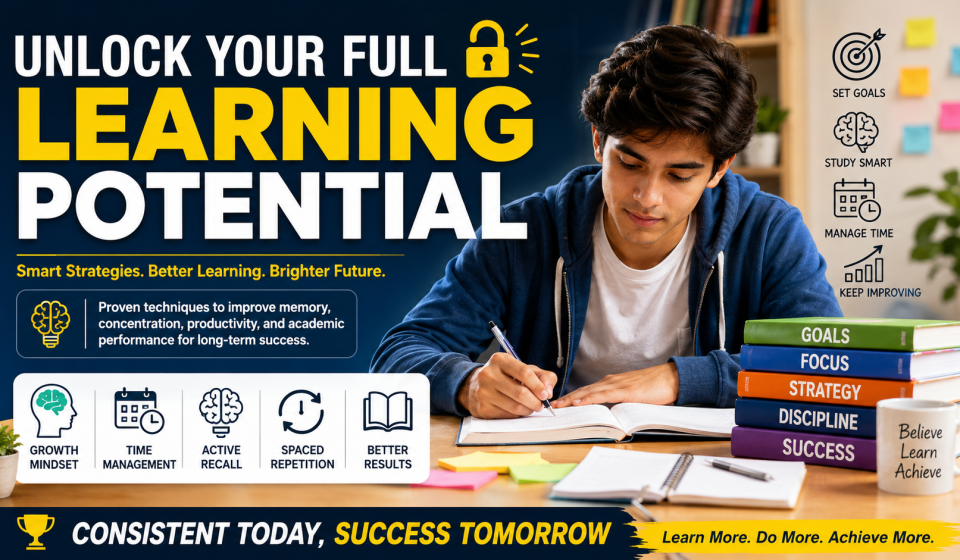

Unlock your full learning potential with expert study strategies. Discover proven techniques to improve memory, concentration, productivity, and academic performance for long-term success.
Every student has the ability to achieve more than they think. The difference between average and exceptional learners often comes down to the strategies they use. Learning is not just about intelligence—it’s about understanding how to study effectively, retain information, stay motivated, and continuously improve.
By applying expert-backed learning techniques, students can unlock their full potential and achieve greater academic success with less stress and more confidence.
What Does Learning Potential Mean?
Learning potential refers to your ability to acquire knowledge, develop skills, solve problems, and continuously improve over time.
Students who maximize their learning potential often:
- Learn faster
- Remember information longer
- Perform better in exams
- Stay motivated
- Adapt to challenges
- Achieve long-term success
The good news is that learning potential can be developed through the right habits and strategies.
Why Many Students Struggle to Reach Their Potential
Common obstacles include:
- Poor study habits
- Lack of focus
- Procrastination
- Low confidence
- Ineffective learning methods
- Excessive distractions
- Poor time management
Identifying these challenges is the first step toward overcoming them.
1. Develop a Growth Mindset
A growth mindset is the belief that abilities can improve through effort and practice.
Students with a growth mindset:
- Embrace challenges
- Learn from mistakes
- Stay persistent
- Focus on improvement
This mindset creates the foundation for lifelong learning.
2. Set Clear Academic Goals
Goals provide direction and purpose.
Examples include:
- Improving grades
- Learning a new skill
- Completing a certification
- Preparing for competitive exams
Specific goals help maintain focus and motivation.
3. Use Active Recall
Active Recall is one of the most effective learning techniques.
Instead of rereading notes:
- Test yourself
- Use flashcards
- Solve practice questions
- Explain concepts from memory
Benefits:
- Better retention
- Faster recall
- Improved exam performance
4. Apply Spaced Repetition
Spaced Repetition helps transfer information into long-term memory.
Example review schedule:
- Day 1
- Day 3
- Day 7
- Day 14
- Day 30
Regular reviews significantly reduce forgetting.
5. Improve Your Concentration
Focused study sessions are more effective than long distracted sessions.
Ways to improve concentration:
- Study in a quiet environment
- Turn off notifications
- Follow a study schedule
- Use focus techniques
Better concentration leads to faster learning.
6. Master Time Management
Successful students manage their time wisely.
Strategies include:
- Prioritizing tasks
- Creating schedules
- Setting deadlines
- Avoiding procrastination
Good time management reduces stress and increases productivity.
7. Learn Through Multiple Methods
The brain learns more effectively when information is presented in different ways.
Combine:
- Reading
- Writing
- Videos
- Practice exercises
- Discussions
Multiple learning approaches improve understanding and retention.
8. Use Technology and AI Wisely
Modern technology can accelerate learning.
Helpful tools include:
- ChatGPT
- Quizlet
- Grammarly
- Notion AI
- Khan Academy
These resources support personalized and efficient learning.
9. Strengthen Critical Thinking Skills
Critical thinking helps students:
- Analyze information
- Solve problems
- Make better decisions
- Understand concepts deeply
Strong thinkers become stronger learners.
10. Take Effective Notes
Good notes simplify revision and improve understanding.
Popular methods:
- Cornell Notes
- Mind Mapping
- Summary Notes
- Digital Notes
Organized notes save valuable study time.
11. Prioritize Sleep
Sleep is essential for learning and memory.
Benefits include:
- Better concentration
- Improved recall
- Enhanced creativity
- Stronger problem-solving abilities
Aim for 7–9 hours of quality sleep daily.
12. Stay Physically Active
Exercise improves brain performance.
Benefits:
- Increased focus
- Better mood
- Improved memory
- Reduced stress
Even short daily workouts can boost academic performance.
13. Build Strong Learning Habits
Small habits create long-term success.
Examples:
- Daily revision
- Reading regularly
- Completing tasks on time
- Reviewing goals
Consistency often matters more than talent.
14. Learn from Mistakes
Mistakes provide valuable feedback.
After every test or assignment:
- Review errors
- Understand weak areas
- Improve strategies
Growth comes from learning, not perfection.
15. Stay Curious and Keep Exploring
Curiosity fuels learning.
Ways to stay curious:
- Ask questions
- Explore new subjects
- Read beyond textbooks
- Learn new skills
Curious learners often retain information better and enjoy learning more.
Common Habits of High-Performing Students
Successful students often:
- Study consistently
- Manage time effectively
- Practice Active Recall
- Maintain healthy routines
- Set goals
- Stay disciplined
- Embrace lifelong learning
These habits help unlock maximum learning potential.
Educational Trends Supporting Learning Success
Students should take advantage of:
- AI-powered learning
- Personalized education
- Online courses
- Skill-based learning
- Digital certifications
- Interactive learning platforms
Modern tools provide more opportunities than ever before.
Benefits of Unlocking Your Learning Potential
Students who maximize their learning potential often experience:
- Better academic performance
- Greater confidence
- Faster skill development
- Stronger memory
- Increased productivity
- Better career opportunities
Learning becomes more enjoyable and effective.
Sources
- Khan Academy
- Coursera
- edX
- Harvard Learning Center
- MIT OpenCourseWare
- Google for Education
- OpenAI ChatGPT
Conclusion
Unlocking your full learning potential is not about being naturally gifted—it’s about using the right strategies consistently. By developing a growth mindset, mastering time management, using evidence-based study techniques, maintaining healthy habits, and embracing modern learning tools, students can dramatically improve their academic performance and personal growth. Every small improvement compounds over time, helping students reach levels of success they once thought were impossible.
Frequently Asked Questions (FAQs)
What is learning potential?
Learning potential is a person’s ability to acquire knowledge, develop skills, and continuously improve through learning.
How can students improve their learning potential?
Students can improve by using effective study techniques, setting goals, managing time well, and maintaining healthy habits.
What is the best study method for long-term learning?
Active Recall and Spaced Repetition are among the most effective methods for long-term retention.
Why is a growth mindset important?
A growth mindset encourages persistence, resilience, and continuous improvement.
How does sleep affect learning?
Sleep strengthens memory, improves concentration, and supports overall cognitive performance.
Can AI help students learn better?
Yes. AI tools can provide explanations, study plans, quizzes, and personalized learning support.
Why is time management important for students?
Good time management improves productivity, reduces stress, and helps students achieve goals more efficiently.
How can students stay motivated to learn?
Set meaningful goals, track progress, celebrate achievements, and focus on long-term success.
What habits do successful students follow?
They study consistently, revise regularly, manage time effectively, and maintain healthy lifestyles.
Is learning potential fixed?
No. Learning potential can grow significantly through practice, effective strategies, and continuous learning.