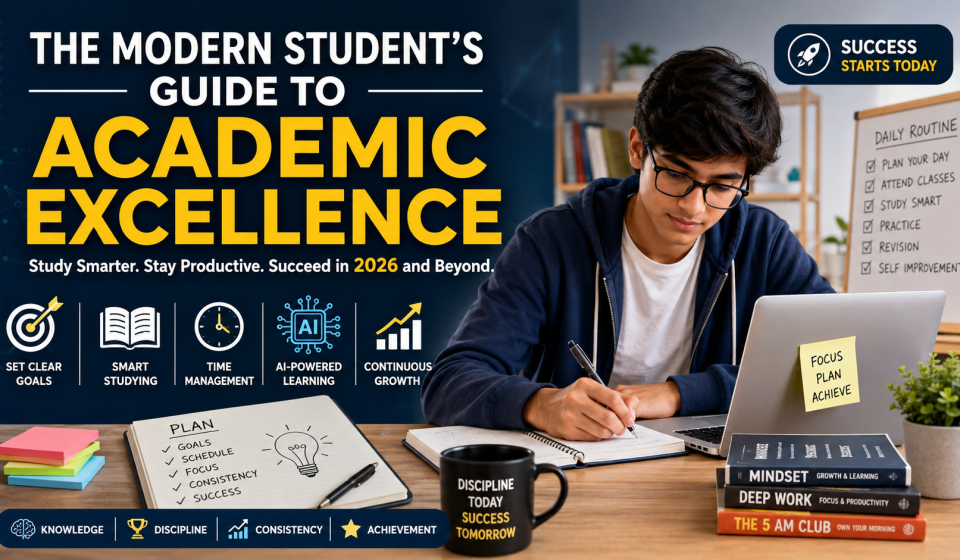

Discover the modern student’s guide to academic excellence. Learn proven strategies for smart studying, productivity, time management, AI-powered learning, and long-term academic success in 2026.
Academic excellence is no longer just about scoring high marks in exams. In today’s fast-changing educational environment, successful students combine strong study habits, digital skills, critical thinking, productivity, and continuous learning. Modern education requires students to adapt, innovate, and develop skills that prepare them for both academic and professional success.
This comprehensive guide explores the strategies that can help students achieve academic excellence in 2026 and beyond.
What Is Academic Excellence?
Academic excellence refers to consistently performing at a high level in learning, personal development, and educational achievement.
It includes:
- Strong academic performance
- Effective study habits
- Continuous improvement
- Critical thinking abilities
- Time management skills
- Personal growth
True academic excellence focuses on learning, not just grades.
Why Academic Excellence Matters
Students who strive for excellence often benefit from:
- Better academic results
- Increased confidence
- Greater career opportunities
- Improved discipline
- Stronger problem-solving skills
- Lifelong learning habits
These advantages extend far beyond the classroom.
1. Set Clear Academic Goals
Successful students know exactly what they want to achieve.
Examples include:
- Improving GPA
- Scoring higher in exams
- Learning a new skill
- Earning certifications
Clear goals provide direction and motivation.
2. Develop Effective Study Habits
Consistent study habits are the foundation of academic success.
Key practices include:
- Daily revision
- Active learning
- Organized note-taking
- Regular self-assessment
Small daily efforts produce significant long-term results.
3. Use Active Recall
Active Recall is one of the most effective study techniques.
Methods include:
- Flashcards
- Practice questions
- Self-testing
- Teaching concepts to others
Benefits:
- Better memory retention
- Faster recall
- Improved exam performance
4. Apply Spaced Repetition
Spaced Repetition helps transfer knowledge into long-term memory.
Example:
- Study today
- Review after 2 days
- Review after 1 week
- Review after 2 weeks
This method reduces forgetting and improves retention.
5. Master Time Management
Time is a student’s most valuable resource.
Strategies include:
- Creating schedules
- Prioritizing tasks
- Setting deadlines
- Avoiding procrastination
Effective time management improves productivity and reduces stress.
6. Stay Organized
Organization supports efficient learning.
Useful tools include:
- Study planners
- Calendars
- To-do lists
- Digital productivity apps
An organized student can focus more on learning and less on managing chaos.
7. Embrace AI-Powered Learning
Artificial Intelligence is transforming education.
Students can use AI for:
- Personalized study plans
- Concept explanations
- Practice quizzes
- Writing assistance
- Research support
Popular AI tools include ChatGPT, Grammarly, and Notion AI.
8. Improve Concentration and Focus
Focused learning sessions produce better results.
Tips:
- Study in a quiet environment
- Turn off notifications
- Follow the Pomodoro Technique
- Take regular breaks
Concentration improves learning efficiency.
9. Develop Critical Thinking Skills
Academic excellence requires more than memorization.
Critical thinking helps students:
- Analyze information
- Solve problems
- Make informed decisions
- Understand concepts deeply
These skills are valuable throughout life.
10. Build Strong Communication Skills
Communication is essential for academic and professional success.
Students should practice:
- Writing clearly
- Public speaking
- Presentations
- Team discussions
Strong communication enhances learning and leadership.
11. Prioritize Physical Health
Healthy students perform better academically.
Important habits include:
- Regular exercise
- Balanced nutrition
- Staying hydrated
- Maintaining healthy routines
Physical health supports cognitive performance.
12. Get Quality Sleep
Sleep is critical for learning and memory.
Benefits include:
- Better concentration
- Improved recall
- Enhanced creativity
- Reduced stress
Aim for 7–9 hours of quality sleep daily.
13. Develop a Growth Mindset
Students with a growth mindset believe they can improve through effort and learning.
They:
- Accept challenges
- Learn from mistakes
- Stay resilient
- Focus on progress
This mindset promotes long-term success.
14. Learn Future-Ready Skills
Academic excellence in 2026 includes skill development.
Important skills include:
- Digital literacy
- Leadership
- Problem-solving
- Creativity
- Collaboration
- Adaptability
These abilities improve career readiness.
15. Become a Lifelong Learner
The most successful students never stop learning.
Ways to continue growing:
- Read regularly
- Take online courses
- Follow industry trends
- Learn emerging technologies
Continuous learning creates long-term opportunities.
Common Obstacles to Academic Excellence
Students often face challenges such as:
- Procrastination
- Poor planning
- Lack of focus
- Excessive social media use
- Fear of failure
- Inconsistent study habits
Recognizing these obstacles is the first step toward overcoming them.
Daily Routine for Academic Excellence
Morning
- Review goals
- Exercise or stretch
- Plan study sessions
Afternoon
- Attend classes
- Complete important tasks
- Practice active learning
Evening
- Revise lessons
- Work on skills
- Complete assignments
Night
- Reflect on progress
- Prepare for tomorrow
- Get adequate sleep
Consistency is more important than perfection.
Educational Trends Every Modern Student Should Follow
Stay updated with:
- AI-powered learning
- Skill-based education
- Online certifications
- Personalized learning
- Digital literacy
- Project-based learning
- Career-focused education
These trends are shaping the future of learning.
Benefits of Academic Excellence
Students who pursue excellence often enjoy:
- Better grades
- Stronger confidence
- Improved productivity
- Better career opportunities
- Greater personal growth
- Enhanced leadership abilities
Academic excellence creates a strong foundation for future success.
Sources
Conclusion
Academic excellence in the modern world goes beyond achieving high grades. It involves developing effective study habits, mastering time management, embracing technology, building future-ready skills, and maintaining a growth mindset. By applying these strategies consistently, students can unlock their full potential and prepare themselves for success in education, careers, and life. Excellence is not a destination—it is a continuous journey of learning and improvement.
Frequently Asked Questions (FAQs)
What is academic excellence?
Academic excellence is the consistent pursuit of high-quality learning, strong performance, and continuous personal development.
How can students achieve academic excellence?
Students can achieve excellence through effective study habits, time management, goal setting, and continuous learning.
Why is time management important for students?
Time management helps students stay organized, meet deadlines, reduce stress, and improve productivity.
What are the best study techniques for academic success?
Active Recall, Spaced Repetition, self-testing, and structured revision are highly effective techniques.
How does AI help students?
AI provides personalized learning support, study plans, explanations, quizzes, and productivity tools.
What skills should modern students develop?
Digital literacy, communication, critical thinking, creativity, leadership, and adaptability are essential skills.
Does sleep affect academic performance?
Yes. Quality sleep improves memory, focus, concentration, and overall learning ability.
What is a growth mindset?
A growth mindset is the belief that intelligence and abilities can improve through effort and learning.
Why is lifelong learning important?
Continuous learning helps students adapt to changing industries and future career opportunities.
What is the biggest obstacle to academic excellence?
Procrastination and inconsistent study habits are among the most common barriers to success.