
Discover the complete guide to becoming a better learner. Learn proven study techniques, critical thinking, time management, and lifelong learning strategies to achieve academic success.
Learning is one of the most valuable skills anyone can develop. Whether you’re a student, a professional, or someone who simply enjoys gaining new knowledge, becoming a better learner can improve your academic performance, career opportunities, and personal growth. Effective learning is not about studying longer—it is about studying smarter, staying curious, and using strategies that help you understand and remember information.
In today’s digital world, information is available everywhere, making it more important than ever to develop strong learning habits. By improving your learning techniques, managing your time effectively, and maintaining a growth mindset, you can achieve lasting success in every area of life.
What Does It Mean to Be a Better Learner?
A better learner is someone who actively seeks knowledge, applies effective study strategies, thinks critically, and continuously improves through experience and practice.
Effective learners typically:
- Stay curious
- Ask meaningful questions
- Practice consistently
- Learn from mistakes
- Adapt to new challenges
- Continue learning throughout life
Learning is a lifelong journey rather than a one-time achievement.
Why Becoming a Better Learner Matters
Improving your learning skills helps you:
- Achieve better academic results
- Develop stronger problem-solving abilities
- Improve memory and concentration
- Increase confidence
- Adapt to change
- Prepare for future career opportunities
Strong learning skills create a foundation for lifelong success.
1. Develop a Growth Mindset
Believe that intelligence and abilities can improve through effort.
A growth mindset encourages you to:
- Accept challenges
- Learn from mistakes
- Stay motivated
- Keep improving
Viewing setbacks as learning opportunities builds resilience.
2. Set Clear Learning Goals
Well-defined goals provide direction.
Examples include:
- Completing a course
- Improving exam scores
- Learning a new language
- Developing technical skills
Clear goals help maintain motivation.
3. Practice Active Learning
Learning becomes more effective when you actively engage with the material.
Use methods such as:
- Taking notes
- Asking questions
- Solving practice problems
- Teaching others
Active participation improves understanding.
4. Use Active Recall
Instead of rereading notes, test yourself regularly.
Try:
- Self-quizzes
- Flashcards
- Practice exams
- Explaining concepts without looking at notes
Active recall strengthens long-term memory.
5. Apply Spaced Repetition
Review information over increasing intervals.
For example:
- Review after one day
- Review after three days
- Review after one week
- Review after one month
This technique improves long-term retention.
6. Improve Time Management
Effective learners manage their study time wisely.
Helpful strategies include:
- Daily study schedules
- Time blocking
- Priority lists
- Weekly planning
Good time management reduces stress.
7. Eliminate Distractions
A focused environment improves learning.
Reduce distractions by:
- Silencing notifications
- Keeping your workspace organized
- Studying in a quiet location
- Working on one task at a time
Concentration improves productivity.
8. Strengthen Critical Thinking
Critical thinking helps you understand concepts more deeply.
Practice by:
- Analyzing information
- Comparing ideas
- Asking “why” and “how”
- Evaluating evidence
Critical thinking supports better decision-making.
9. Take Care of Your Health
A healthy body supports a healthy mind.
Maintain:
- Balanced nutrition
- Regular exercise
- Proper hydration
- Quality sleep
Healthy habits improve memory and concentration.
10. Learn Through Practice
Practical application reinforces learning.
Examples include:
- Hands-on projects
- Experiments
- Coding exercises
- Real-world problem-solving
Practice helps convert knowledge into skills.
11. Stay Curious
Curiosity encourages continuous learning.
Explore:
- Books
- Educational videos
- Podcasts
- Research articles
- Online courses
Curiosity keeps learning enjoyable.
12. Collaborate with Others
Learning with others provides new perspectives.
Participate in:
- Study groups
- Classroom discussions
- Team projects
- Peer teaching
Collaboration improves communication and understanding.
13. Review Your Progress
Evaluate your learning regularly.
Monitor:
- Test results
- Assignment performance
- Completed goals
- Areas needing improvement
Reflection helps you learn more effectively.
14. Build Consistent Learning Habits
Small daily habits create long-term success.
Develop routines such as:
- Reading every day
- Reviewing notes regularly
- Practicing new skills
- Setting weekly learning goals
Consistency leads to continuous improvement.
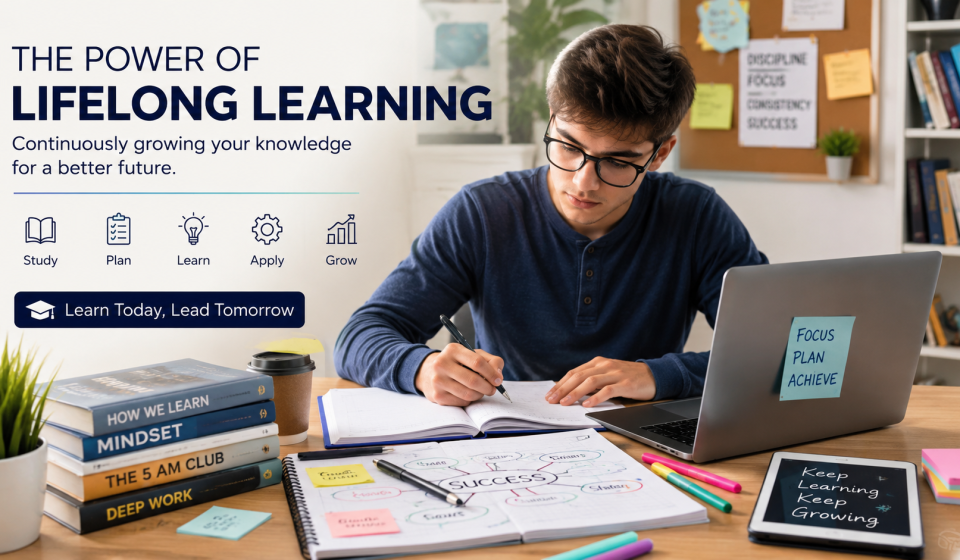
15. Embrace Lifelong Learning
Learning should continue beyond school or university.
Continue developing yourself by:
- Earning certifications
- Attending workshops
- Learning emerging technologies
- Building new professional skills
Lifelong learning keeps you adaptable in a changing world.
Common Learning Mistakes to Avoid
Avoid these common habits:
- Cramming before exams
- Passive reading without practice
- Multitasking while studying
- Skipping review sessions
- Ignoring feedback
- Studying without clear goals
Replacing ineffective habits with evidence-based learning strategies improves long-term success.
Benefits of Becoming a Better Learner
Students who improve their learning skills often experience:
- Better academic performance
- Stronger memory retention
- Greater confidence
- Improved problem-solving abilities
- Better career readiness
- Lifelong personal growth
Learning effectively creates opportunities in every stage of life.
Sources
- American Psychological Association (APA)
- Harvard University
- Stanford University
- UNESCO
- Edutopia
- Verywell Mind
- Mind Tools
Conclusion
Becoming a better learner is one of the most valuable investments you can make in yourself. By developing a growth mindset, using proven learning techniques such as active recall and spaced repetition, managing your time effectively, and maintaining healthy habits, you can improve your ability to understand, remember, and apply knowledge. Learning is not limited to classrooms—it is a lifelong process that opens doors to academic achievement, professional success, and personal fulfillment. With consistent effort and the right strategies, anyone can become a more confident and effective learner.
Frequently Asked Questions (FAQs)
1. What does it mean to become a better learner?
Becoming a better learner means improving your ability to understand, remember, apply, and continuously build knowledge using effective learning strategies.
2. How can I improve my learning skills?
You can improve by setting clear goals, practicing active recall, using spaced repetition, managing your time well, and maintaining consistent study habits.
3. Why is active learning more effective than passive reading?
Active learning encourages deeper understanding by engaging with the material through questioning, practice, discussions, and problem-solving rather than simply reading.
4. What is the importance of a growth mindset?
A growth mindset helps learners believe they can improve through effort, making them more resilient, motivated, and willing to embrace challenges.
5. How does sleep affect learning?
Quality sleep helps the brain organize and store information, improving memory, concentration, and overall cognitive performance.
6. Why should students review what they learn regularly?
Regular review strengthens memory, prevents forgetting, and reinforces understanding over time.
7. How can technology help students become better learners?
Educational apps, online courses, AI-powered learning tools, digital libraries, and interactive platforms provide flexible and personalized learning opportunities.
8. What are the biggest mistakes students make while learning?
Common mistakes include procrastination, multitasking, cramming, studying without goals, ignoring feedback, and relying only on passive reading.
9. Why is lifelong learning important?
Lifelong learning helps individuals stay updated with new knowledge, adapt to changing industries, improve career opportunities, and continue personal growth.
10. What is the biggest secret to becoming a better learner?
The biggest secret is staying curious, practicing consistently, using evidence-based learning techniques, and continuously improving through reflection and experience.