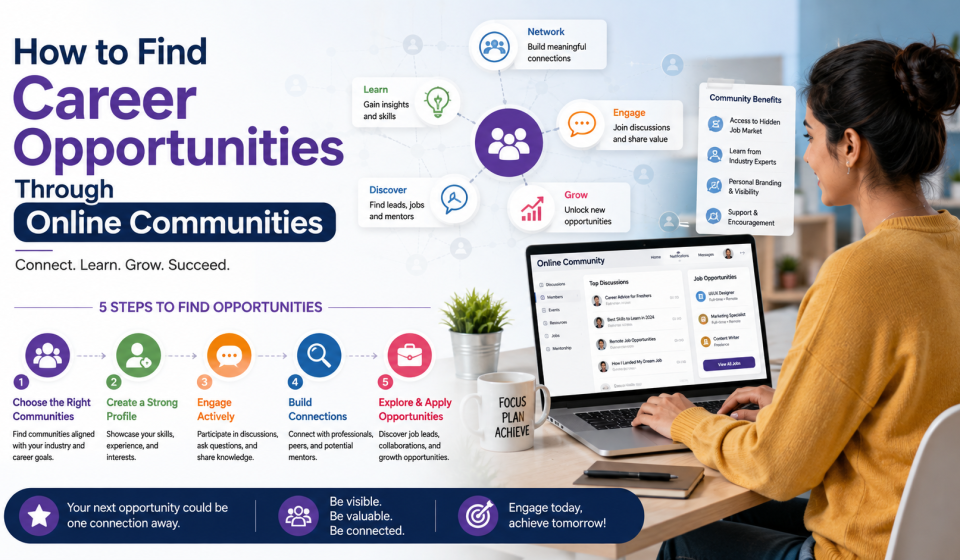

Learn how to find career opportunities through online communities. Discover the best ways to network, build your professional presence, and connect with employers for job opportunities.
Online communities have become one of the most effective ways for students, graduates, and professionals to discover career opportunities. Beyond traditional job portals, these communities allow people to connect with industry experts, participate in discussions, learn new skills, and stay informed about job openings. Many employers and recruiters also use online communities to identify talented candidates.
By becoming an active member of professional communities, you can expand your network, gain valuable career insights, and increase your chances of finding internships, freelance projects, and full-time employment. Building genuine connections within these communities can support both your immediate job search and your long-term career development.
Why Online Communities Matter for Career Growth
Professional communities provide access to information and opportunities that may not always appear on traditional job websites.
Benefits include:
- Access to job opportunities
- Professional networking
- Industry knowledge
- Career guidance
- Skill development
- Mentorship opportunities
- Increased professional visibility
Active participation can strengthen your career prospects.
Choose the Right Online Communities
Different communities serve different industries and career interests.
Popular types of communities include:
- Professional networking platforms
- Industry-specific forums
- Student communities
- Alumni networks
- Technology communities
- Creative communities
- Business groups
- Career development forums
Joining communities related to your career goals helps you find more relevant opportunities.
Build a Professional Online Profile
Your profile often creates the first impression for recruiters and professionals.
Include:
- Professional profile photo
- Clear headline
- Educational background
- Skills
- Certifications
- Projects
- Internship experience
- Career interests
A complete and updated profile improves your credibility.
Participate in Discussions
Being active helps others recognise your knowledge and interests.
Ways to participate include:
- Answering questions
- Sharing useful resources
- Commenting professionally
- Asking thoughtful questions
- Joining industry conversations
- Offering helpful advice
Meaningful participation helps you build professional relationships.
Expand Your Professional Network
Networking is one of the biggest advantages of online communities.
You can connect with:
- Industry professionals
- Recruiters
- Hiring managers
- Alumni
- Mentors
- Fellow students
- Subject matter experts
Building genuine relationships can lead to future career opportunities.
Share Your Skills and Projects
Showcasing your work helps demonstrate your abilities to potential employers.
Consider sharing:
- Personal projects
- Research work
- Portfolio samples
- Certifications
- Case studies
- Competition achievements
A strong online presence can attract recruiters.
Stay Updated on Job Opportunities
Many communities regularly post career openings and hiring announcements.
Monitor:
- Job boards
- Community announcements
- Recruitment posts
- Internship opportunities
- Freelance projects
- Virtual career fairs
Checking regularly increases your chances of finding suitable roles.
Learn From Industry Experts
Experienced professionals often share valuable career advice.
Topics may include:
- Industry trends
- Interview preparation
- Career planning
- Resume improvement
- Workplace skills
- Professional development
Learning from experienced professionals helps you prepare for future opportunities.
Attend Online Events
Virtual events provide opportunities to meet employers and expand your network.
Useful events include:
- Webinars
- Career fairs
- Workshops
- Industry conferences
- Networking sessions
- Live Q&A events
Participating in events helps increase your visibility.
Develop Your Personal Brand
Building a positive professional reputation takes time and consistency.
Focus on:
- Sharing quality content
- Maintaining professionalism
- Demonstrating expertise
- Helping community members
- Communicating respectfully
- Staying active
A strong personal brand can attract career opportunities naturally.
Be Consistent and Patient
Networking through online communities is a long-term process.
Successful professionals often:
- Engage regularly
- Continue learning
- Build authentic relationships
- Offer value to others
- Follow up professionally
- Stay open to new opportunities
Consistency often leads to better results over time.
Common Mistakes to Avoid
Avoid behaviours that may reduce your professional credibility.
Common mistakes include:
- Sending generic connection requests
- Posting inappropriate content
- Ignoring community guidelines
- Requesting jobs immediately
- Having an incomplete profile
- Being inactive for long periods
Professional behaviour helps create a positive impression.
Practical Tips for Students and Graduates
You can maximise online communities by:
- Updating your profile regularly
- Connecting with alumni
- Joining industry groups
- Participating in discussions
- Sharing your achievements
- Following companies of interest
- Learning new skills continuously
- Applying for relevant opportunities promptly
Small, consistent efforts can significantly improve your career prospects.
Sources
- https://www.linkedin.com
- https://www.indeed.com
- https://www.ncs.gov.in
- https://www.coursera.org
- https://www.aicte-india.org
Conclusion
Online communities have become valuable platforms for discovering career opportunities, building professional relationships, and learning from experienced industry professionals. They provide access to job openings, mentorship, networking events, and educational resources that can help students and graduates prepare for successful careers.
By creating a professional profile, participating actively, sharing your skills, and engaging with the right communities, you can expand your network and increase your visibility among recruiters and employers. Consistent participation and genuine relationship-building can open the door to rewarding career opportunities both now and in the future.
Frequently Asked Questions (FAQs)
1. How do online communities help with career opportunities?
Online communities connect job seekers with recruiters, industry professionals, mentors, and employers while providing access to job postings, networking opportunities, and career advice.
2. Which online communities are best for career networking?
Professional networking platforms, industry-specific forums, alumni groups, student communities, and career development forums are excellent places to build professional connections.
3. Should students join online communities before graduating?
Yes. Joining early allows students to build their network, learn about industry trends, develop professional relationships, and discover internship or graduate job opportunities.
4. How can I make my online profile more attractive to employers?
Use a professional photo, write a clear profile summary, list your education, skills, certifications, projects, internships, and keep your information updated regularly.
5. Is networking more important than applying for jobs?
Both are important. Networking can help you discover opportunities and receive referrals, while applying for suitable positions increases your chances of securing interviews.
6. How often should I participate in online communities?
Regular participation is recommended. Engaging consistently by commenting, sharing useful content, and joining discussions helps increase your visibility and professional reputation.
7. Can online communities help fresh graduates find jobs?
Yes. Many graduates secure internships, freelance work, graduate programmes, and full-time jobs through networking, referrals, and recruitment posts shared within professional communities.
8. What should I avoid when using online communities for career growth?
Avoid sending generic messages, posting unprofessional content, requesting jobs immediately after connecting, ignoring community rules, and leaving your profile incomplete.