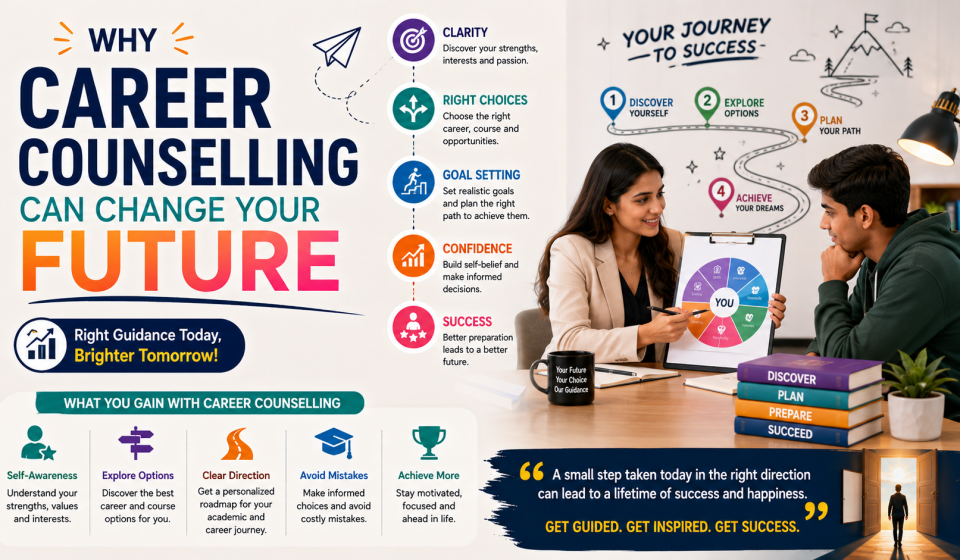

Discover how career counselling can shape your future by helping you understand your strengths, explore career options, set goals, and make informed education and career decisions.
Choosing a career is one of the most important decisions a student or professional can make. With thousands of educational programs, job roles, industries, and skill pathways available, it can be difficult to determine which direction is right for you. Career counselling can provide structured guidance, helping individuals understand their interests, strengths, skills, and goals before making important decisions about education and employment.
Career counselling is not about someone choosing a career for you. Instead, it can help you understand your options and make decisions based on reliable information and self-awareness. Whether you are selecting a college course, considering a career change, preparing for employment, or feeling uncertain about your professional direction, appropriate guidance can make the decision-making process more organized and confident.
What Is Career Counselling?
Career counselling is a process in which a trained career professional helps individuals explore educational and career choices.
A career counsellor may help you:
- Understand your interests.
- Identify strengths and skills.
- Explore career options.
- Research education pathways.
- Set realistic goals.
- Improve decision-making.
- Prepare for employment.
- Develop career plans.
The exact approach varies depending on the counsellor, individual, age, education level, and career concerns.
Why Career Decisions Can Be Difficult
Modern career choices can be complicated because the world of work continues to change.
Students may have to choose between:
- Different degree programs.
- Diploma courses.
- Professional certifications.
- Traditional careers.
- Emerging technology roles.
- Entrepreneurship.
- Vocational pathways.
- Further education.
At the same time, students may face pressure from family, friends, teachers, or social expectations.
Career counselling can provide a structured environment for examining these factors rather than making decisions based entirely on pressure or assumptions.
Career Counselling Improves Self-Awareness
Understanding yourself is an important part of choosing a suitable career.
Career counselling can encourage you to examine:
- Interests.
- Strengths.
- Skills.
- Values.
- Personality characteristics.
- Preferred work environments.
- Learning preferences.
- Long-term goals.
For example, someone who enjoys solving technical problems may want to explore technology-related careers, while someone who enjoys communication and organizing activities may prefer different professional environments.
Self-awareness does not guarantee a perfect career choice, but it can provide a stronger starting point.
It Helps Identify Suitable Career Options
Many students know only a small number of career paths.
They may be familiar with common professions but unaware of specialized roles that match their abilities.
A counsellor can help individuals research broader possibilities and understand the education, skills, responsibilities, and working environments associated with different careers.
This can be especially useful for students who feel that they have “no idea” what career they want.
Career Counselling Can Reduce Confusion
Having too many choices can sometimes be as difficult as having too few.
A student might be interested in several fields and struggle to decide where to focus.
Career counselling can help organize these choices by comparing factors such as:
- Personal interests.
- Academic performance.
- Skills.
- Career requirements.
- Education costs.
- Job opportunities.
- Long-term goals.
This process can make a complicated decision easier to approach.
It Supports Better Education Decisions
Career and education decisions are closely connected.
The course you choose may influence the opportunities available to you later. Before selecting a program, it is useful to understand what careers it can support and whether it provides the qualifications required for your target field.
Career guidance can help students compare:
- Degrees.
- Diplomas.
- Certifications.
- Vocational programs.
- Online courses.
- Professional training.
However, students should also verify admission rules and qualification requirements directly with educational institutions.
Career Counselling Can Help Set Realistic Goals
A career goal becomes more useful when it can be converted into practical steps.
For example:
Long-term goal: Work in a technology-related career.
Short-term goal: Improve programming fundamentals.
Next step: Complete a practical project.
Following step: Apply for internships.
Breaking a large goal into smaller actions can make career planning feel more manageable.
It Can Help You Understand Your Strengths
Students sometimes underestimate their abilities because they compare themselves with others.
Career counselling can encourage individuals to identify strengths that may not be obvious.
These might include:
- Communication.
- Creativity.
- Organization.
- Leadership.
- Analytical thinking.
- Problem-solving.
- Teamwork.
- Adaptability.
Understanding your strengths can help you identify careers and learning opportunities where those abilities may be useful.
Career Counselling Can Identify Skill Gaps
Career planning should not focus only on what you already know.
It should also identify what you need to learn.
For example, a student interested in digital marketing may discover that they need stronger skills in:
- Content creation.
- Analytics.
- Search engine optimization.
- Communication.
- Social media management.
Once these gaps are identified, the student can create a development plan.
It Encourages Informed Decision-Making
Good career decisions should be based on more than popularity or social pressure.
Career counselling can encourage students to consider evidence and practical factors before making a choice.
Instead of asking only:
“Which career is popular?”
You can ask:
“Does this career match my interests, abilities, values, educational plans, and long-term goals?”
This approach can lead to more thoughtful decisions.
Career Counselling Can Help With Career Changes
Career counselling is not only for students.
Professionals may seek guidance when they:
- Feel unhappy in their current career.
- Want to change industries.
- Need to develop new skills.
- Want to return to work.
- Are considering further education.
- Want to understand new career opportunities.
Changing careers can involve financial and practical considerations, so structured planning can be valuable.
It Can Improve Job Search Preparation
Career guidance may also support the transition from education to employment.
Depending on the service, a counsellor may help you improve:
- Resume writing.
- Interview preparation.
- Job-search strategies.
- Professional communication.
- Networking.
- Personal branding.
- Career goal setting.
These skills can complement your academic qualifications.
It Can Help Students Handle Career Pressure
Students may experience pressure to choose careers based on family expectations, social status, salary, or what their friends are doing.
Career counselling can provide an opportunity to discuss these pressures objectively.
The goal is not necessarily to reject other people’s advice. Instead, students can learn to balance external expectations with their own abilities, interests, circumstances, and goals.
The Role of Career Assessments
Some career counselling services use assessments to explore interests, skills, personality characteristics, or work preferences.
These assessments can provide useful discussion points, but they should not be treated as a perfect prediction of someone’s future.
A career assessment should ideally be considered alongside:
- Personal interests.
- Academic performance.
- Skills.
- Experience.
- Career information.
- Personal circumstances.
- Professional guidance.
No single test can determine the ideal career for every individual.
How to Choose a Career Counsellor
The quality of guidance matters.
Before working with a counsellor, consider:
- Their qualifications and professional training.
- Their experience.
- Their approach to counselling.
- The services they provide.
- Whether they explain assessment results clearly.
- Whether they respect your decisions.
- Whether they provide practical and evidence-based guidance.
Be cautious of anyone who guarantees a specific career outcome or claims that one test can determine your entire future.
How to Prepare for Career Counselling
You can make a counselling session more productive by preparing beforehand.
Think about:
- Subjects you enjoy.
- Subjects you find difficult.
- Activities you enjoy.
- Skills you already have.
- Careers you are considering.
- Careers you want to avoid.
- Your educational plans.
- Your financial or practical limitations.
- Questions you want to ask.
Bring relevant academic information or a resume if requested.
Questions to Ask During Career Counselling
Useful questions may include:
- Which careers match my current skills?
- What skills should I develop?
- What qualifications are required?
- What education pathways are available?
- What practical experience should I seek?
- How can I explore a career before committing?
- What should I do during the next six months?
- How can I improve my employability?
Good questions can help turn a general conversation into a practical career plan.
Career Counselling Is a Process, Not a One-Time Answer
Your interests and goals can change over time.
A career plan created at age 18 may need adjustment later because of new experiences, education, skills, or changes in the employment market.
Career counselling can therefore be viewed as an ongoing process rather than a single session that permanently determines your future.
Take Responsibility for Your Decisions
Career counsellors can provide information, structure, and guidance, but the final decision belongs to you.
You should research recommendations independently and consider your personal circumstances.
Use counselling as a tool for better decision-making rather than expecting someone else to make every decision for you.
Practical Steps After Career Counselling
After a counselling session, turn the advice into action.
For example:
- Choose two or three career areas to explore.
- Research required qualifications.
- Identify skill gaps.
- Select relevant learning resources.
- Complete a practical project.
- Look for internships or volunteering opportunities.
- Speak with professionals in the field.
- Review your progress regularly.
Small actions can gradually transform career ideas into a realistic plan.
Common Career Planning Mistakes
Choosing a Career Only for Money
Income is an important consideration, but long-term career satisfaction also depends on interests, abilities, working conditions, and opportunities for growth.
Following Friends
A career that suits your friend may not suit you. Make decisions based on your own strengths and goals.
Ignoring Skill Requirements
Research the actual skills and qualifications required for the career you want.
Expecting One Test to Decide Everything
Career assessments can provide insights, but they should not be treated as absolute predictions.
Waiting Until Graduation
Career planning can begin early. Exploring options before graduation gives you more time to develop relevant skills and experience.
Source Links
https://www.oecd.org/education
https://www.unesco.org/en/education
Conclusion
Career counselling can change the way people approach important education and career decisions by providing structure, self-awareness, reliable information, and practical planning. Instead of choosing a career based only on pressure, trends, or limited knowledge, individuals can explore their interests, understand their strengths, research opportunities, and identify the steps needed to reach their goals.
However, career counselling should not be viewed as a service that predicts your future or guarantees success. Your career develops through education, experience, decisions, skills, relationships, and continuous learning. A counsellor can provide guidance, but you remain responsible for evaluating your options and taking action.
If you feel uncertain about your future, seeking appropriate career guidance can be a useful starting point. With clear goals, realistic planning, practical experience, and a willingness to adapt, you can build a career path that reflects both your abilities and your long-term aspirations.
Frequently Asked Questions (FAQs)
1. What is career counselling?
Career counselling is a structured process that helps people explore educational and career options based on their interests, skills, goals, and circumstances. It can support students, graduates, and professionals at different stages of their careers.
2. Can career counselling really change my future?
Career counselling cannot guarantee a particular future, but it can improve the way you make career decisions. Better self-awareness, information, and planning may help you choose more suitable educational and professional pathways.
3. Who should consider career counselling?
Students who are unsure about courses or careers, graduates planning their first job, and professionals considering career changes can all benefit from career guidance. It can also help people who want to identify skill gaps or create a clearer career plan.
4. What happens during a career counselling session?
A session may involve discussions about your education, interests, skills, goals, and career concerns. Depending on the counsellor, assessments and career research activities may also be used to explore suitable options.
5. Can a career test tell me exactly which career to choose?
No career test can reliably determine one perfect career for every individual. Assessments can provide useful insights, but results should be considered alongside personal interests, skills, experience, goals, and real-world career information.
6. Is career counselling useful for college students?
Yes. College students can use career counselling to explore career options, choose relevant skills, plan internships, improve employability, and prepare for the transition from education to work.
7. Can career counselling help with changing careers?
Yes. Career counselling can help professionals evaluate transferable skills, explore alternative industries, identify skill gaps, and develop a realistic transition plan.
8. How should I choose a career counsellor?
Look for a qualified and experienced professional who uses a transparent approach and provides practical guidance. Avoid providers who guarantee specific career outcomes or claim that a single assessment can determine your entire future.
9. What should I bring to a career counselling session?
You can bring academic records, a resume, information about courses you are considering, and a list of career questions. Thinking about your interests, strengths, challenges, and goals beforehand can also make the session more productive.
10. Is one career counselling session enough?
It may be useful, but career development is usually an ongoing process. Your interests, skills, education, and career goals can change, so reviewing and adjusting your plan over time can be beneficial.