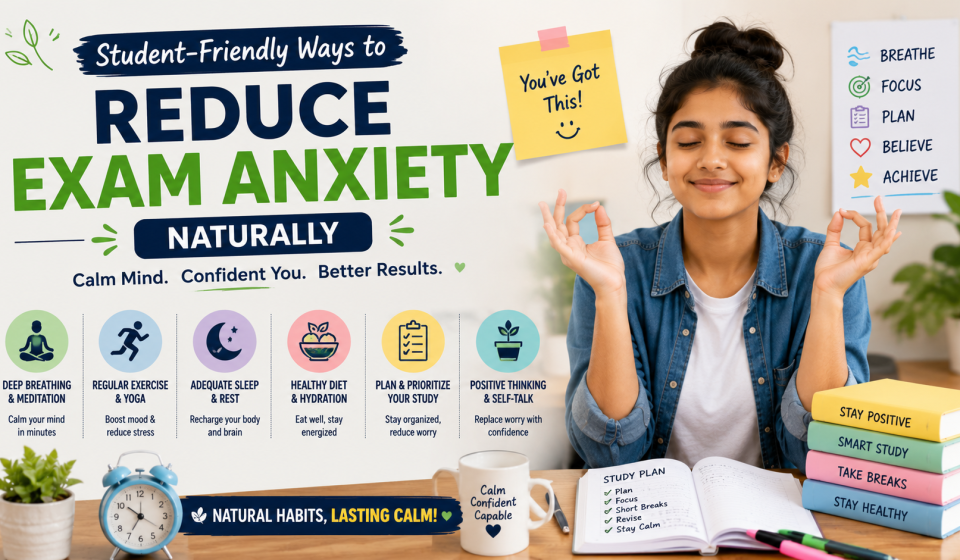

Discover student-friendly ways to reduce exam anxiety naturally. Learn practical techniques to stay calm, improve focus, manage stress, and perform confidently during exams.
Feeling nervous before an exam is a common experience for many students. A small amount of stress can motivate you to prepare, but excessive anxiety may make it difficult to concentrate, remember information, and perform at your best. Learning healthy ways to manage exam-related stress can improve both your wellbeing and your academic performance.
Understanding student-friendly ways to reduce exam anxiety naturally can help students build confidence and approach exams with a calmer mindset. Simple daily habits, effective study techniques, and healthy lifestyle choices can make a significant difference without relying on unhealthy coping methods.
This guide explores practical and natural strategies that students can use to reduce exam anxiety and create a more positive learning experience.
Understanding Exam Anxiety
Exam anxiety is a feeling of worry, nervousness, or fear before or during an examination. While some stress is normal, excessive anxiety can interfere with learning and performance.
Common signs of exam anxiety include:
- Difficulty concentrating
- Feeling overwhelmed
- Rapid heartbeat
- Sweating
- Trouble sleeping
- Negative thoughts
- Muscle tension
- Restlessness
Recognising these signs early allows students to take positive steps to manage them.
Why Managing Exam Anxiety Is Important
Managing anxiety helps students think more clearly and stay focused during revision and examinations.
Benefits of reducing exam anxiety include:
- Improved concentration
- Better memory recall
- Increased confidence
- Better sleep quality
- Improved emotional wellbeing
- More effective study sessions
Developing healthy coping strategies can also benefit students beyond their academic life.
Create a Realistic Study Plan
One of the most effective ways to reduce exam anxiety is to prepare well in advance.
A good study plan should:
- Break subjects into manageable sections
- Include regular revision sessions
- Set achievable daily goals
- Allow time for breaks
- Include review sessions before exams
Planning ahead helps prevent last-minute cramming and reduces unnecessary stress.
Study in Small Sessions
Long study sessions without breaks can lead to fatigue and reduced concentration.
Try to:
- Study for focused periods
- Take short breaks between sessions
- Review difficult topics regularly
- Alternate between different subjects
Short, consistent study sessions often improve learning and reduce mental exhaustion.
Get Enough Sleep
Sleep plays an important role in memory, learning, and emotional wellbeing.
Students should aim to:
- Maintain a regular sleep schedule
- Avoid staying up all night before exams
- Create a quiet sleeping environment
- Limit screen time before bedtime
Adequate rest helps the brain process and retain information more effectively.
Eat a Balanced Diet
Healthy nutrition supports brain function and energy levels during exam preparation.
Choose foods such as:
- Fresh fruits
- Vegetables
- Whole grains
- Lean proteins
- Nuts and seeds
- Plenty of water
Limiting excessive sugary snacks and caffeinated drinks may help some students avoid energy crashes or feeling more jittery.
Stay Physically Active
Regular physical activity can help reduce stress and improve mood.
Simple activities include:
- Walking
- Cycling
- Stretching
- Yoga
- Light jogging
- Playing sports
Even a short period of exercise each day can contribute to better mental wellbeing.
Practise Relaxation Techniques
Relaxation exercises may help calm the mind before studying or taking an exam.
Helpful techniques include:
- Deep breathing
- Gentle stretching
- Mindfulness
- Progressive muscle relaxation
- Quiet reflection
Practising these techniques regularly may make them more effective during stressful situations.
Avoid Comparing Yourself with Others
Every student learns at a different pace.
Instead of comparing yourself with classmates:
- Focus on your own progress.
- Celebrate small achievements.
- Set realistic personal goals.
- Remember that everyone’s strengths are different.
A positive mindset can help reduce unnecessary pressure.
Use Effective Revision Methods
Active learning often improves understanding and confidence.
Useful revision techniques include:
- Writing summary notes
- Creating flashcards
- Practising past papers
- Teaching someone else
- Using diagrams and mind maps
- Testing yourself regularly
Choosing revision methods that suit your learning style can make studying more productive.
Limit Distractions
A focused study environment supports better concentration.
Reduce distractions by:
- Turning off unnecessary notifications
- Keeping your study area organised
- Studying in a quiet location
- Setting specific study times
A consistent routine helps build productive study habits.
Stay Positive
Negative thinking can increase exam anxiety.
Try to:
- Focus on what you have learned
- Remind yourself of past successes
- Replace unhelpful thoughts with realistic ones
- Recognise that one exam does not define your future
Maintaining a balanced perspective can improve confidence.
Ask for Support
Students do not have to manage exam stress alone.
Support may come from:
- Parents
- Teachers
- Friends
- Tutors
- School or college counsellors
Talking about concerns can often make them feel more manageable.
Prepare for Exam Day
Being organised can reduce unnecessary stress on the day of the exam.
Remember to:
- Check the exam time and location
- Pack necessary materials
- Get enough sleep the night before
- Eat a balanced meal
- Arrive early
Preparation allows you to focus on the exam rather than last-minute problems.
When to Seek Additional Help
Occasional exam nerves are normal, but some students experience anxiety that significantly affects their daily life or academic performance.
Consider speaking with a qualified healthcare professional, school counsellor, or mental health specialist if anxiety:
- Feels overwhelming
- Persists for a long time
- Interferes with studying or daily activities
- Causes severe emotional or physical distress
Seeking support is a positive step towards improving wellbeing.
Sources
- https://www.nhs.uk
- https://www.mind.org.uk
- https://www.cdc.gov
- https://medlineplus.gov
- https://www.apa.org
Conclusion
Exam anxiety is a common challenge, but it can often be managed through healthy habits, effective preparation, and positive coping strategies. Creating a realistic study plan, maintaining a healthy lifestyle, practising relaxation techniques, and seeking support when needed can help students approach exams with greater confidence.
Every student experiences stress differently, so it is important to find strategies that work best for you. With consistent preparation and a balanced approach to studying, students can reduce anxiety naturally and create a healthier, more enjoyable learning experience.
Frequently Asked Questions (FAQs)
1. What is exam anxiety?
Exam anxiety is a feeling of nervousness or worry before or during an examination. Mild anxiety is common, but excessive anxiety may affect concentration, memory, and overall performance.
2. Can exam anxiety be reduced naturally?
Yes. Many students benefit from natural strategies such as creating a study schedule, getting enough sleep, eating a balanced diet, exercising regularly, practising relaxation techniques, and preparing well before exams.
3. How much sleep should students get before exams?
Most teenagers and young adults benefit from around 8–10 hours or 7–9 hours of sleep respectively, depending on their age and individual needs. Getting enough rest before an exam supports concentration and memory.
4. Does exercise help reduce exam stress?
Yes. Regular physical activity can improve mood, reduce stress, and support overall mental wellbeing. Even light exercise such as walking or stretching may help students feel more relaxed.
5. What foods are good during exam preparation?
A balanced diet including fruits, vegetables, whole grains, lean proteins, nuts, seeds, and adequate water supports overall health and brain function during study periods.
6. Should I study all night before an exam?
Generally, no. Staying up all night may reduce concentration and memory. Consistent revision over time and a good night’s sleep before the exam are usually more beneficial.
7. When should I seek help for exam anxiety?
If anxiety becomes overwhelming, lasts for a long time, or significantly affects your studies, daily activities, or wellbeing, it is advisable to speak with a teacher, counsellor, or qualified healthcare professional.
8. Can positive thinking improve exam confidence?
Positive and realistic self-talk may help reduce unnecessary worry and build confidence. Combining a positive mindset with good preparation often leads to a calmer approach to exams.