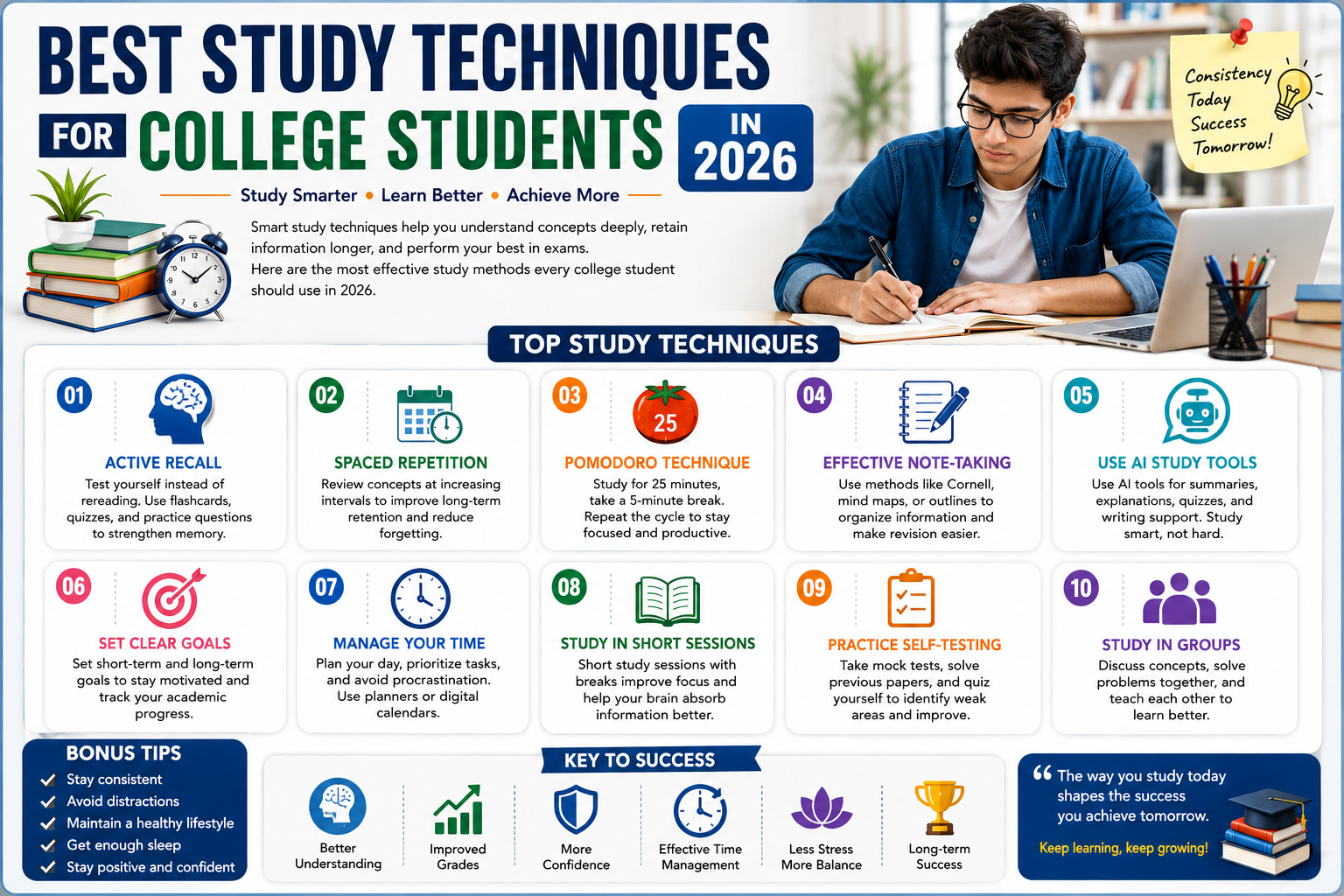

College life in 2026 is more competitive and fast-paced than ever before. Students are expected to manage lectures, assignments, online learning platforms, internships, projects, and personal responsibilities all at once. With increasing academic pressure and digital distractions, using the right study techniques has become essential for success.
Why Effective Study Techniques Matter
Many students spend long hours studying but still struggle with poor results because they use ineffective methods.
Benefits of Good Study Techniques
- Improve memory retention
- Increase focus and concentration
- Reduce stress and burnout
- Help manage time efficiently
- Improve academic performance
- Build long-term learning skills
Using smart study strategies helps students learn faster and retain information more effectively.
Active Recall – The Most Powerful Study Method
Active recall is considered one of the most effective study techniques in 2026.
What Is Active Recall?
Active recall involves testing yourself instead of simply rereading notes or textbooks. The brain remembers information better when it actively retrieves knowledge.
How to Practice Active Recall
- Use flashcards
- Solve practice questions
- Quiz yourself regularly
- Explain concepts without notes
Why It Works
Active recall strengthens neural connections and improves long-term memory retention.
Example
Instead of reading a biology chapter repeatedly, close the book and try to explain the topic from memory.
Spaced Repetition for Long-Term Memory
Spaced repetition is another highly effective study method.
What Is Spaced Repetition?
It involves reviewing information at increasing time intervals instead of cramming everything at once.
Benefits
- Improves long-term memory
- Reduces forgetting
- Makes revision more efficient
Popular Spaced Repetition Apps
- Anki
- Quizlet
- RemNote
Students who use spaced repetition often perform better in exams because they review information consistently over time.
The Pomodoro Technique for Better Focus
The Pomodoro Technique helps students maintain concentration while preventing mental exhaustion.
How the Pomodoro Technique Works
- Study for 25 minutes
- Take a 5-minute break
- Repeat four times
- Take a longer break
Benefits
- Improves productivity
- Reduces procrastination
- Prevents burnout
- Increases concentration
This method is especially useful for students who struggle with distractions or long study sessions.
Digital Note-Taking Techniques
Digital learning continues to dominate education in 2026.
Best Digital Note-Taking Apps
- Notion
- OneNote
- GoodNotes
- Evernote
Effective Note-Taking Methods
Cornell Method
Divides notes into:
- Main notes
- Key points
- Summary section
Mind Mapping
Uses diagrams to connect ideas visually.
Outline Method
Organizes information using headings and bullet points.
Benefits of Digital Notes
- Easy organization
- Fast searching
- Cloud backup
- Multimedia integration
Students should review notes regularly instead of only before exams.
Use AI Study Tools Wisely
Artificial intelligence is transforming education in 2026.
Popular AI Study Tools
- ChatGPT
- Grammarly
- Quizlet AI
- Notion AI
How AI Helps Students
- Generates summaries
- Explains difficult topics
- Creates quizzes
- Improves writing quality
- Organizes study schedules
Important Tip
AI should support learning, not replace critical thinking and personal understanding.
Create a Productive Study Environment
Your surroundings directly affect concentration and motivation.
Features of a Good Study Space
- Comfortable seating
- Good lighting
- Quiet atmosphere
- Organized desk
- Minimal distractions
Tips for Better Focus
- Keep phones away
- Use noise-canceling headphones
- Study in libraries or quiet rooms
A clean and organized environment improves mental clarity and productivity.
Time Management Strategies for Students
Time management is one of the most important academic skills.
Common Time Management Problems
- Procrastination
- Poor planning
- Multitasking
- Overcommitting
Effective Time Management Tips
- Use planners or digital calendars
- Prioritize important tasks
- Break assignments into smaller goals
- Set deadlines early
The 80/20 Rule
Focus on the 20% of study activities that produce 80% of results.
Study in Short Sessions Instead of Cramming
Cramming may help temporarily but often leads to poor long-term retention.
Why Short Study Sessions Work Better
- Improves concentration
- Prevents mental fatigue
- Enhances understanding
Recommended Study Duration
- 30–60 minutes per session
- Short breaks between sessions
Frequent short sessions are more effective than marathon study nights.
Practice Self-Testing Regularly
Self-testing is one of the best ways to prepare for exams.
Effective Self-Testing Methods
- Mock exams
- Practice quizzes
- Flashcards
- Writing summaries from memory
Benefits
- Identifies weak areas
- Builds confidence
- Improves exam performance
Testing yourself regularly strengthens learning more effectively than passive reading
Group Study and Collaborative Learning
Group study can be highly effective when managed properly.
Benefits of Group Study
- Sharing ideas
- Solving difficult problems together
- Improving communication skills
- Increasing motivation
Tips for Successful Group Study
- Keep groups small
- Stay focused on goals
- Avoid social distractions
Collaborative learning helps students understand concepts from different perspectives.
Improve Reading and Comprehension Skills
College students often need to process large amounts of information quickly.
Active Reading Techniques
- Highlight key points
- Take notes while reading
- Summarize chapters
- Ask questions during reading
Skimming vs Deep Reading
- Skimming helps with overview
- Deep reading improves understanding
Strong reading skills improve overall academic performance.
Prioritize Sleep and Mental Health
Mental and physical health strongly affect learning ability.
Importance of Sleep
Sleep helps:
- Consolidate memory
- Improve concentration
- Boost cognitive performance
Healthy Student Habits
- Exercise regularly
- Eat nutritious foods
- Stay hydrated
- Manage stress
Students who maintain healthy lifestyles generally perform better academically.
Avoid Multitasking While Studying
Many students believe multitasking improves productivity, but research shows the opposite.
Problems With Multitasking
- Reduced concentration
- Lower memory retention
- Increased mistakes
Better Alternative
Focus on one subject or task at a time for deeper learning.
Single-tasking improves efficiency and understanding.
Set Clear Academic Goals
Goal-setting helps students stay motivated and organized.
Types of Academic Goals
Short-Term Goals
- Finish assignments on time
- Improve weekly quiz scores
Long-Term Goals
- Achieve target GPA
- Prepare for future careers
SMART Goal Method
Goals should be:
- Specific
- Measurable
- Achievable
- Relevant
- Time-bound
Clear goals provide direction and purpose.
Stay Consistent and Disciplined
Consistency is more important than studying intensely once in a while.
How to Build Consistency
- Study daily
- Create routines
- Track progress
- Reward achievements
Small daily efforts lead to long-term academic success.
Source
https://sl1nk.com/502eg32
https://sl1nk.com/6ysnbo8
Conclusion
In 2026, successful college students use smart study techniques rather than relying on long, stressful study hours. Methods like active recall, spaced repetition, Pomodoro sessions, self-testing, and AI-powered learning tools can dramatically improve productivity and academic performance.
Effective studying also requires proper time management, healthy habits, focused environments, and consistency. Every student learns differently, so experimenting with different techniques can help identify the most effective personal learning style.
By applying these study techniques regularly, students can reduce stress, improve grades, and develop lifelong learning skills that support future career success
FAQs
What is the best study technique for college students?
Active recall and spaced repetition are considered among the most effective study methods for long-term learning.
How many hours should college students study daily?
Most students benefit from 2–4 focused study hours daily outside class time.
Is studying every day better than cramming?
Yes. Daily study sessions improve memory retention and reduce exam stress.
What are the best apps for studying in 2026?
Popular study apps include Notion, Quizlet, Anki, OneNote, and AI-powered learning tools.
Does the Pomodoro Technique really work?
Yes. It improves focus, reduces procrastination, and helps prevent burnout.