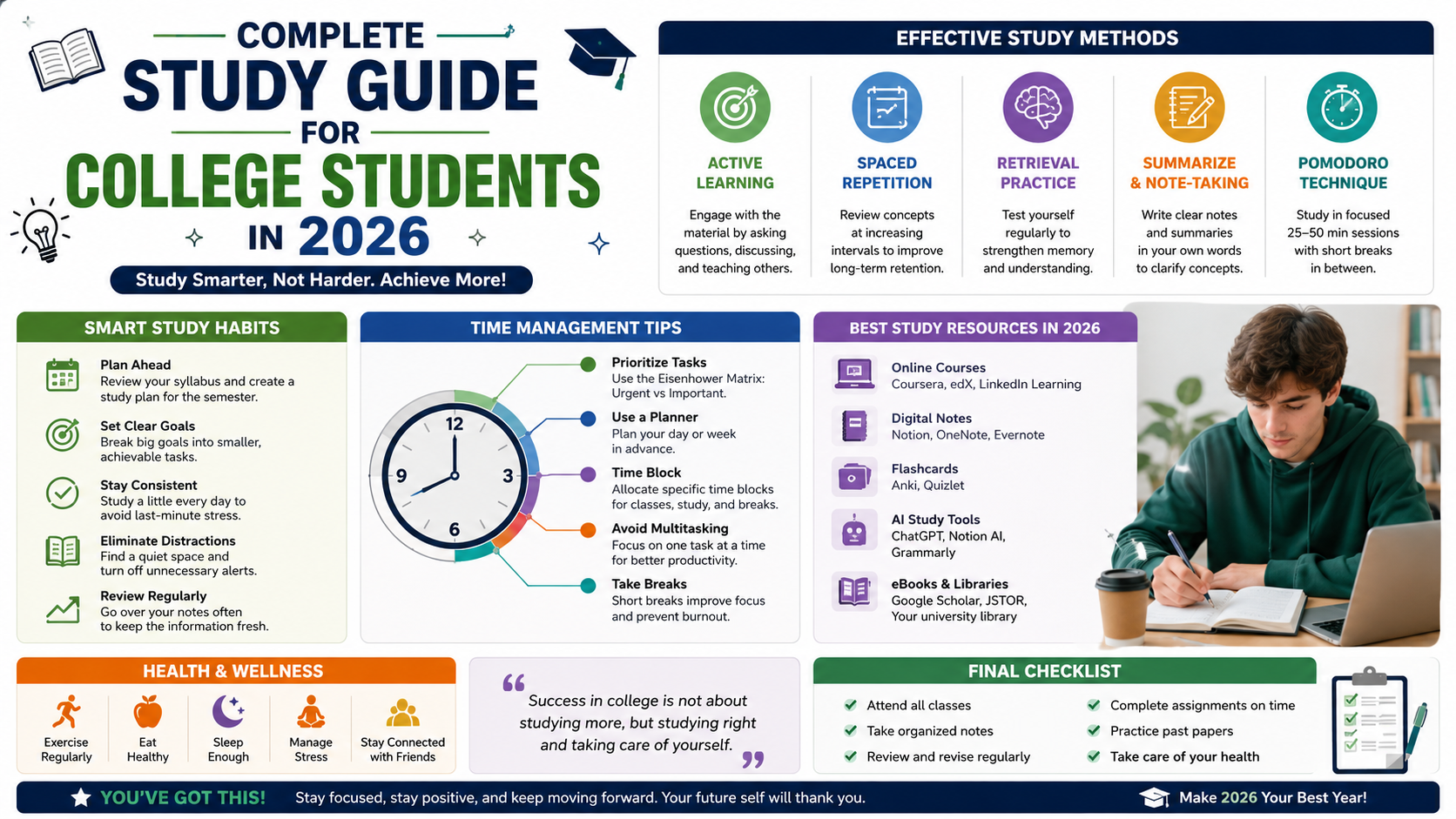

College life in 2026 is more competitive and fast-paced than ever before. Students are expected to manage academics, assignments, projects, internships, extracurricular activities, and personal responsibilities all at the same time. With the rapid growth of technology, online learning platforms, and digital distractions, maintaining focus and achieving academic success can be challenging for many students.
Why Effective Study Habits Matter
Good study habits are essential for academic success because they help students learn more efficiently and reduce stress during exams and assignments.
Students with effective study habits often:
- Understand concepts faster
- Retain information longer
- Perform better in exams
- Reduce procrastination
- Stay organized and productive
- Experience less academic stress
Developing the right habits early in college can improve long-term academic and career success.
Create a Dedicated Study Space
A proper study environment plays a major role in concentration and productivity.
Students should choose a quiet and comfortable study area with:
- Good lighting
- Comfortable seating
- Minimal distractions
- Organized study materials
- Stable internet connection if needed
A clean and distraction-free environment helps students focus better and complete tasks more efficiently.
Set Clear Academic Goals
Setting goals gives students direction and motivation.
Examples of useful academic goals include:
- Improving GPA
- Completing assignments before deadlines
- Studying consistently every day
- Preparing early for exams
- Developing better note-taking skills
Goals should be realistic, measurable, and achievable. Clear goals help students stay focused and organized.
Learn Effective Time Management
Time management is one of the most important skills college students need in 2026.
Students can improve time management by:
- Creating daily schedules
- Using planners or calendar apps
- Setting reminders for deadlines
- Prioritizing important tasks
- Breaking large tasks into smaller steps
Managing time properly reduces stress and improves productivity.
Create a Study Schedule
A study schedule helps students organize study sessions and maintain consistency.
An effective study schedule should include:
- Class timings
- Study sessions
- Assignment work
- Revision periods
- Breaks and relaxation
- Exercise and sleep
Students should avoid unrealistic schedules that are difficult to maintain.
Use Active Learning Techniques
Passive reading is often ineffective because students may quickly forget information.
Active learning methods help students engage with the material more effectively.
Useful active learning strategies include:
- Taking handwritten notes
- Solving practice questions
- Teaching concepts to others
- Using flashcards
- Participating in study groups
- Summarizing topics in your own words
These methods improve understanding and long-term memory retention.
Improve Note-Taking Skills
Good notes help students revise efficiently before exams.
Popular note-taking methods include:
Cornell Method
Divides notes into sections for key points, details, and summaries.
Mind Mapping
Uses diagrams and visual connections to organize information.
Outline Method
Organizes notes using headings and bullet points.
Students should choose a method that suits their learning style.
Avoid Procrastination
Procrastination is a major problem for many college students.
Delaying assignments and study sessions often leads to stress and poor performance.
Students can avoid procrastination by:
- Starting tasks early
- Setting small goals
- Using timers while studying
- Eliminating distractions
- Rewarding themselves after completing tasks
Consistency is more important than waiting for motivation.
Use the Pomodoro Technique
The Pomodoro Technique is a highly effective productivity method.
This strategy involves:
- Studying for 25 minutes
- Taking a 5-minute break
- Repeating the cycle four times
- Taking a longer break afterward
Short, focused sessions help students maintain concentration and avoid mental exhaustion.
Eliminate Digital Distractions
Social media and smartphones are among the biggest distractions for students.
To improve focus, students should:
- Turn off notifications
- Use website blockers if needed
- Keep phones away during study sessions
- Study in quiet environments
Reducing distractions helps students complete work faster and with better concentration.
Prepare Effectively for Exams
Exam preparation should begin early instead of relying on last-minute cramming.
Students should:
- Revise regularly throughout the semester
- Practice previous exam papers
- Focus on understanding concepts
- Create summary notes for revision
- Identify weak areas early
Consistent preparation reduces stress and improves confidence during exams.
Maintain Physical Health
Physical health directly affects concentration, memory, and productivity.
Get Enough Sleep
Students should aim for 7–8 hours of sleep daily. Proper sleep improves memory retention and focus.
Eat Healthy Foods
Nutritious foods such as fruits, vegetables, nuts, eggs, and whole grains support brain function and energy levels.
Exercise Regularly
Physical activity reduces stress and improves mental clarity. Even short walks or stretching sessions can improve productivity.
Take Care of Mental Health
Mental well-being is equally important for academic success.
Students can maintain mental health by:
- Taking regular breaks
- Practicing meditation or deep breathing
- Spending time with supportive friends and family
- Avoiding excessive stress
- Seeking help when needed
Healthy mental habits improve focus, motivation, and emotional balance.
Participate in Group Study Sessions
Group study can help students learn more effectively when managed properly.
Benefits include:
- Sharing knowledge
- Solving doubts quickly
- Learning different perspectives
- Improving communication skills
However, study groups should remain focused and avoid becoming social distractions.
Use Technology Wisely
Technology can either improve or reduce productivity depending on how it is used.
Helpful tools for students include:
- Google Calendar
- Notion
- Evernote
- Quizlet
- Microsoft To Do
- Educational video platforms
Students should use technology as a learning aid rather than a source of distraction.
Develop Strong Communication Skills
Communication skills are important for academic presentations, group projects, internships, and future careers.
Students can improve communication by:
- Participating in discussions
- Giving presentations
- Joining clubs or organizations
- Practicing public speaking
Strong communication skills increase confidence and career opportunities.
Balance College Life and Studies
College life should not revolve only around academics.
Students should also make time for:
- Hobbies and interests
- Social activities
- Exercise and relaxation
- Family and friends
Maintaining balance reduces burnout and improves overall well-being.
Common Mistakes Students Should Avoid
Many students unintentionally reduce productivity through poor habits.
Common mistakes include:
- Studying without breaks
- Ignoring sleep
- Cramming before exams
- Multitasking while studying
- Spending excessive time on social media
- Following unrealistic schedules
Avoiding these habits can improve academic performance and reduce stress.
Conclusion
College life in 2026 presents both opportunities and challenges for students. Success in college requires more than intelligence or long study hours. It depends on effective study habits, time management, self-discipline, healthy routines, and a balanced lifestyle.
By creating proper study schedules, using active learning techniques, avoiding distractions, and maintaining physical and mental health, students can improve productivity and achieve better academic results. Consistency and smart planning are the keys to long-term success.
Every student learns differently, so it is important to find study methods that match personal strengths and preferences. With dedication, organization, and positive habits, college students can enjoy a successful and rewarding academic journey in 2026.
FAQs
1. What are the best study techniques for college students?
Active learning methods such as taking notes, solving practice questions, using flashcards, and teaching concepts to others are highly effective.
2. How many hours should college students study daily?
Most students benefit from 2–4 hours of focused study outside classroom time, depending on their workload.
3. How can students improve concentration while studying?
Students can improve focus by eliminating distractions, using study timers, taking breaks, and maintaining healthy sleep habits.
4. Why is time management important in college?
Time management helps students stay organized, reduce stress, complete assignments on time, and balance academics with personal life.
5. What is the Pomodoro Technique?
The Pomodoro Technique involves studying in short focused sessions followed by small breaks to improve concentration and productivity.