
Learn how to choose the right college course after 12th in 2026. Explore career options, important factors to consider, popular courses, and tips to make an informed decision for your future.
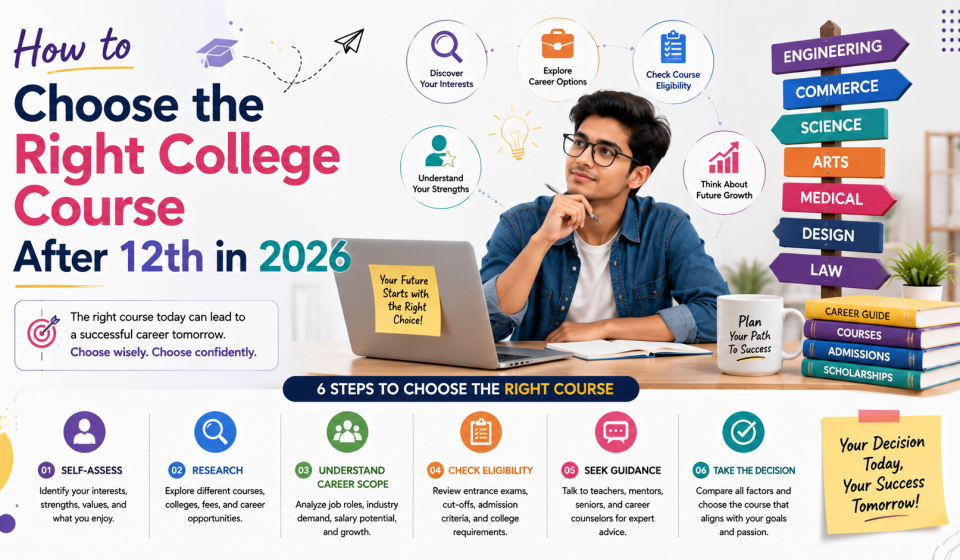
Choosing the right college course after completing Class 12 is one of the most important decisions a student can make. The course you select can influence your future career, higher education opportunities, and professional growth. With hundreds of degree, diploma, and certification programs available in 2026, many students find it challenging to decide which path best matches their interests, abilities, and long-term goals. Taking the time to research and evaluate your options can help you make a confident and informed choice.
The best college course is not always the most popular or highest-paying option. Instead, it should align with your strengths, interests, career aspirations, and learning style. By understanding different career paths, evaluating industry trends, and considering factors such as course curriculum, job opportunities, and skill requirements, students can build a strong foundation for long-term academic and career success.
Why Choosing the Right Course Matters
Selecting the right course affects both your education and your future career.
A well-chosen course can help you:
- Build relevant knowledge
- Develop professional skills
- Improve employability
- Increase career satisfaction
- Prepare for higher education
- Achieve long-term career goals
Making an informed decision reduces the chances of changing courses later.
Know Your Interests
Your interests should be one of the first factors to consider.
Ask yourself:
- Which subjects do I enjoy most?
- What activities motivate me?
- What kind of work would I enjoy every day?
- Which skills do I naturally perform well?
Choosing a course that matches your interests often leads to better academic performance and greater career satisfaction.
Identify Your Strengths
Understanding your strengths helps you select a course that matches your abilities.
Consider your:
- Academic performance
- Communication skills
- Analytical thinking
- Creativity
- Leadership abilities
- Technical skills
Selecting a course based on your strengths improves confidence and learning outcomes.
Explore Career Opportunities
Research careers connected to each course before making a decision.
Look for information about:
- Job roles
- Industry demand
- Career growth
- Salary potential
- Required qualifications
- Future opportunities
Understanding career prospects helps you plan beyond graduation.
Research Course Curriculum
Do not choose a course based only on its title.
Review the curriculum to understand:
- Subjects covered
- Practical training
- Internship opportunities
- Project work
- Skill development
- Assessment methods
A strong curriculum prepares students for real-world careers.
Consider Future Industry Trends
Many industries are changing because of technology and innovation.
Growing career fields include:
- Artificial Intelligence
- Data Science
- Cybersecurity
- Healthcare
- Renewable Energy
- Digital Marketing
- Software Development
- Financial Technology
Researching future trends helps students prepare for emerging career opportunities.
Popular College Courses After 12th
Students can choose from many educational pathways depending on their interests.
Popular options include:
- Bachelor of Technology (B.Tech)
- Bachelor of Science (B.Sc)
- Bachelor of Commerce (B.Com)
- Bachelor of Business Administration (BBA)
- Bachelor of Arts (BA)
- Bachelor of Computer Applications (BCA)
- Bachelor of Pharmacy (B.Pharm)
- Bachelor of Design (B.Des)
- Nursing
- Law (Integrated LLB)
The right choice depends on your career goals and personal interests.
Check College Reputation
The quality of the institution is as important as the course itself.
Consider:
- Accreditation
- Faculty qualifications
- Campus facilities
- Placement records
- Internship opportunities
- Student support services
A reputable college can provide better learning experiences and career opportunities.
Evaluate Costs and Financial Planning
Education is a long-term investment.
Consider:
- Tuition fees
- Accommodation costs
- Study materials
- Scholarships
- Financial aid
- Education loans if required
Planning your finances helps avoid unexpected challenges during your studies.
Seek Career Guidance
Career counselors, teachers, and mentors can provide valuable advice.
They can help you:
- Understand your strengths
- Explore career options
- Compare different courses
- Set career goals
- Make informed decisions
Professional guidance can reduce confusion and increase confidence.
Develop Essential Skills
Regardless of the course you choose, employers value transferable skills.
Important skills include:
- Communication
- Critical thinking
- Problem-solving
- Teamwork
- Leadership
- Digital literacy
- Time management
- Adaptability
Developing these skills improves future employability.
Avoid Common Mistakes
Many students make decisions based on outside pressure rather than personal goals.
Avoid choosing a course because:
- Friends are selecting it.
- Family pressure alone influences the decision.
- It is currently popular.
- You only focus on salary.
- You have not researched career opportunities.
Careful planning leads to better long-term satisfaction.
Benefits of Choosing the Right College Course
Making the right decision offers many advantages.
These include:
- Better academic performance
- Increased career satisfaction
- Improved employability
- Higher confidence
- Better skill development
- Stronger professional growth
- Greater motivation
- Long-term career stability
- Better educational outcomes
- Increased future opportunities
Source Links
- https://www.ncs.gov.in
- https://www.ugc.gov.in
- https://www.aicte-india.org
- https://www.education.gov.in
Conclusion
Choosing the right college course after Class 12 is one of the most important decisions for your academic and professional future. By understanding your interests, evaluating your strengths, researching career opportunities, reviewing course curricula, and considering future industry trends, you can make a well-informed choice that aligns with your long-term goals. Taking the time to compare options and seek professional guidance can help you avoid common mistakes and build a strong foundation for success.
Remember that no single course guarantees success. Your dedication, willingness to learn, practical experience, and continuous skill development will play an equally important role in shaping your career. With careful planning and informed decision-making, you can confidently choose a college course that supports your ambitions and prepares you for the opportunities of 2026 and beyond.
Frequently Asked Questions (FAQs)
1. How do I choose the right college course after 12th?
Start by identifying your interests, strengths, career goals, and preferred subjects. Research different courses and compare their career opportunities before making a decision.
2. Should I choose a course based only on salary?
No. While salary is important, you should also consider your interests, skills, job satisfaction, and long-term career growth.
3. What are some popular college courses after 12th?
Popular options include B.Tech, B.Sc, B.Com, BBA, BA, BCA, B.Pharm, Nursing, Law, and Bachelor of Design.
4. Why is researching the course curriculum important?
The curriculum helps you understand what you will study, the practical training involved, and the skills you will develop.
5. How can career counseling help me?
Career counselors can assess your interests and strengths, explain career options, and guide you toward suitable courses.
6. Should I consider future industry trends before selecting a course?
Yes. Understanding future job market trends helps you choose a course with strong long-term career opportunities.
7. How important is the reputation of the college?
A recognized institution with experienced faculty, good infrastructure, and strong placement support can improve your learning experience and employment prospects.
8. What skills should I develop during college?
Focus on communication, teamwork, digital literacy, critical thinking, leadership, problem-solving, adaptability, and time management.
9. Is it okay to choose a different career path from my friends?
Absolutely. Your course should match your own interests, strengths, and career goals rather than someone else’s choices.
10. What is the biggest mistake students make when choosing a college course?
One of the biggest mistakes is selecting a course without proper research or choosing it only because it is popular or recommended by others.