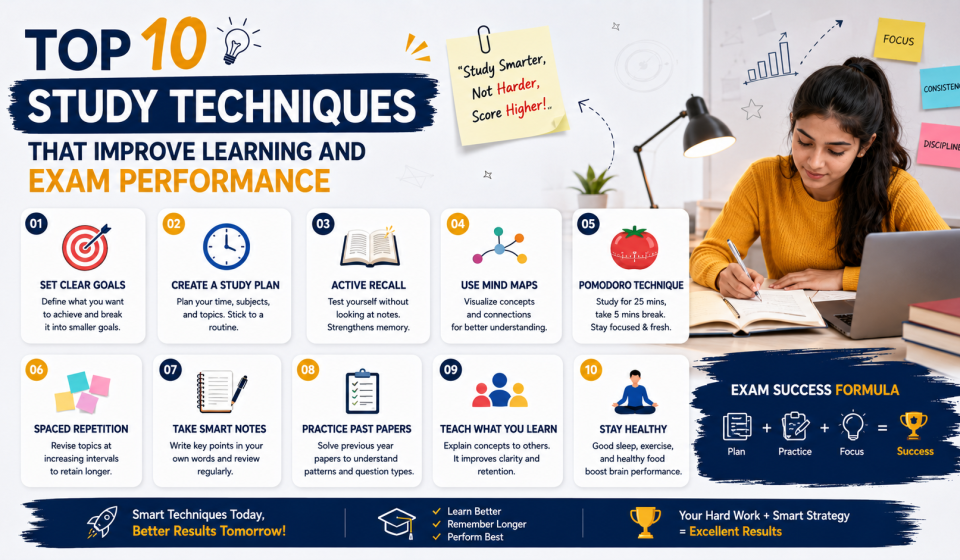

Discover the top 10 study techniques that improve learning and exam performance. Learn effective study methods, time management strategies, memory techniques, and revision tips for academic success.
Studying effectively is not about spending countless hours with books open on your desk. The key to academic success lies in using the right study techniques that help you understand concepts, remember information, and apply your knowledge during exams. Every student has a different learning style, but proven study methods can make learning more organized, enjoyable, and productive. By developing effective study habits, students can reduce stress, improve concentration, and perform better in school, college, and competitive examinations.
With increasing academic competition and growing course requirements, students need smart learning strategies rather than simply studying harder. Good study techniques help improve memory retention, boost confidence, and make revision more efficient. Whether you are preparing for board exams, university tests, or professional certifications, adopting the right approach can significantly improve both learning outcomes and exam performance.
Why Effective Study Techniques Matter
Using effective study methods helps students learn more efficiently and retain information for longer periods.
Benefits include:
- Better understanding of subjects
- Improved memory retention
- Higher exam scores
- Reduced study stress
- Increased confidence
- Better time management
Developing strong study habits supports long-term academic success.
1. Create a Study Schedule
A well-planned study timetable helps you stay organized and avoid last-minute preparation.
Tips for creating a study schedule:
- Set daily study goals.
- Study at the same time each day.
- Include regular breaks.
- Prioritize difficult subjects.
- Review your progress weekly.
Consistency improves learning and reduces procrastination.
2. Set Clear Learning Goals
Studying with specific objectives keeps you focused and motivated.
Examples include:
- Completing one chapter
- Solving practice questions
- Reviewing class notes
- Learning new concepts
- Preparing for weekly tests
Small goals make large tasks more manageable.
3. Use Active Learning
Active learning helps students understand concepts instead of simply memorizing them.
Active learning methods include:
- Asking questions
- Explaining concepts aloud
- Creating summaries
- Solving problems
- Teaching someone else
Engaging with the material improves long-term retention.
4. Practice Active Recall
Active recall is one of the most effective memory techniques.
Instead of repeatedly reading notes:
- Close your book.
- Try to remember key information.
- Write down important points.
- Check your answers.
- Repeat regularly.
This strengthens memory and improves recall during exams.
5. Apply Spaced Repetition
Spaced repetition involves reviewing information at increasing intervals.
For example:
- Review after one day.
- Review again after three days.
- Review after one week.
- Continue reviewing periodically.
This technique improves long-term memory retention.
6. Take Organized Notes
Good notes make revision easier and more effective.
Your notes should:
- Highlight key concepts.
- Use headings and bullet points.
- Include diagrams where appropriate.
- Summarize important ideas.
- Be easy to review.
Well-organized notes save time during exam preparation.
7. Practice with Sample Questions
Solving practice questions prepares you for real exam conditions.
Benefits include:
- Identifying weak areas
- Improving time management
- Understanding question patterns
- Building exam confidence
- Strengthening problem-solving skills
Regular practice improves overall performance.
8. Minimize Distractions
A distraction-free environment increases concentration.
Helpful strategies include:
- Turn off unnecessary notifications.
- Keep your study area organized.
- Study in a quiet place.
- Limit social media use.
- Focus on one task at a time.
Better concentration leads to more productive study sessions.
9. Take Regular Breaks
Studying continuously for long hours can reduce concentration.
Healthy study breaks help:
- Refresh your mind
- Improve focus
- Reduce fatigue
- Increase productivity
- Support better learning
Short breaks after focused study sessions improve efficiency.
10. Maintain a Healthy Lifestyle
Physical health directly affects academic performance.
Students should:
- Get enough sleep
- Eat nutritious meals
- Stay hydrated
- Exercise regularly
- Manage stress effectively
A healthy body supports better concentration and memory.
Additional Tips for Exam Success
Students can improve exam performance by following these habits:
- Start preparing early.
- Revise consistently.
- Practice previous exam papers.
- Stay positive and confident.
- Avoid last-minute cramming.
- Ask teachers for clarification when needed.
Good preparation reduces exam anxiety.
Common Study Mistakes to Avoid
Avoid these common habits:
- Procrastinating
- Studying without a plan
- Memorizing without understanding
- Ignoring weak subjects
- Skipping revision
- Studying while distracted
Recognizing these mistakes helps improve learning efficiency.
Benefits of Effective Study Techniques
Using proven study methods provides many long-term advantages.
These include:
- Better academic performance
- Improved memory
- Stronger critical thinking
- Greater confidence
- Reduced stress
- Better time management
- Increased motivation
- Improved concentration
- Higher exam scores
- Lifelong learning skills
Source Links
- https://www.unesco.org
- https://www.khanacademy.org
- https://www.coursera.org
- https://www.edutopia.org
Conclusion
Effective study techniques help students learn more efficiently, retain information longer, and perform better in examinations. Methods such as active recall, spaced repetition, organized note-taking, regular practice, and good time management allow students to build strong learning habits that support academic success. Combining these techniques with healthy lifestyle choices and consistent revision creates a balanced approach to studying.
Academic success is not determined by the number of hours spent studying but by the quality of your learning methods. By adopting these ten proven study techniques and remaining committed to continuous improvement, students can develop confidence, reduce exam stress, and achieve their educational goals with greater success.
Frequently Asked Questions (FAQs)
1. What is the most effective study technique?
Active recall and spaced repetition are widely recognized as two of the most effective study techniques for long-term memory and exam preparation.
2. How many hours should I study each day?
The ideal study time depends on your workload and learning needs. Consistent, focused study sessions are generally more effective than studying for long hours without breaks.
3. Why is active recall effective?
Active recall strengthens memory by encouraging you to retrieve information instead of simply rereading it.
4. What is spaced repetition?
Spaced repetition is a study method that reviews information at gradually increasing intervals to improve long-term retention.
5. How can I improve concentration while studying?
Study in a quiet environment, remove distractions, create a schedule, and take regular breaks to maintain focus.
6. Should I study every day?
Yes. Regular daily study sessions help build consistent learning habits and reduce the need for last-minute preparation.
7. Are practice tests useful?
Yes. Practice tests improve time management, identify weak areas, and increase confidence before exams.
8. How important is sleep during exam preparation?
Adequate sleep supports memory, concentration, and overall cognitive performance, making it essential for effective learning.
9. What are the biggest study mistakes students make?
Common mistakes include procrastination, lack of planning, passive reading, skipping revision, and studying with distractions.
10. Can these study techniques help with competitive exams?
Yes. These techniques are effective for school exams, college tests, entrance exams, and professional certification examinations.