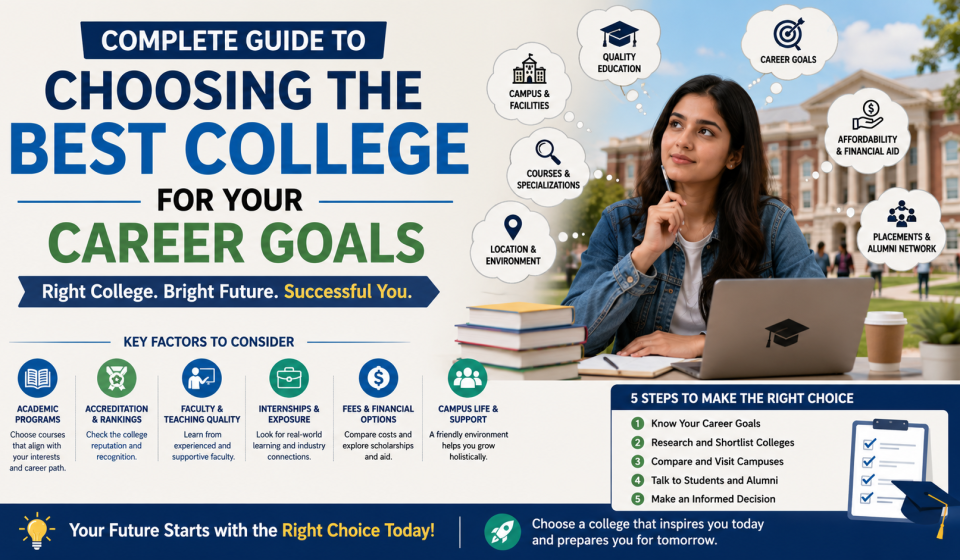

Learn how to choose the best college for your career goals with practical tips on selecting courses, evaluating colleges, understanding costs, and preparing for future career success.
Choosing the right college is one of the most important decisions a student will make. The college you attend can influence your education, career opportunities, professional network, and personal development. With thousands of colleges offering different programs, facilities, and learning environments, selecting the right one may seem overwhelming. However, making an informed decision based on your career goals can help you build a strong foundation for future success.
A good college is more than just a well-known name. It should provide quality education, experienced faculty, modern facilities, internship opportunities, career guidance, and industry connections that support your long-term ambitions. This guide explains the key factors to consider when choosing the best college so you can make a confident and informed decision.
Why Choosing the Right College Matters
The college you choose plays a significant role in shaping your academic and professional future.
Benefits of selecting the right college include:
- Better education quality
- Strong career opportunities
- Industry exposure
- Skill development
- Internship opportunities
- Professional networking
- Higher employability
- Personal growth
A well-informed decision can make your college experience more rewarding and prepare you for long-term career success.
Define Your Career Goals
Before selecting a college, identify your career interests and long-term objectives.
Ask yourself questions such as:
- Which subjects do I enjoy most?
- What career do I want to pursue?
- What skills do I want to develop?
- Do I prefer practical or research-based learning?
- Would I like to study locally or abroad?
- What industries interest me?
- What salary expectations do I have?
- What kind of work environment suits me?
Clear career goals make it easier to narrow down suitable colleges and programs.
Choose the Right Course
Your chosen course should align with your career aspirations rather than simply following popular trends.
Consider factors such as:
- Course curriculum
- Industry relevance
- Career opportunities
- Internship availability
- Skill development
- Accreditation
- Future job demand
- Opportunities for higher education
Selecting the right course is just as important as choosing the right college.
Research College Reputation
A college’s reputation can influence learning opportunities and employer recognition.
Evaluate colleges based on:
- Academic performance
- Accreditation
- Faculty qualifications
- Student reviews
- Graduation rates
- Employer reputation
- Research opportunities
- Industry partnerships
Researching multiple colleges helps you compare options objectively.
Check Campus Facilities
Modern facilities create a better learning environment.
Important facilities include:
- Well-equipped classrooms
- Science laboratories
- Computer labs
- Libraries
- Sports facilities
- Student activity centers
- Hostel accommodation
- Wi-Fi access
A supportive campus environment contributes to both academic and personal development.
Evaluate Faculty and Teaching Quality
Experienced faculty members help students build practical knowledge and professional skills.
Consider:
- Faculty qualifications
- Teaching experience
- Student-to-faculty ratio
- Research achievements
- Industry experience
- Mentorship opportunities
- Classroom engagement
- Academic support
Quality teaching has a lasting impact on your educational experience.
Look for Internship and Placement Opportunities
Career-focused colleges provide opportunities to gain real-world experience before graduation.
Important factors include:
- Internship programs
- Campus recruitment
- Industry collaborations
- Placement support
- Career counseling
- Resume workshops
- Interview preparation
- Alumni network
Strong placement services improve your chances of securing employment after graduation.
Consider College Fees and Financial Aid
Education is a long-term investment, so evaluate costs carefully.
Review:
- Tuition fees
- Hostel charges
- Transportation costs
- Examination fees
- Scholarship opportunities
- Financial aid programs
- Student loans
- Part-time work opportunities
Choosing a college within your budget reduces financial stress during your studies.
Explore Student Life
College is about more than academics.
Look for opportunities such as:
- Student clubs
- Cultural activities
- Sports competitions
- Leadership programs
- Volunteer work
- Entrepreneurship cells
- Innovation labs
- Networking events
An active campus life helps students develop confidence, communication skills, and teamwork.
Visit the Campus if Possible
A campus visit provides valuable insights that websites cannot always show.
During your visit, observe:
- Classroom environment
- Campus cleanliness
- Student interactions
- Faculty accessibility
- Library resources
- Laboratory equipment
- Safety measures
- Overall atmosphere
Speaking with current students can also help you understand campus life better.
Common Mistakes to Avoid
Many students make avoidable mistakes when selecting a college.
Avoid these common errors:
- Choosing based only on rankings
- Following friends without research
- Ignoring accreditation
- Overlooking placement records
- Not comparing multiple colleges
- Ignoring course quality
- Focusing only on tuition fees
- Making rushed decisions
Careful research helps you make a smarter choice.
Source Links
https://www.educationusa.state.gov
https://www.topuniversities.com
Conclusion
Choosing the best college for your career goals requires thoughtful planning, careful research, and a clear understanding of your personal interests and professional ambitions. By evaluating factors such as course quality, faculty expertise, campus facilities, internship opportunities, placement support, and financial considerations, you can select a college that supports both your academic growth and long-term career success.
Remember that success depends not only on the college you choose but also on the effort, dedication, and skills you develop during your education. Stay focused on your goals, continue learning, participate in internships and extracurricular activities, and make the most of every opportunity. A well-chosen college can provide the knowledge, experience, and confidence needed to build a successful and fulfilling career.
Frequently Asked Questions (FAQs)
1. How do I choose the best college for my career goals?
Start by identifying your career interests, researching accredited colleges, comparing courses, checking placement records, evaluating faculty quality, and considering your budget.
2. Why is college accreditation important?
Accreditation ensures that a college meets recognized educational standards and that employers and universities value its qualifications.
3. Should I choose a college based only on rankings?
No. Rankings are useful, but you should also consider course quality, faculty, internships, campus facilities, placement support, and your personal goals.
4. How important are internships during college?
Internships provide practical experience, improve professional skills, expand your network, and increase your chances of securing a job after graduation.
5. What should I check before applying to a college?
Review the curriculum, faculty, accreditation, campus facilities, placement statistics, tuition fees, scholarship opportunities, and student reviews.
6. Can extracurricular activities help my career?
Yes. Activities such as student clubs, leadership roles, volunteering, and competitions help develop communication, teamwork, and leadership skills valued by employers.
7. How can I reduce the cost of college education?
Look for scholarships, grants, financial aid, part-time work opportunities, and affordable colleges that still provide quality education.
8. Is choosing the right course more important than choosing the college?
Both are important. A quality course that aligns with your career goals, combined with a supportive college environment, provides the best foundation for future success.