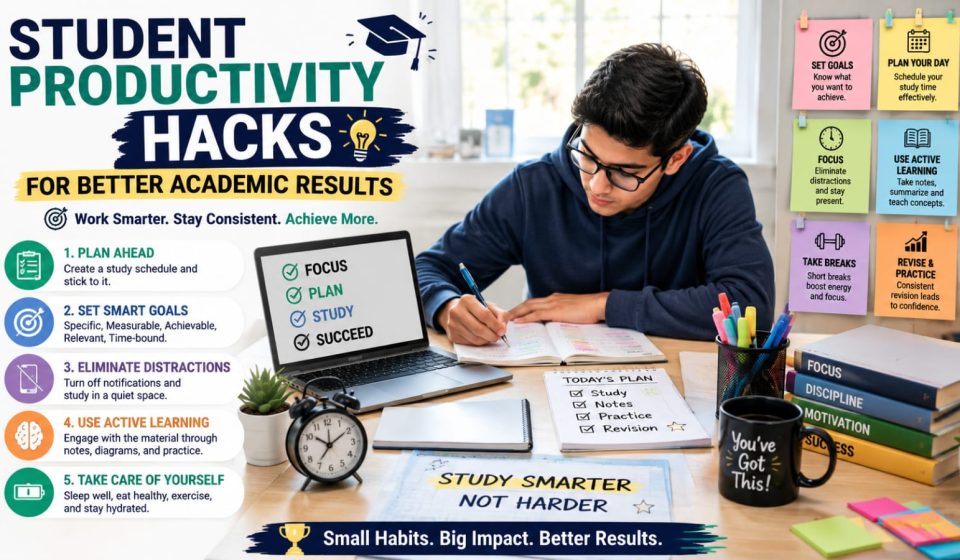

Discover the best student productivity hacks to improve academic results. Learn practical study strategies, time management techniques, and daily habits that help students stay focused, organized, and successful.
Academic success is not only about studying for long hours but also about studying smarter. Many students struggle to balance classes, assignments, extracurricular activities, and personal responsibilities, making productivity an essential skill. By adopting effective productivity habits, students can complete tasks more efficiently, reduce stress, and achieve better grades without feeling overwhelmed.
Modern technology and proven learning techniques have made it easier than ever for students to stay organized and focused. Whether you are preparing for school exams, college entrance tests, or university assignments, the right productivity strategies can improve concentration, boost motivation, and help you make the most of your study time. This guide explores practical productivity hacks that can support better academic performance and long-term learning success.
Why Student Productivity Matters
Being productive helps students use their time wisely and improve learning outcomes. Instead of spending hours studying without a clear plan, productive students focus on completing important tasks efficiently.
Benefits of improving productivity include:
- Better academic performance
- Reduced stress
- Improved time management
- Higher concentration
- Better organization
- Increased confidence
- More free time
- Consistent study habits
Developing productive routines makes learning more enjoyable and effective.
Set Clear Academic Goals
Having clear goals provides direction and keeps you motivated throughout the academic year.
Effective goals may include:
- Improving exam scores
- Completing assignments before deadlines
- Reading one chapter each day
- Learning a new skill every month
- Maintaining regular attendance
- Preparing early for exams
- Improving class participation
- Building stronger study habits
Break large goals into smaller tasks to make progress easier to track.
Create a Daily Study Schedule
A study timetable helps you stay organized and avoid last-minute preparation.
Tips for building a study schedule:
- Study at the same time each day
- Prioritize difficult subjects first
- Include regular short breaks
- Set realistic study sessions
- Review completed topics
- Keep time for revision
- Balance study and relaxation
- Adjust the schedule when necessary
Consistency is more effective than occasional long study sessions.
Eliminate Distractions
Maintaining focus is one of the biggest challenges students face.
Reduce distractions by:
- Turning off unnecessary notifications
- Keeping your phone away while studying
- Studying in a quiet environment
- Organizing your study desk
- Closing unrelated browser tabs
- Using website blockers if needed
- Informing family members during study time
- Listening to soft instrumental music if it improves concentration
A distraction-free environment improves productivity and learning efficiency.
Use Active Learning Techniques
Passive reading is often less effective than active learning.
Helpful study methods include:
- Taking handwritten notes
- Summarizing lessons in your own words
- Teaching concepts to others
- Solving practice questions
- Creating flashcards
- Drawing mind maps
- Reviewing mistakes
- Participating in group discussions
Active learning improves understanding and long-term memory.
Practice Effective Time Management
Good time management allows students to complete more work without unnecessary pressure.
Useful techniques include:
- Prioritize important tasks
- Use a to-do list
- Set daily study goals
- Break large assignments into smaller parts
- Avoid multitasking
- Finish one task before starting another
- Use timers to stay focused
- Review your progress every evening
Managing time well reduces procrastination and improves productivity.
Make Smart Use of Technology
Digital tools can help students stay organized and learn more efficiently.
Useful resources include:
- Note-taking apps
- Digital calendars
- Task management applications
- Online learning platforms
- Educational videos
- Flashcard apps
- Grammar checking tools
- Cloud storage services
Technology should support learning rather than become a distraction.
Maintain Healthy Study Habits
Physical and mental health have a direct impact on academic performance.
Healthy habits include:
- Getting enough sleep
- Eating nutritious meals
- Drinking enough water
- Exercising regularly
- Taking short study breaks
- Managing stress
- Maintaining good posture
- Practicing mindfulness when needed
Healthy students often perform better in the classroom.
Stay Motivated Throughout the Year
Motivation can change over time, but building consistent habits keeps you moving forward.
Ways to stay motivated include:
- Celebrate small achievements
- Reward yourself after completing tasks
- Study with positive classmates
- Track your progress
- Focus on long-term goals
- Learn from mistakes
- Stay positive during challenges
- Keep improving every day
Consistency is more valuable than occasional bursts of motivation.
Common Productivity Mistakes to Avoid
Avoiding common mistakes can improve study efficiency.
Common mistakes include:
- Procrastinating
- Cramming before exams
- Skipping revision
- Multitasking excessively
- Ignoring breaks
- Poor sleep habits
- Lack of planning
- Studying without clear goals
Recognizing these habits helps students develop more effective learning routines.
Source Links
https://learningcenter.unc.edu
Conclusion
Improving productivity is one of the most effective ways for students to achieve better academic results while maintaining a healthy balance between studies and personal life. By setting clear goals, creating structured study schedules, practicing active learning, managing time effectively, and minimizing distractions, students can make every study session more productive and enjoyable. Small daily improvements often lead to significant academic success over time.
Academic excellence is built through consistency rather than perfection. Students who develop positive study habits, make smart use of technology, maintain healthy lifestyles, and continue learning from their experiences will be better prepared for exams, future careers, and lifelong learning. Every productive habit you build today brings you one step closer to achieving your educational goals.
Frequently Asked Questions (FAQs)
1. What are productivity hacks for students?
Productivity hacks are practical techniques that help students study more efficiently, manage time effectively, and improve academic performance.
2. How can I stay focused while studying?
Study in a quiet place, remove distractions, keep your phone away, follow a schedule, and take regular short breaks to maintain concentration.
3. How many hours should a student study each day?
The ideal study time depends on individual goals and workload, but consistent daily study sessions are generally more effective than occasional long sessions.
4. What is the best way to manage study time?
Create a daily timetable, prioritize important tasks, use to-do lists, break assignments into smaller steps, and avoid procrastination.
5. Can technology improve student productivity?
Yes. Educational apps, digital calendars, note-taking tools, online courses, and task management applications can help students stay organized and learn efficiently.
6. Why are healthy habits important for academic success?
Good sleep, proper nutrition, regular exercise, hydration, and stress management improve concentration, memory, and overall learning performance.
7. What are the biggest productivity mistakes students make?
Common mistakes include procrastination, multitasking, poor planning, lack of revision, excessive screen time, and studying without clear goals.
8. How can students stay motivated throughout the school year?
Set realistic goals, celebrate progress, maintain a positive mindset, reward achievements, and focus on consistent daily improvement rather than perfection.