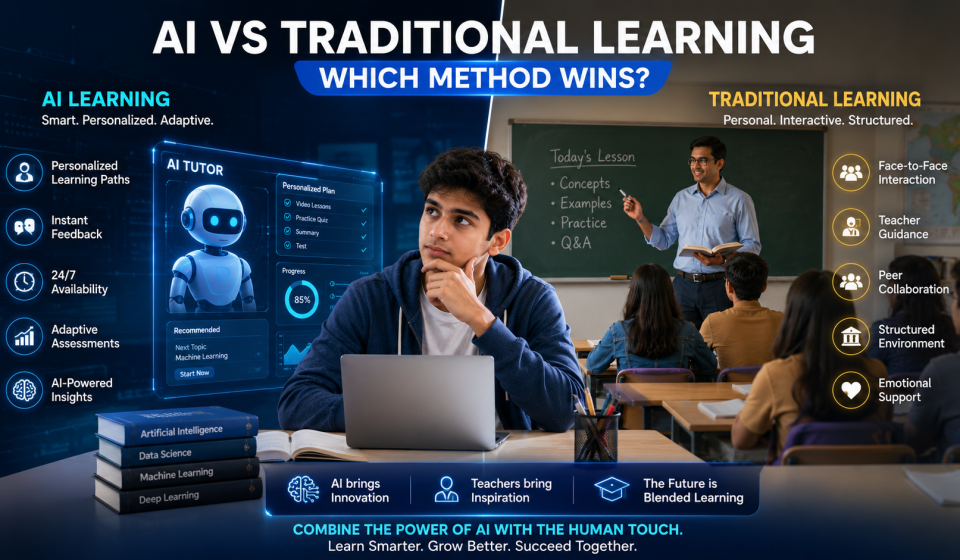

AI vs Traditional Learning: Discover the advantages, disadvantages, and key differences between AI-powered education and traditional learning methods. Find out which approach is more effective for students in 2026.
Education is evolving rapidly with the rise of Artificial Intelligence. Students today have access to AI-powered learning tools that can provide personalized tutoring, instant feedback, and adaptive learning experiences. At the same time, traditional learning methods continue to play a crucial role in classrooms worldwide.
This raises an important question: AI vs Traditional Learning—which method wins?
The answer is not as simple as choosing one over the other. Both approaches offer unique advantages and challenges. Let’s compare them in detail.
What Is AI Learning?
AI Learning refers to educational methods that use Artificial Intelligence to enhance learning experiences.
Examples include:
- AI tutors
- Personalized learning platforms
- ChatGPT
- AI-powered quizzes
- Adaptive learning systems
- Automated feedback tools
AI can analyze student performance and provide customized learning recommendations.
What Is Traditional Learning?
Traditional Learning is the conventional education system where teachers instruct students through classrooms, lectures, textbooks, and face-to-face interactions.
It focuses on:
- Classroom teaching
- Teacher guidance
- Group discussions
- Practical activities
- Structured learning environments
Traditional education has been the foundation of learning for centuries.
AI Learning vs Traditional Learning: Key Differences
Personalized Learning
AI Learning
AI adapts lessons based on individual strengths and weaknesses.
Benefits:
- Customized learning pace
- Targeted recommendations
- Personalized study plans
Traditional Learning
Teachers often teach an entire class using the same curriculum.
Benefits:
- Structured learning environment
- Consistent educational standards
Winner: AI Learning
Accessibility
AI Learning
Students can access educational resources anytime and anywhere.
Benefits:
- 24/7 availability
- Remote learning opportunities
- Global access to education
Traditional Learning
Learning is often limited to classroom hours.
Benefits:
- Direct supervision
- Scheduled learning routine
Winner: AI Learning
Human Interaction
AI Learning
AI provides automated responses but lacks emotional understanding.
Challenges:
- Limited emotional support
- Reduced social interaction
Traditional Learning
Teachers provide mentorship, motivation, and emotional support.
Benefits:
- Human connection
- Classroom discussions
- Teamwork opportunities
Winner: Traditional Learning
Cost Efficiency
AI Learning
Many AI tools offer affordable or free learning resources.
Benefits:
- Lower educational costs
- Reduced need for physical materials
Traditional Learning
Schools and colleges often involve higher expenses.
Challenges:
- Tuition fees
- Transportation costs
- Printed materials
Winner: AI Learning
Critical Thinking Development
AI Learning
Students may become dependent on automated answers if not used carefully.
Traditional Learning
Teachers encourage discussions, debates, and analytical thinking.
Benefits:
- Better reasoning skills
- Enhanced problem-solving abilities
Winner: Traditional Learning
Learning Speed
AI Learning
Students can learn at their own pace and revisit concepts instantly.
Benefits:
- Faster doubt-solving
- Immediate feedback
- Self-paced learning
Traditional Learning
Learning speed often depends on classroom schedules.
Winner: AI Learning
Motivation and Discipline
AI Learning
Requires strong self-discipline and independent learning habits.
Traditional Learning
Teachers and classroom environments help maintain accountability.
Benefits:
- Better routine
- Consistent supervision
Winner: Traditional Learning
Technology Integration
AI Learning
AI provides advanced tools such as:
- Virtual tutors
- Smart assessments
- Personalized recommendations
- Interactive learning platforms
Traditional Learning
Technology integration varies by institution.
Winner: AI Learning
Advantages of AI Learning
- Personalized education
- 24/7 availability
- Faster feedback
- Flexible learning schedules
- Improved accessibility
- Cost-effective resources
- Data-driven learning insights
Advantages of Traditional Learning
- Human interaction
- Emotional support
- Collaborative learning
- Better discipline
- Classroom discussions
- Teacher mentorship
- Social skill development
Challenges of AI Learning
- Limited human connection
- Technology dependence
- Potential distractions
- Internet requirements
- Privacy concerns
Challenges of Traditional Learning
- Fixed schedules
- Limited personalization
- Higher costs
- Slower feedback process
- Accessibility limitations
Which Method Wins in 2026?
The reality is that neither method completely replaces the other.
AI Learning excels in:
- Personalization
- Accessibility
- Speed
- Cost efficiency
Traditional Learning excels in:
- Human interaction
- Emotional support
- Social development
- Critical thinking
The most effective approach is a combination of both methods.
Students who use AI tools alongside traditional classroom learning can benefit from personalized support while still receiving guidance from teachers and peers.
The Future of Education
The future of education will likely involve a hybrid model where AI enhances traditional teaching rather than replacing it.
Expected trends include:
- AI-powered tutoring
- Smart classrooms
- Personalized learning pathways
- Adaptive assessments
- Enhanced teacher support tools
This combination can create a more effective and inclusive learning experience for students worldwide.
Sources
Conclusion
The debate between AI vs Traditional Learning does not have a single winner. AI offers personalization, flexibility, and instant support, while traditional learning provides mentorship, emotional intelligence, and valuable social interactions. The best educational approach in 2026 is a balanced combination of both methods. Students who leverage AI tools while benefiting from teacher guidance are likely to achieve the best learning outcomes and academic success.
Frequently Asked Questions (FAQs)
Is AI better than traditional learning?
AI is better for personalized learning and accessibility, while traditional learning is better for human interaction and mentorship.
Can AI replace teachers?
No. AI can support education but cannot fully replace the guidance, emotional support, and expertise of teachers.
What are the benefits of AI learning?
AI learning offers personalized study plans, instant feedback, flexible schedules, and improved accessibility.
What are the benefits of traditional learning?
Traditional learning provides classroom interaction, teacher guidance, teamwork, and social development.
Is AI learning cheaper than traditional education?
In many cases, yes. Many AI learning tools are free or affordable compared to traditional educational costs.
What are the disadvantages of AI learning?
AI learning may reduce human interaction, create dependency on technology, and require internet access.
Which learning method is best for students?
A combination of AI learning and traditional learning often produces the best results.
How does AI personalize learning?
AI analyzes student performance and adapts content, recommendations, and study plans accordingly.
What is the future of education?
Education is expected to combine AI technologies with traditional teaching methods to create personalized and effective learning experiences.
Can AI improve academic performance?
Yes. When used responsibly, AI can help students understand concepts faster, stay organized, and improve productivity.