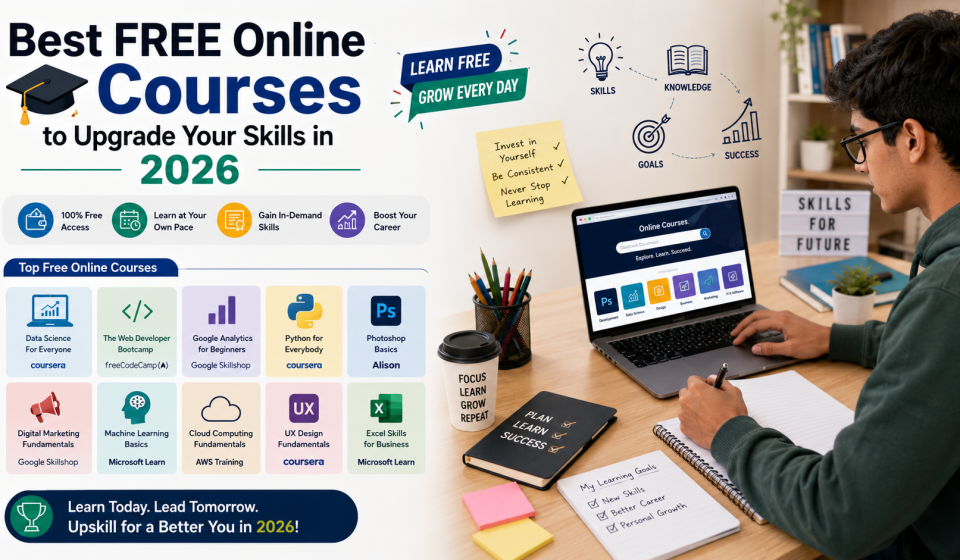

Discover the best free online courses to upgrade your skills in 2026. Explore top learning platforms, in-demand skills, career-focused courses, and tips to advance your education without spending money.
The demand for new skills continues to grow as technology, business, healthcare, and other industries evolve rapidly. In 2026, employers are looking for candidates who can adapt to changing workplace requirements, solve problems, communicate effectively, and use modern digital tools. Fortunately, learning these valuable skills no longer requires enrolling in expensive degree programs. Many trusted online learning platforms now offer high-quality courses for free, allowing students, graduates, job seekers, and working professionals to improve their knowledge from anywhere in the world. Whether you want to learn programming, digital marketing, project management, data analysis, communication, or personal development, free online courses provide an affordable and flexible way to stay competitive.
Online learning has also become more accessible than ever before. Most free courses include video lectures, quizzes, practical exercises, downloadable resources, and discussion forums that make learning interactive and engaging. Students can study at their own pace, revisit lessons whenever needed, and build practical skills that support academic success and career growth. By choosing courses from reputable educational platforms, learners can strengthen their resumes, prepare for future job opportunities, and develop lifelong learning habits without financial barriers.
Why Take Free Online Courses?
Free online courses offer an excellent opportunity to learn new skills without paying tuition fees.
Major benefits include:
- No enrollment cost
- Flexible learning schedule
- Learn from anywhere
- Self-paced study
- Career-focused skills
- Access to expert instructors
- Practical learning resources
- Continuous skill development
These advantages make online learning suitable for students and professionals alike.
Skills That Are in High Demand in 2026
Employers increasingly value practical skills that improve workplace productivity and innovation.
Popular skills include:
- Artificial Intelligence fundamentals
- Data analysis
- Digital marketing
- Cybersecurity
- Cloud computing
- Programming
- Project management
- Communication skills
- Financial literacy
- Graphic design
Learning these skills can improve employability across many industries.
Google Digital Garage
Google Digital Garage offers free courses designed to help learners build digital and professional skills.
Popular topics include:
- Digital marketing
- Career development
- Business growth
- Productivity tools
- Online communication
These courses are suitable for beginners and experienced learners.
Coursera Free Courses
Coursera provides free access to many university-level courses from leading institutions.
Students can learn:
- Computer science
- Business
- Data science
- Health
- Personal development
- Language learning
Many courses allow free auditing, while optional certificates may require payment.
edX Free Learning Programs
edX partners with world-renowned universities to provide free educational content.
Subjects include:
- Engineering
- Artificial intelligence
- Economics
- Computer programming
- Mathematics
- Environmental science
Learners gain access to high-quality academic materials from respected institutions.
Khan Academy
Khan Academy remains one of the best free educational platforms for students.
Courses cover:
- Mathematics
- Science
- Economics
- Computing
- History
- Grammar
- Test preparation
The platform is especially useful for school and college students.
Harvard Online Learning
Harvard offers several free online courses that introduce learners to university-level subjects.
Popular areas include:
- Computer science
- Public health
- Data science
- Leadership
- Entrepreneurship
These courses help learners explore advanced academic topics.
Microsoft Learn
Microsoft Learn provides free training for technology and cloud-related careers.
Learning paths include:
- Azure cloud services
- Artificial intelligence
- Data analytics
- Cybersecurity
- Software development
- Microsoft Office productivity
Interactive learning modules help students build practical technical skills.
LinkedIn Learning Free Resources
LinkedIn Learning occasionally provides free courses on professional development and workplace skills.
Common topics include:
- Leadership
- Communication
- Project management
- Time management
- Team collaboration
- Career planning
These resources support both students and working professionals.
Essential Soft Skills to Learn
Technical knowledge is important, but employers also value soft skills.
Important soft skills include:
- Communication
- Critical thinking
- Problem-solving
- Teamwork
- Adaptability
- Creativity
- Leadership
- Emotional intelligence
Developing these skills improves career opportunities in every industry.
Tips for Choosing the Right Course
Selecting the right course helps maximize learning outcomes.
Consider these factors:
- Your career goals
- Course quality
- Instructor expertise
- Learning objectives
- Practical assignments
- Student reviews
- Platform reputation
- Time commitment
Choose courses that align with your personal and professional goals.
How to Stay Consistent While Learning
Online learning requires self-discipline and regular practice.
Helpful strategies include:
- Create a study schedule
- Set weekly goals
- Complete assignments on time
- Take notes
- Practice new skills regularly
- Review lessons frequently
- Join online discussions
- Track your progress
Consistency is the key to mastering any new skill.
Benefits of Continuous Learning
Lifelong learning helps individuals remain competitive in a changing job market.
Long-term benefits include:
- Better career opportunities
- Increased confidence
- Higher productivity
- Improved problem-solving abilities
- Greater adaptability
- Professional growth
- Academic success
- Personal development
Continuous learning prepares students and professionals for future challenges.
Source Links
Conclusion
Free online courses have made high-quality education more accessible than ever before. Whether you are a student preparing for your future career, a graduate looking to strengthen your resume, or a professional seeking new opportunities, these learning platforms provide valuable knowledge without financial barriers. By focusing on in-demand skills such as digital marketing, artificial intelligence, programming, cybersecurity, communication, and project management, learners can remain competitive in today’s rapidly evolving job market.
The key to success is choosing courses that match your goals and committing to consistent learning. Completing practical assignments, reviewing lessons regularly, and applying newly acquired knowledge in real-world situations will help you gain confidence and develop meaningful expertise. As industries continue to change throughout 2026 and beyond, continuous learning will remain one of the most effective ways to achieve academic excellence, career growth, and long-term professional success.
Frequently Asked Questions (FAQs)
1. Are free online courses worth taking?
Yes. Many free online courses are created by reputable universities and organizations, providing valuable knowledge and practical skills.
2. Can free online courses improve my career opportunities?
Yes. Learning in-demand skills can strengthen your resume, improve your knowledge, and increase your employability.
3. Which skills are most valuable in 2026?
Artificial intelligence, data analysis, cybersecurity, cloud computing, digital marketing, programming, communication, and project management are among the most valuable skills.
4. Can I study online while working full-time?
Yes. Most free online courses are self-paced, allowing learners to study according to their own schedules.
5. Do free online courses provide certificates?
Some platforms offer free certificates, while others charge a fee for optional certificates even if the course content is free.
6. How much time should I spend learning each week?
Even 5–10 hours of focused learning each week can help you build valuable skills consistently.
7. Which platform is best for beginners?
Khan Academy, Google Digital Garage, Coursera, edX, and Microsoft Learn all offer beginner-friendly learning resources.
8. How can I stay motivated during online learning?
Set realistic goals, create a study schedule, track your progress, complete assignments, and celebrate small achievements.
9. Are online courses recognized by employers?
Many employers value skills gained through reputable online learning platforms, especially when combined with practical experience.
10. How do I choose the best online course?
Select courses based on your career goals, instructor quality, course content, platform reputation, and opportunities to apply what you learn.