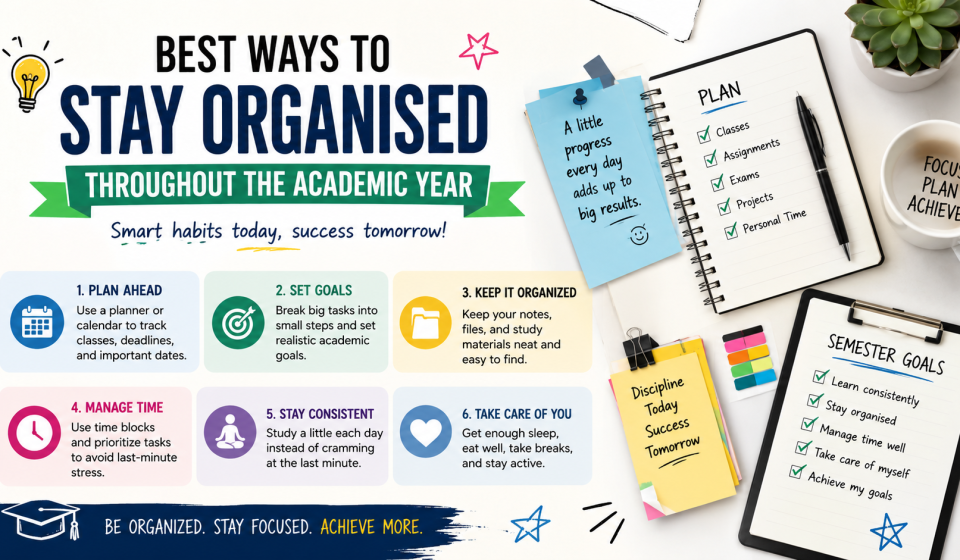

Discover the best ways to stay organised throughout the academic year with practical tips for planning, studying, managing deadlines, and reducing stress.
Staying organised throughout the academic year can make student life more manageable and productive. Classes, assignments, exams, projects, presentations, extracurricular activities, and personal responsibilities can quickly become difficult to balance without a clear system. Good organisation helps students understand what needs to be done, when it needs to be completed, and how to use their available time effectively.
Being organised does not mean planning every minute of every day. Instead, it means creating simple habits that make academic responsibilities easier to manage. A practical combination of calendars, to-do lists, organised study materials, realistic schedules, and regular reviews can help students stay on track throughout the semester.
Why Academic Organisation Matters
Students often have several deadlines at the same time. Without a reliable way to track responsibilities, important assignments can be forgotten or completed at the last minute.
Good organisation can help students:
- Keep track of deadlines.
- Plan study time effectively.
- Reduce last-minute work.
- Find notes and materials quickly.
- Balance academic and personal responsibilities.
- Prepare for examinations earlier.
- Monitor academic progress.
- Create more consistent study habits.
Organisation is therefore not only about keeping things tidy. It is also about making decisions about time, priorities, and responsibilities.
Create an Academic Calendar
One of the simplest ways to stay organised is to maintain a calendar for the entire academic year.
At the beginning of a semester or academic year, add important dates such as:
- Examination dates.
- Assignment deadlines.
- Project submissions.
- Presentations.
- Class schedules.
- Practical examinations.
- College events.
- Application deadlines.
- Important extracurricular activities.
A digital calendar can send reminders, while a physical planner can provide a quick visual overview. Choose the system you are most likely to use consistently.
Make a Weekly Study Plan
A yearly calendar shows major deadlines, but a weekly plan helps you manage everyday responsibilities.
At the beginning or end of each week, identify your most important academic tasks. Then divide them across the available days.
For example:
Monday: Review lecture notes and complete mathematics exercises.
Tuesday: Work on programming assignment.
Wednesday: Read the next chapter and prepare questions.
Thursday: Complete project research.
Friday: Review the week’s lessons.
A weekly plan should be realistic. Leaving some flexibility is important because unexpected responsibilities can arise.
Use a Daily To-Do List
A daily task list can help turn a large workload into manageable steps.
Instead of writing:
Complete project
break it down into:
- Choose project topic.
- Research three sources.
- Create project outline.
- Complete first section.
- Review information.
- Prepare final document.
Smaller tasks are easier to start and provide a clearer sense of progress.
Prioritize Important Tasks
Not every task requires the same level of urgency. Learning how to prioritize can prevent students from spending too much time on low-priority activities.
A simple approach is to divide tasks into:
- Urgent and important: Complete soon.
- Important but not urgent: Schedule dedicated time.
- Urgent but less important: Complete efficiently.
- Low priority: Do later when time is available.
Check upcoming deadlines before deciding what to work on each day.
Organize Your Study Materials
Disorganized notes and files can waste valuable study time. Create a simple system for storing academic materials.
For digital files, consider creating folders such as:
Academic Year → Semester → Subject → Notes / Assignments / Projects / Exams
Use clear file names instead of names such as “document1” or “newfile.”
For physical materials, use separate notebooks, folders, or binders for different subjects.
Keep Notes Consistent
Consistent note-taking makes revision easier. Try to use a similar structure for each subject.
For example:
Topic:
Important concepts:
Examples:
Questions:
Summary:
After class, spend a few minutes reviewing your notes while the material is still fresh.
Break Large Projects Into Smaller Steps
Large assignments can feel overwhelming when viewed as one task. Breaking them into stages makes the work easier to manage.
A research project might involve:
- Choosing a topic.
- Understanding the requirements.
- Researching reliable information.
- Creating an outline.
- Writing the first draft.
- Reviewing the content.
- Editing and proofreading.
- Preparing the final submission.
Set personal deadlines for each stage instead of waiting until the official deadline.
Avoid Procrastination
Procrastination can make academic organisation difficult. Students may delay work because an assignment seems difficult, boring, or time-consuming.
One useful strategy is to start with a small amount of work. Tell yourself that you will spend only a short period reviewing the material or completing the first step.
Once you begin, continuing is often easier than starting.
Use Time Blocks
Time blocking involves assigning specific periods to particular activities.
For example:
4:00–5:00: Mathematics study
5:00–5:30: Break
5:30–6:30: Programming project
7:30–8:00: Review notes
The purpose is not to create a rigid schedule. It is to give important tasks dedicated time and reduce the temptation to postpone them.
Keep Your Study Space Organised
Your physical environment can affect how easily you begin studying. A clean, prepared workspace can reduce distractions and make study materials easier to find.
Keep frequently used items nearby and remove unnecessary objects from your study area.
You do not need a perfect study room. Even a small, consistently organised space can be useful.
Manage Digital Distractions
Phones, social media, notifications, and entertainment can interrupt study sessions.
During focused study time, consider:
- Turning off unnecessary notifications.
- Keeping your phone away from your desk.
- Using website blockers when needed.
- Closing unrelated browser tabs.
- Using focus or do-not-disturb modes.
- Checking messages during planned breaks.
The goal is not to eliminate technology but to use it intentionally.
Review Your Progress Every Week
A weekly review can help you identify what is working and what needs adjustment.
Ask yourself:
- Did I complete my important tasks?
- Which assignments are coming next?
- Am I falling behind in any subject?
- Do I need additional study time?
- Are my notes organised?
- What should I prioritize next week?
This short review can prevent small delays from becoming larger problems.
Prepare for Exams Early
Exam preparation should not begin only a few days before the examination. Reviewing material regularly can make final revision more manageable.
Useful strategies include:
- Reviewing notes weekly.
- Practicing questions.
- Creating summaries.
- Using flashcards when appropriate.
- Identifying difficult topics early.
- Completing practice papers when available.
- Asking teachers or instructors about unclear concepts.
Spreading study over time can be more manageable than relying entirely on last-minute revision.
Balance Academics With Personal Life
Organisation should include time for rest and personal responsibilities. Constant studying without adequate breaks can make it difficult to maintain concentration and motivation.
Make room for:
- Sleep.
- Meals.
- Physical activity.
- Family time.
- Friends.
- Hobbies.
- Relaxation.
A balanced routine can make it easier to maintain consistent academic habits throughout the year.
Use the Right Productivity Tools
Students can use physical or digital tools depending on their preferences.
Useful options include:
- Calendar applications.
- Task-management apps.
- Digital note-taking tools.
- Cloud storage.
- Spreadsheets.
- Physical planners.
- Notebooks.
- Reminder applications.
The best tool is usually the one you will actually use consistently. Having too many productivity systems can create unnecessary complexity.
Keep a Backup of Important Academic Work
Losing an assignment or project can create unnecessary stress. Save important academic files in more than one location when possible.
For example, you can keep a working copy on your computer and a backup in reliable cloud storage or another secure location.
Regularly save important documents and avoid waiting until the final submission date to create backups.
Develop a Consistent Routine
Organisation becomes easier when it becomes a habit. Try to establish regular times for reviewing assignments, checking your calendar, organizing notes, and planning the next day.
A simple routine might include:
Morning: Check the day’s priorities.
After classes: Review important notes.
Evening: Complete priority tasks and prepare for tomorrow.
Weekly: Review deadlines and plan the upcoming week.
Consistency matters more than creating a complicated routine.
Common Organisation Mistakes Students Should Avoid
Trying to Remember Everything
Memory alone is not a reliable academic planning system. Write down deadlines and important responsibilities.
Creating Unrealistic Schedules
Planning ten hours of productive study every day may look impressive but can be difficult to maintain. Create schedules that match your actual time and energy.
Ignoring Small Tasks
Small assignments can accumulate quickly. Completing them regularly can prevent a large backlog.
Studying Only Before Exams
Last-minute studying can create unnecessary pressure. Regular review throughout the academic year can make exam preparation easier.
Using Too Many Apps
Switching between multiple planning systems can become confusing. Choose a small number of tools that meet your needs.
A Simple Academic Organisation Routine
A practical routine can look like this:
Daily: Check your schedule, complete priority tasks, and organize materials.
Weekly: Review upcoming deadlines and create a study plan.
Monthly: Review academic progress and adjust your goals.
Before exams: Create a revision plan and identify difficult topics.
End of semester: Organize notes, save important projects, and review achievements.
This system can be adjusted according to your course and personal responsibilities.
Source Links
https://learningcenter.unc.edu
https://www.cdc.gov/healthyschools
Conclusion
Staying organised throughout the academic year is about creating simple systems that help you manage responsibilities consistently. Using an academic calendar, weekly study plan, daily task list, organised notes, and realistic priorities can make assignments and examinations easier to manage.
Students should also remember that organisation includes more than academic work. Adequate sleep, breaks, personal activities, and time with family and friends are important parts of maintaining a sustainable routine. A schedule that leaves room for rest is more realistic than one that focuses entirely on studying.
The most effective organisation strategy is one that you can maintain. Start with a few simple habits, review your progress regularly, and adjust your system when your academic workload changes. With consistency and planning, students can approach the academic year with greater confidence and control.
Frequently Asked Questions (FAQs)
1. What is the best way to stay organised as a student?
Start with a calendar, weekly study plan, and daily task list. Keep your academic materials organized and review your deadlines regularly.
2. How can I manage multiple assignments at the same time?
List all assignments with their deadlines and break larger projects into smaller tasks. Prioritize work according to urgency, importance, and the amount of time required.
3. Should students use a digital planner or paper planner?
Either option can work. Choose the format that you find easy to maintain and check regularly.
4. How can I stop procrastinating on assignments?
Break the assignment into small steps and begin with the easiest action. Setting a short focused work period can make it easier to get started.
5. How often should I review my study schedule?
Review your schedule daily for immediate priorities and weekly for upcoming deadlines. A monthly review can also help you evaluate your overall academic progress.
6. How can I keep my notes organised?
Use separate folders or notebooks for each subject and follow a consistent note-taking structure. For digital files, use clear names and organized folders.
7. How early should I start preparing for exams?
Start reviewing material throughout the semester rather than waiting until the final days. Regular review can make final exam preparation more manageable.
8. How can I balance studying with personal activities?
Create a realistic schedule that includes study time, sleep, meals, physical activity, social activities, and breaks. Planning personal time can help prevent your schedule from becoming overwhelming.
9. What should I do if I fall behind in my studies?
Identify the most urgent tasks first and create a realistic recovery plan. If you are struggling significantly, consider speaking with a teacher, academic advisor, or appropriate support service.
10. How can I stay organised for the entire academic year?
Build consistent habits rather than relying on occasional planning. Check your calendar, update your task list, organize materials, and review your progress every week.