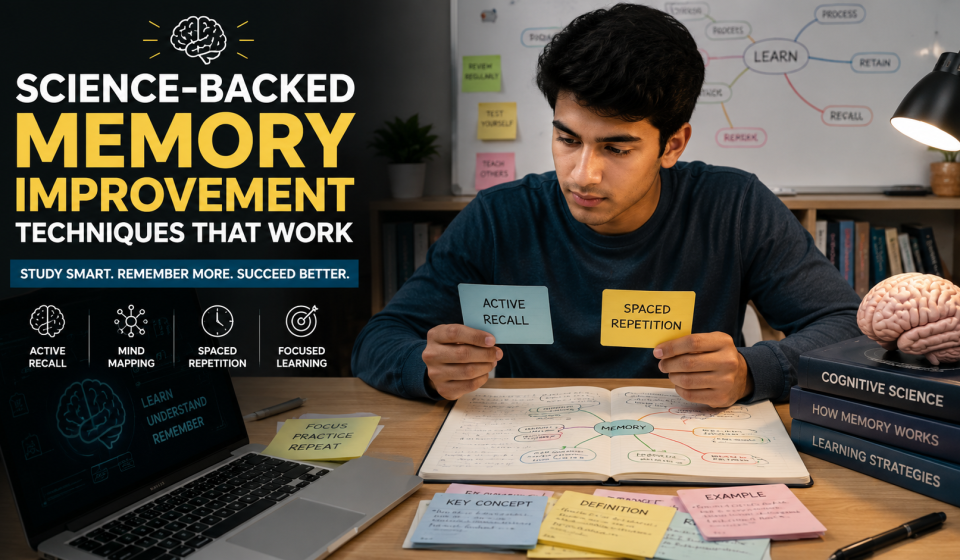

Discover proven learning techniques to boost your memory, improve concentration, enhance retention, and study more effectively for long-term academic success.
Having a strong memory is one of the most valuable skills for academic success. Whether you’re preparing for exams, learning a new language, or developing professional skills, remembering information effectively can save time, reduce stress, and improve confidence. Fortunately, memory is not simply a natural talent—it is a skill that can be strengthened through proven learning techniques and consistent practice.
Research in cognitive science shows that active learning strategies help the brain process, store, and recall information more efficiently than passive reading alone. By using the right study methods, students can retain knowledge for longer periods and perform better in both academics and everyday life.
Why Memory Matters in Learning
A strong memory helps students:
- Learn faster
- Improve academic performance
- Retain information longer
- Solve problems more effectively
- Build confidence
- Develop lifelong learning skills
Better memory leads to more effective and enjoyable learning experiences.
1. Use Active Recall
Active recall is one of the most effective study techniques.
Instead of rereading notes:
- Test yourself regularly
- Answer practice questions
- Explain concepts from memory
- Create self-quizzes
Retrieving information strengthens long-term memory.
2. Practice Spaced Repetition
Review information over increasing intervals instead of cramming.
For example:
- Review after one day
- Review after three days
- Review after one week
- Review after one month
Spaced repetition improves long-term retention.
3. Break Information into Smaller Chunks
The brain processes smaller pieces of information more easily.
Examples include:
- Grouping vocabulary words
- Dividing chapters into sections
- Learning formulas by category
- Organizing notes into topics
Chunking makes learning less overwhelming.
4. Teach Someone Else
Explaining concepts helps reinforce understanding.
Try teaching:
- Friends
- Family members
- Classmates
- Even yourself aloud
Teaching reveals what you truly understand.
5. Use Visual Learning
Visual information is often easier to remember.
Helpful tools include:
- Mind maps
- Diagrams
- Charts
- Infographics
- Flashcards
Visual learning strengthens memory connections.
6. Connect New Information to Existing Knowledge
The brain remembers information better when it has meaningful connections.
Relate new concepts to:
- Daily life
- Personal experiences
- Previous lessons
- Familiar examples
Connections improve understanding and recall.
7. Study in Focused Sessions
Long study sessions often reduce concentration.
A better approach is to:
- Study for 25–50 minutes
- Take short breaks
- Return with fresh focus
Regular breaks improve productivity and memory.
8. Get Enough Sleep
Sleep plays a vital role in memory formation.
Healthy sleep habits include:
- Sleeping 7–9 hours each night
- Maintaining a consistent sleep schedule
- Avoiding late-night cramming
Well-rested brains retain information more effectively.
9. Exercise Regularly
Physical activity benefits both body and brain.
Exercise can:
- Improve concentration
- Increase blood flow to the brain
- Reduce stress
- Enhance cognitive performance
Regular movement supports healthy learning.
10. Reduce Multitasking
Focusing on one task improves learning efficiency.
Avoid:
- Constant phone checking
- Social media distractions
- Studying while watching television
- Switching between multiple tasks
Single-task focus improves memory retention.
11. Practice Retrieval Through Writing
Writing information from memory strengthens learning.
Try:
- Summarizing lessons
- Writing practice answers
- Creating study notes
- Keeping a learning journal
Writing reinforces long-term recall.
12. Stay Organized
An organized study environment improves concentration.
Keep:
- Notes well arranged
- Study materials accessible
- A clean workspace
- A study schedule
Organization reduces distractions.
13. Maintain a Healthy Diet
Nutrition affects brain function.
Choose foods such as:
- Fruits
- Vegetables
- Whole grains
- Nuts
- Fish rich in omega-3 fatty acids
Balanced nutrition supports memory and concentration.
14. Stay Curious
Curiosity increases motivation and engagement.
Develop curiosity by:
- Asking questions
- Exploring new topics
- Reading beyond textbooks
- Participating in discussions
Interested learners often remember information better.
15. Review Progress Regularly
Evaluate your learning to identify strengths and weaknesses.
Review:
- Quiz scores
- Practice tests
- Completed assignments
- Study goals
Regular reflection supports continuous improvement.
Common Memory Mistakes to Avoid
Avoid these habits:
- Cramming before exams
- Passive reading without testing yourself
- Poor sleep habits
- Multitasking while studying
- Skipping review sessions
- Studying without clear goals
Replacing these habits with evidence-based techniques improves memory over time.
Benefits of Proven Learning Techniques
Students who use effective learning methods often experience:
- Better memory retention
- Improved concentration
- Higher academic performance
- Greater confidence
- Reduced exam stress
- Stronger lifelong learning skills
Consistent practice leads to lasting academic success.
Sources
- American Psychological Association (APA)
- Harvard University
- Stanford University
- UNESCO
- Edutopia
- Verywell Mind
- Mind Tools
Conclusion
Improving memory is not about working harder—it is about studying smarter. Techniques such as active recall, spaced repetition, visual learning, focused study sessions, and healthy lifestyle habits help strengthen memory and make learning more effective. By applying these proven learning strategies consistently, students can retain information longer, perform better academically, and build the confidence needed for lifelong success. Every study session becomes more productive when supported by methods backed by learning science.
Frequently Asked Questions (FAQs)
1. What are proven learning techniques?
Proven learning techniques are study methods supported by research, such as active recall, spaced repetition, chunking, and visual learning, that improve memory and understanding.
2. How does active recall improve memory?
Active recall strengthens memory by requiring you to retrieve information from memory instead of simply rereading your notes.
3. What is spaced repetition?
Spaced repetition is a learning method that reviews information at increasing intervals to improve long-term memory retention.
4. Why is sleep important for memory?
Sleep helps the brain organize and store newly learned information, making it easier to remember later.
5. Can exercise improve memory?
Yes. Regular physical activity improves blood flow to the brain, supports cognitive function, reduces stress, and enhances memory.
6. How can I avoid forgetting what I study?
Review information regularly, practice active recall, use spaced repetition, stay organized, and maintain healthy sleep habits.
7. Are visual learning techniques effective?
Yes. Mind maps, diagrams, charts, flashcards, and infographics help many students understand and remember information more effectively.
8. Why should students avoid multitasking while studying?
Multitasking divides attention, reduces concentration, and makes it more difficult for the brain to retain information.
9. How often should I review study material?
Review new material within 24 hours, then continue reviewing it at increasing intervals over days and weeks for better retention.
10. What is the biggest secret to improving memory?
The biggest secret is using evidence-based learning strategies consistently while maintaining healthy habits such as quality sleep, regular exercise, and focused study sessions.