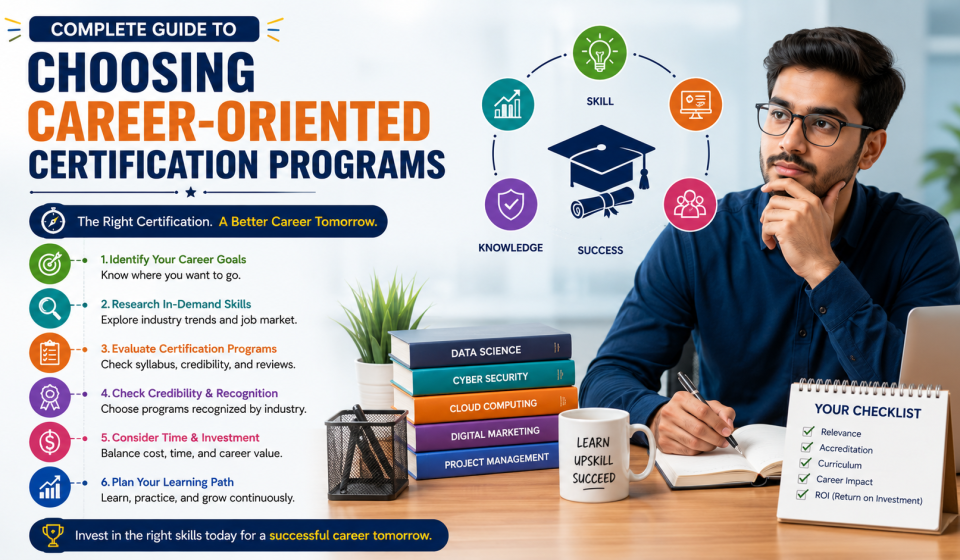

Learn how to choose career-oriented certification programs. Discover how certifications improve employability, develop in-demand skills, and help you achieve your long-term career goals.
Career-oriented certification programs have become an excellent way for students, graduates, and working professionals to develop practical skills and improve their employment opportunities. As industries continue to evolve, employers increasingly value candidates who possess both academic qualifications and job-ready skills. Professional certifications demonstrate your commitment to learning and your ability to perform specific tasks in your chosen field.
Choosing the right certification program can strengthen your resume, increase your confidence, and open doors to better career opportunities. However, with thousands of online and offline certification courses available, selecting the most suitable program requires careful research and planning.
What Are Career-Oriented Certification Programs?
Career-oriented certification programs are structured learning courses designed to develop specific professional skills and validate your knowledge in a particular field.
These programs often focus on:
- Industry-specific skills
- Practical training
- Professional development
- Technical knowledge
- Job readiness
- Career advancement
Many certifications can be completed online, making learning flexible and accessible.
Why Certifications Are Important
Professional certifications can provide a competitive advantage in today’s job market.
Benefits include:
- Improved employability
- Enhanced practical skills
- Stronger resume
- Increased professional credibility
- Better career opportunities
- Higher earning potential
- Continuous learning
Certifications demonstrate a willingness to develop relevant workplace skills.
Identify Your Career Goals
Before selecting a certification, define what you want to achieve.
Ask yourself:
- Which career interests me?
- What skills do employers require?
- Do I want to change careers?
- Am I seeking a promotion?
- Which industries are growing?
- What are my long-term goals?
Clear career objectives help narrow your choices.
Research Industry Demand
Choose certifications that align with current and future job market needs.
Research factors such as:
- Growing industries
- In-demand skills
- Employer expectations
- Job market trends
- Future career opportunities
- Skill shortages
Selecting relevant certifications increases their value.
Choose Recognised Certification Providers
The reputation of the certification provider matters.
Consider programs offered by:
- Universities
- Professional organisations
- Industry associations
- Recognised training providers
- Technology companies
- Accredited educational institutions
Well-recognised certifications often carry greater credibility with employers.
Evaluate the Course Content
Review the curriculum carefully before enrolling.
Look for courses that include:
- Practical skills
- Real-world applications
- Industry case studies
- Hands-on projects
- Assessments
- Updated learning materials
Comprehensive content improves learning outcomes.
Consider Course Flexibility
Choose a program that fits your schedule and learning preferences.
Factors to evaluate include:
- Online or classroom learning
- Self-paced study
- Live sessions
- Course duration
- Mobile accessibility
- Study resources
Flexible learning helps maintain consistency.
Compare Costs and Value
Higher-priced certifications are not always better.
Compare:
- Tuition fees
- Examination costs
- Study materials
- Certification validity
- Renewal requirements
- Career benefits
Focus on long-term value rather than price alone.
Check Certification Recognition
Before enrolling, verify whether employers recognise the certification.
Research:
- Employer preferences
- Industry acceptance
- Global recognition
- Professional accreditation
- Alumni success stories
Widely recognised certifications often provide greater career benefits.
Build Practical Experience
A certification is most valuable when combined with practical experience.
You can strengthen your profile by:
- Completing internships
- Working on personal projects
- Participating in competitions
- Volunteering
- Building a portfolio
- Practising real-world skills
Experience demonstrates your ability to apply what you have learned.
Popular Career Fields for Certifications
Many industries offer valuable certification opportunities.
Popular areas include:
- Information Technology
- Data Analytics
- Artificial Intelligence
- Cybersecurity
- Cloud Computing
- Digital Marketing
- Project Management
- Finance
- Human Resources
- Graphic Design
- Healthcare Administration
- Business Analysis
Choose a field that aligns with your interests and career aspirations.
Common Mistakes to Avoid
Avoid these mistakes when selecting a certification program:
- Choosing based only on popularity
- Ignoring industry recognition
- Overlooking course content
- Not researching career demand
- Selecting outdated programs
- Focusing only on low cost
- Ignoring practical skill development
Careful planning helps maximise the value of your certification.
Practical Tips for Students and Professionals
To make the best choice:
- Define your career goals
- Research employer expectations
- Compare multiple certification programs
- Read student reviews
- Verify provider credibility
- Focus on practical learning
- Continue updating your skills
- Apply your knowledge through projects
Continuous learning supports long-term career success.
Sources
- https://www.coursera.org
- https://www.edx.org
- https://www.linkedin.com/learning
- https://www.ncs.gov.in
- https://www.indeed.com/career-advice
Conclusion
Career-oriented certification programs provide an effective way to develop valuable skills, improve employability, and prepare for a competitive job market. By selecting certifications that align with your career goals, industry demand, and learning preferences, you can gain practical knowledge that supports both personal and professional growth.
Remember that certifications are most effective when combined with hands-on experience, continuous learning, and a commitment to skill development. Investing time in the right certification program can help you build confidence, expand your opportunities, and achieve long-term career success.
Frequently Asked Questions (FAQs)
1. What are career-oriented certification programs?
Career-oriented certification programs are professional courses that teach industry-specific skills and provide certification to demonstrate your knowledge and competence in a particular field.
2. Why are certifications important for career growth?
Certifications improve employability, validate professional skills, strengthen resumes, increase credibility, and help candidates stay competitive in the job market.
3. How do I choose the right certification program?
Consider your career goals, industry demand, course content, provider reputation, flexibility, costs, employer recognition, and opportunities for practical learning.
4. Are online certification programs valuable?
Yes. Many online certification programs from recognised universities, professional organisations, and reputable training providers are widely respected by employers.
5. Which career fields offer the best certification opportunities?
Popular areas include Information Technology, Artificial Intelligence, Data Analytics, Cybersecurity, Cloud Computing, Digital Marketing, Finance, Human Resources, Project Management, and Business Analysis.
6. Can certifications help fresh graduates find jobs?
Yes. Certifications can demonstrate practical skills, improve resumes, and increase confidence during job applications and interviews, especially when combined with projects or internships.
7. Should I choose the cheapest certification available?
Not necessarily. Focus on the quality, industry recognition, course content, and long-term career value rather than choosing solely based on price.
8. Do certifications replace a college degree?
No. Certifications usually complement formal education by providing specialised, job-focused skills. Combining a degree with relevant certifications often creates a stronger professional profile.