
Learn how to stay motivated while studying for long hours. Discover practical study tips, productivity strategies, time management techniques, and healthy habits that improve focus and academic performance.
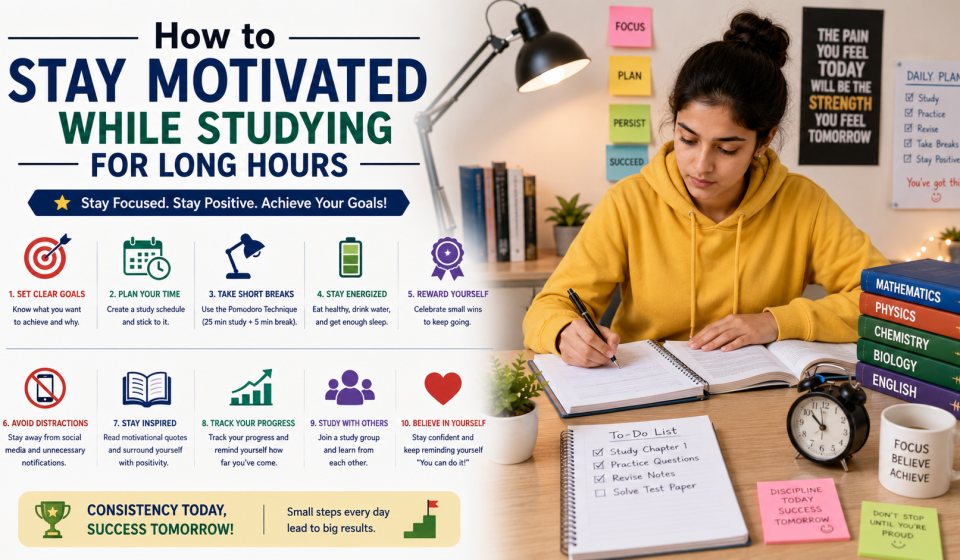
Studying for long hours can be challenging, especially when preparing for school examinations, college assessments, or competitive exams. Many students begin their study sessions with enthusiasm but gradually lose motivation due to fatigue, distractions, or the pressure of covering a large syllabus. Staying motivated throughout the preparation process is essential because consistent effort leads to better understanding, stronger memory, and improved academic performance. Instead of relying only on willpower, students can develop effective study habits that keep them focused, productive, and committed to their goals.
Motivation is not something that appears automatically every day. It is built through proper planning, realistic goals, healthy routines, and a positive mindset. By organizing study sessions, taking regular breaks, eliminating distractions, and celebrating small achievements, students can maintain their energy and confidence even during long study periods. Developing these habits not only improves exam preparation but also builds discipline and resilience that benefit students throughout their educational journey and future careers.
Why Motivation Matters During Study
Motivation encourages students to stay committed to their learning goals even when studying becomes difficult.
Benefits of staying motivated include:
- Better concentration
- Improved productivity
- Higher academic performance
- Greater confidence
- Reduced procrastination
- Better time management
- Consistent learning
- Lower exam stress
Motivated students are more likely to complete their study plans successfully.
Set Clear and Realistic Goals
Having specific goals gives every study session a clear purpose.
Examples of study goals include:
- Complete one chapter today
- Solve 50 practice questions
- Revise one subject every evening
- Finish weekly assignments
- Improve mock test scores
- Learn a new concept daily
- Complete the syllabus before the exam
- Review difficult topics regularly
Small and achievable goals help maintain motivation.
Break Study Sessions Into Manageable Blocks
Studying continuously for several hours can reduce concentration.
A balanced study routine may include:
- Study for 45–60 minutes
- Take a 5–10 minute break
- Stretch or walk briefly
- Drink water
- Resume studying with renewed focus
Short breaks improve attention and reduce mental fatigue.
Create a Study Schedule
A well-organized timetable helps students stay disciplined and avoid last-minute stress.
Include time for:
- Learning new topics
- Revision
- Practice questions
- Mock tests
- Homework
- Exercise
- Meals
- Sleep
Following a routine makes studying a regular habit.
Study in a Distraction-Free Environment
A peaceful study environment improves concentration and efficiency.
Your study space should have:
- Good lighting
- Comfortable seating
- Organized books and notes
- Minimal noise
- Limited phone usage
- Stable internet when required
- Clean surroundings
- Proper ventilation
Reducing distractions allows you to focus fully on learning.
Use Active Learning Techniques
Active learning keeps your mind engaged and improves memory retention.
Helpful methods include:
- Taking notes
- Summarizing lessons
- Teaching concepts to others
- Solving practice questions
- Creating mind maps
- Using flashcards
- Self-testing
- Group discussions
These techniques make studying more interesting and effective.
Reward Yourself After Completing Tasks
Small rewards can increase motivation and make studying more enjoyable.
Examples include:
- Watching a short video
- Eating a healthy snack
- Listening to music
- Taking a short walk
- Talking with friends
- Enjoying a favorite hobby
Rewarding progress encourages consistent effort.
Stay Positive and Avoid Negative Comparisons
Every student learns at a different pace. Comparing yourself with others can reduce confidence.
Instead:
- Focus on personal improvement
- Celebrate your progress
- Learn from mistakes
- Stay patient
- Maintain a growth mindset
Positive thinking supports long-term motivation.
Practice Regular Revision
Revision helps reinforce knowledge and reduces exam anxiety.
Effective revision methods include:
- Daily review sessions
- Weekly revision
- Monthly revision
- Reviewing summary notes
- Solving previous year papers
- Practicing quizzes
Frequent revision improves long-term memory.
Maintain a Healthy Lifestyle
Good physical and mental health play an important role in maintaining motivation.
Healthy habits include:
- Eating balanced meals
- Drinking enough water
- Sleeping 7–8 hours
- Exercising regularly
- Managing stress
- Taking regular breaks
- Practicing relaxation techniques
- Maintaining a positive attitude
Healthy students generally study more effectively.
Track Your Progress
Monitoring your achievements helps maintain motivation over time.
Track:
- Completed chapters
- Practice test scores
- Daily study hours
- Weekly goals
- Revision progress
- Assignment completion
Seeing improvement encourages continued effort.
Overcome Common Motivation Challenges
Students often lose motivation because of common obstacles.
Challenges include:
- Procrastination
- Fear of failure
- Large syllabus
- Poor time management
- Excessive distractions
- Lack of confidence
- Exam pressure
- Mental fatigue
Recognizing these challenges helps you develop effective solutions.
Long-Term Benefits of Staying Motivated
Maintaining motivation throughout your studies offers benefits beyond examinations.
Long-term advantages include:
- Better academic performance
- Improved self-discipline
- Stronger problem-solving skills
- Greater confidence
- Better time management
- Lifelong learning habits
- Career readiness
- Personal growth
Motivation supports success in both education and future professional life.
Source Links
Conclusion
Staying motivated while studying for long hours is not about relying on constant inspiration but about developing effective habits that encourage consistent progress. Setting realistic goals, following a structured study schedule, taking regular breaks, practicing active learning, and maintaining a healthy lifestyle all contribute to better focus and higher productivity. Students who remain organized and committed to their learning process are more likely to achieve strong academic results and feel confident during examinations.
Motivation grows through small daily achievements and continuous effort. Instead of worrying about the entire syllabus, focus on completing one task at a time and celebrate every milestone you reach. By staying positive, reviewing your progress regularly, and maintaining a balanced routine, you can overcome challenges, reduce stress, and build the discipline needed for long-term academic success. Consistent effort combined with smart study strategies will help you reach your educational goals and prepare for future career opportunities.
Frequently Asked Questions (FAQs)
1. Why do students lose motivation while studying?
Students often lose motivation because of fatigue, distractions, procrastination, stress, or feeling overwhelmed by a large syllabus.
2. How can I stay motivated during long study sessions?
Set clear goals, study in focused time blocks, take regular breaks, reward yourself, and track your progress.
3. How long should one study session be?
A focused study session of 45–60 minutes followed by a short break is effective for most students.
4. How can I avoid distractions while studying?
Study in a quiet environment, turn off unnecessary notifications, limit social media use, and organize your study space.
5. Why is goal setting important?
Clear goals provide direction, improve focus, and help students measure their progress.
6. Does exercise improve study motivation?
Yes. Regular physical activity improves energy levels, reduces stress, and enhances concentration.
7. How important is sleep during exam preparation?
Adequate sleep improves memory, concentration, decision-making, and overall academic performance.
8. Should I reward myself after studying?
Yes. Small rewards after completing study goals can increase motivation and make learning more enjoyable.
9. How can I stay motivated for long-term exam preparation?
Follow a consistent study routine, review your progress, celebrate small achievements, maintain healthy habits, and stay focused on your long-term goals.
10. What is the biggest secret to staying motivated while studying?
The biggest key is consistency. Small, regular efforts combined with proper planning, healthy habits, and a positive mindset produce lasting academic success.