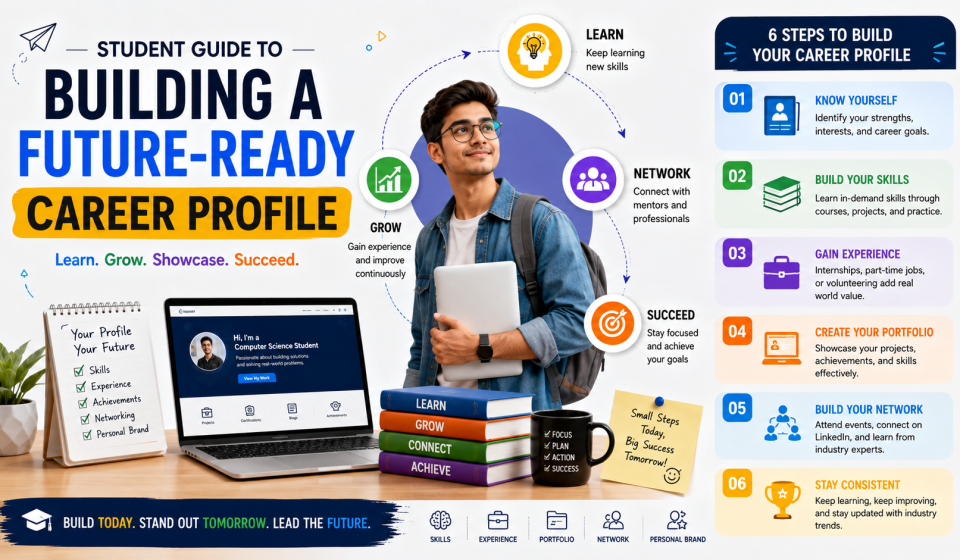

Learn how students can build a future-ready career profile through digital skills, practical experience, networking, personal branding, projects, and continuous learning.
Building a future-ready career profile is becoming increasingly important for students who want to prepare for a competitive and changing employment environment. Academic qualifications remain valuable, but employers may also look for practical skills, communication abilities, digital knowledge, adaptability, teamwork, and evidence that candidates can apply what they have learned.
Students do not need to wait until graduation to begin developing their professional profile. By building relevant skills, completing meaningful projects, gaining practical experience, creating a professional online presence, networking with others, and regularly updating their knowledge, students can gradually develop a career profile that supports their long-term goals.
What Is a Future-Ready Career Profile?
A future-ready career profile is a combination of education, skills, experience, achievements, professional presence, and personal qualities that can help a student adapt to changing career requirements.
It may include:
- Academic qualifications.
- Technical and digital skills.
- Communication skills.
- Projects.
- Internships.
- Certifications.
- Volunteer experience.
- Leadership activities.
- Professional networking.
- A strong resume.
- An online professional profile.
- A portfolio.
The goal is not to collect as many qualifications as possible. Instead, students should develop a focused profile that demonstrates useful abilities and a willingness to keep learning.
Start With Self-Assessment
Before choosing skills or courses, understand your current strengths and areas for improvement.
Ask yourself:
- What subjects do I enjoy?
- Which skills am I already good at?
- What activities give me energy?
- What type of work interests me?
- Which skills do I need to improve?
- What careers match my interests?
- What experience do I currently have?
A simple self-assessment can help you avoid following career trends without considering whether they suit your interests and abilities.
Set Clear Career Goals
Students do not need to have their entire career planned from the beginning. However, having short-term and medium-term goals can provide direction.
For example:
Short-term goal: Improve communication and technical skills.
Medium-term goal: Complete an internship.
Long-term goal: Start a career in a selected industry.
Break larger goals into smaller actions. Instead of saying “I want a good career,” create measurable goals such as completing a project, improving a specific skill, attending a career event, or applying for internships.
Develop Digital Skills
Digital knowledge has become relevant across many industries. Students should develop digital skills appropriate to their chosen field.
Depending on their career interests, students may explore:
- Productivity software.
- Data analysis.
- Programming.
- Web development.
- Digital marketing.
- Cybersecurity.
- Cloud technologies.
- Artificial intelligence tools.
- Graphic design.
- Digital communication.
Not every student needs advanced programming skills. The right digital skills depend on the student’s education, industry, and career goals.
Learn Artificial Intelligence Responsibly
Artificial intelligence is changing how people work and learn. Students can benefit from understanding how AI tools work and how they can be used responsibly.
AI can support activities such as:
- Brainstorming.
- Research planning.
- Writing improvement.
- Data organization.
- Coding assistance.
- Learning difficult concepts.
- Creating study materials.
However, students should understand the limitations of AI-generated information and verify important facts. They should also follow academic integrity rules and avoid presenting AI-generated work as their own when institutional policies prohibit it.
Build Practical Projects
Projects can demonstrate skills more effectively than simply listing them.
For example, a student interested in web development could create:
- A personal portfolio website.
- A student management application.
- An online store prototype.
- A responsive landing page.
- A simple educational website.
A student interested in data analysis could create a project using a public dataset and explain the findings.
For every project, document:
- The objective.
- Tools used.
- Your role.
- Challenges.
- Solutions.
- Final result.
- Skills developed.
Gain Practical Experience
Experience does not always have to come from a full-time job.
Students can gain experience through:
- Internships.
- Part-time work.
- Freelancing.
- Volunteer activities.
- College projects.
- Student organizations.
- Competitions.
- Research.
- Community activities.
Practical experience teaches students how to apply knowledge in real situations and can provide useful examples to discuss during interviews.
Create a Professional Resume
A resume should communicate your most relevant qualifications clearly.
A student resume can include:
- Contact information.
- Career summary or objective when appropriate.
- Education.
- Skills.
- Projects.
- Internships.
- Certifications.
- Achievements.
- Relevant extracurricular activities.
Keep the resume organized and easy to read. Avoid adding unrelated information simply to make the document longer.
Most importantly, ensure that every claim is accurate.
Build a Strong LinkedIn Profile
A professional online presence can complement your resume.
Students can use LinkedIn to showcase:
- Education.
- Projects.
- Skills.
- Certifications.
- Internships.
- Achievements.
- Career interests.
Use a professional profile photo, write a clear headline, and create an About section that explains your interests and goals.
Keep the information consistent with your resume.
Create a Digital Portfolio
A portfolio provides a place to demonstrate practical work.
Depending on your field, it might include:
- Websites.
- Software applications.
- Research projects.
- Writing samples.
- Graphic designs.
- Presentations.
- Marketing projects.
- Data analysis reports.
Each item should have a short explanation describing what you did and what skills you used.
A portfolio can be especially useful for students pursuing technology, design, writing, marketing, media, and other project-based careers.
Develop Communication Skills
Technical knowledge alone may not be enough for many career opportunities. Students also need to communicate ideas effectively.
Work on:
- Speaking clearly.
- Writing professional emails.
- Giving presentations.
- Listening actively.
- Participating in group discussions.
- Explaining technical concepts simply.
- Asking useful questions.
Students can practice by joining presentations, debates, group projects, student clubs, or public speaking activities.
Improve Problem-Solving Skills
Employers often value people who can approach problems systematically.
To develop problem-solving skills, practice:
- Understanding the problem.
- Identifying important information.
- Breaking the problem into smaller parts.
- Considering possible solutions.
- Comparing alternatives.
- Testing a solution.
- Reviewing the result.
This approach can be applied to academic assignments, programming tasks, business cases, and everyday situations.
Build Adaptability
Career requirements can change as technology, industries, and workplace practices evolve. Students should therefore develop the ability to learn new tools and adjust to unfamiliar situations.
Adaptability involves:
- Being open to feedback.
- Learning new skills.
- Accepting changes.
- Trying new approaches.
- Staying curious.
- Learning from mistakes.
A student who can learn effectively may be better prepared for changing professional requirements.
Gain Relevant Certifications
Certifications can provide evidence of additional learning when they are relevant and credible.
Before choosing one, consider:
- Is it relevant to your career goal?
- Who provides it?
- Does it include meaningful assessment?
- Is it recognized in the industry?
- Will you actually use the skills?
Do not collect certificates simply for quantity. A few relevant achievements can be more useful than a long list of unrelated courses.
Build a Professional Network
Networking can help students learn about industries and career opportunities.
Start by connecting with:
- Professors.
- Alumni.
- Classmates.
- Industry professionals.
- Internship supervisors.
- Career advisors.
- Professional organizations.
Networking does not mean asking everyone for a job. Begin by learning, asking thoughtful questions, attending events, and building genuine professional relationships.
Develop a Professional Online Presence
Before applying for internships or jobs, review your public online presence.
Make sure your professional profiles contain accurate information. Consider whether publicly visible posts and content represent the professional image you want employers to see.
Your online presence should support your career goals rather than create unnecessary concerns.
Follow Industry Trends
Students should understand what is happening in their chosen industry.
Follow reliable sources related to:
- New technologies.
- Important skills.
- Industry developments.
- Professional organizations.
- Employment trends.
- Emerging career paths.
You do not need to follow every trend. Focus on developments that are genuinely relevant to your intended career.
Learn Through Continuous Education
Graduation should not mark the end of learning. Professionals often need to update their skills throughout their careers.
Students can develop a lifelong learning habit through:
- Online courses.
- Workshops.
- Books.
- Webinars.
- Professional communities.
- Practical projects.
- Conferences.
- Educational videos.
Choose learning activities that have a clear purpose rather than consuming content without applying it.
Prepare for Interviews
A future-ready profile should be supported by the ability to communicate your experience during interviews.
Practice explaining:
- Your academic background.
- Your projects.
- Your technical skills.
- Your strengths.
- Your challenges.
- Your achievements.
- Your career goals.
- Your teamwork experience.
Use real examples rather than giving vague statements.
For experience-based questions, the STAR approach can help organize responses:
Situation → Task → Action → Result
Build Your Personal Brand
Personal branding is not about pretending to be someone else. It is about communicating your genuine strengths and professional interests consistently.
For example, a student interested in web development can regularly showcase website projects, learning experiences, relevant certifications, and technical interests.
Consistency across your resume, LinkedIn profile, portfolio, and professional communication can make your career profile easier to understand.
Review Your Career Profile Regularly
Your career profile should change as you gain experience.
Every few months, review:
- Resume.
- LinkedIn profile.
- Portfolio.
- Skills.
- Certifications.
- Projects.
- Career goals.
Remove outdated information and add meaningful new achievements.
Common Mistakes Students Should Avoid
Collecting Certificates Without Practical Skills
Certificates can support learning, but they should not replace practical experience.
Listing Skills You Cannot Demonstrate
Only include skills you genuinely understand and can discuss during an interview.
Waiting Until Graduation
Starting early gives students more time to develop skills and gain experience.
Ignoring Communication Skills
Even highly technical students need to communicate with teachers, teammates, clients, and employers.
Following Every Career Trend
Not every popular skill or technology will be relevant to your goals. Choose skills based on your interests and target industry.
A Simple Career Development Plan
Students can follow a practical yearly approach.
First stage: Identify career interests and develop foundational skills.
Second stage: Build projects and complete relevant courses.
Third stage: Apply for internships, volunteer opportunities, or practical experiences.
Fourth stage: Improve your resume, portfolio, LinkedIn profile, and interview skills.
Fifth stage: Network with professionals and apply for relevant opportunities.
The timeline can be adjusted according to your academic program and personal circumstances.
Source Links
https://www.oecd.org/education
Conclusion
Building a future-ready career profile is a gradual process that begins long before graduation. Students can strengthen their professional position by combining academic knowledge with digital skills, practical projects, internships, communication abilities, networking, and continuous learning.
A strong career profile is not defined by the number of certificates or skills listed on a resume. It is built through genuine abilities, relevant experience, demonstrated achievements, and the willingness to continue learning as career requirements change.
Start with small, practical steps. Develop one useful skill, complete one meaningful project, improve your professional profile, connect with people in your field, and regularly evaluate your progress. Over time, these efforts can create a well-rounded profile that helps you approach internships, interviews, and future career opportunities with greater confidence.
Frequently Asked Questions (FAQs)
1. What is a future-ready career profile?
A future-ready career profile combines education, practical skills, experience, achievements, professional networking, and adaptability. It demonstrates that a student is prepared to learn and contribute in a changing professional environment.
2. When should students start building their career profile?
Students can start as early as possible, even during the first years of college. Early preparation provides more time to develop skills, complete projects, gain experience, and explore career options.
3. What skills should students develop for future careers?
The right skills depend on the career field, but digital literacy, communication, problem-solving, adaptability, teamwork, and continuous learning are broadly useful. Students should also develop technical skills relevant to their chosen industry.
4. Are certifications important for students?
Relevant certifications can demonstrate additional learning and specialized knowledge. However, students should prioritize credible and career-related certifications rather than collecting certificates simply to increase their numbers.
5. Why are projects important for a career profile?
Projects demonstrate that students can apply their knowledge to practical situations. They also give students concrete examples to discuss during interviews and include in portfolios.
6. How can students gain experience without a full-time job?
Students can gain experience through internships, volunteering, freelancing, academic projects, competitions, student organizations, research, and part-time opportunities. These experiences can help develop transferable and technical skills.
7. Should every student have a LinkedIn profile?
A professional LinkedIn profile can be useful for students who want to build an online professional presence, network with others, showcase achievements, and explore career opportunities.
8. How can students improve their employability?
Students can improve employability by developing relevant skills, gaining practical experience, improving communication, creating a strong resume and portfolio, networking, and preparing for interviews.
9. How often should students update their career profile?
Review your resume, portfolio, and professional profiles every few months and whenever you complete an important project, internship, certification, or achievement. Regular updates help keep your information accurate.
10. What is the most important part of building a future-ready career?
There is no single factor that guarantees career success. A combination of relevant knowledge, practical skills, communication, adaptability, experience, and continuous learning can provide a strong foundation for long-term career development.