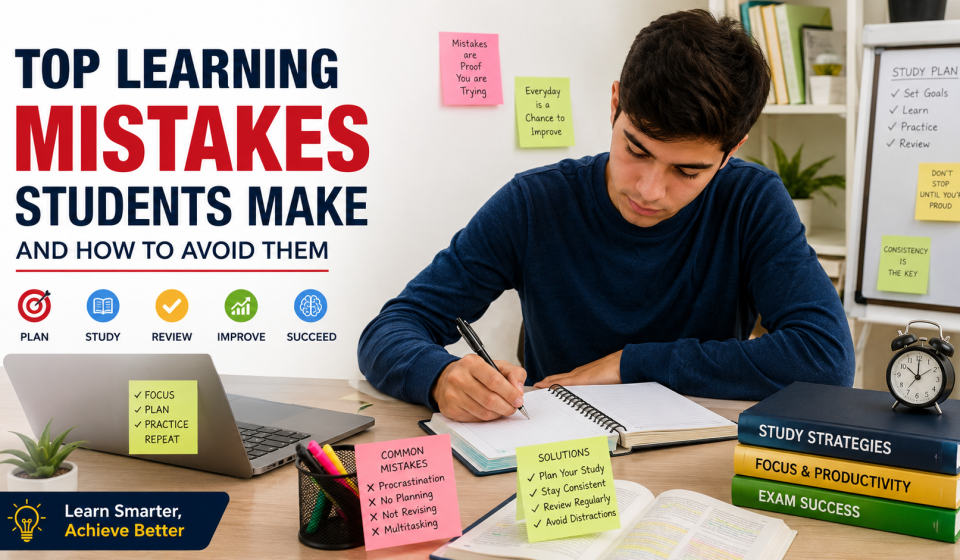

Discover the top learning mistakes students make and how to avoid them. Learn effective study techniques, time management strategies, and productivity habits to improve academic success.
Every student wants to achieve academic success, but many unknowingly develop learning habits that reduce productivity and make studying more difficult. Common mistakes such as procrastination, poor time management, cramming before exams, and relying only on memorization can affect grades, increase stress, and lower confidence. Fortunately, these habits can be identified and replaced with more effective learning strategies.
Successful learning is not about spending endless hours with textbooks. It involves studying smarter, staying organized, using proven learning techniques, and maintaining consistency. By understanding the most common learning mistakes and knowing how to avoid them, students can improve memory, strengthen understanding, and achieve better academic results.
Whether you are a school student, college learner, or preparing for competitive exams, avoiding these mistakes will help you build stronger study habits and become a more confident learner.
Why Students Make Learning Mistakes
Learning mistakes often happen because students lack proper study strategies rather than the ability to succeed.
Common reasons include:
- Poor planning
- Lack of time management
- Procrastination
- Overconfidence
- Study distractions
- Fear of failure
- Ineffective learning methods
Recognizing these challenges is the first step toward improvement.
1. Procrastinating Until the Last Minute
One of the most common mistakes is delaying important work until deadlines approach.
How to avoid it:
- Break tasks into smaller goals.
- Create a daily study schedule.
- Start assignments early.
- Reward yourself for completing tasks.
Consistent progress reduces stress and improves learning.
2. Cramming Before Exams
Many students study only a day or two before exams.
Instead:
- Review lessons regularly.
- Practice spaced repetition.
- Study a little every day.
- Revise weekly.
Regular review improves long-term memory.
3. Studying Without Clear Goals
Studying without direction often wastes time.
Set goals such as:
- Finish one chapter.
- Solve ten practice questions.
- Review today’s lecture.
- Complete one assignment.
Clear objectives improve focus.
4. Relying Only on Memorization
Memorizing information without understanding concepts limits learning.
Better approaches include:
- Understanding concepts
- Solving practical problems
- Explaining topics to others
- Applying knowledge to real situations
Deep learning improves retention.
5. Ignoring Time Management
Poor time management leads to missed deadlines and unnecessary stress.
Improve your schedule by:
- Using a planner
- Prioritizing tasks
- Setting deadlines
- Following a study routine
Effective planning increases productivity.
6. Multitasking While Studying
Switching between multiple tasks reduces concentration.
Avoid:
- Using social media while studying
- Watching television
- Constantly checking your phone
Focus on one task at a time for better results.
7. Skipping Regular Revision
Without revision, information is easily forgotten.
Create a review schedule:
- Daily review
- Weekly revision
- Monthly summaries
- Practice tests
Regular revision strengthens memory.
8. Not Asking Questions
Some students hesitate to seek clarification.
Develop the habit of:
- Asking teachers
- Joining study groups
- Participating in discussions
- Using reliable educational resources
Curiosity improves understanding.
9. Poor Note-Taking
Disorganized notes make revision difficult.
Good notes should:
- Highlight key concepts
- Use headings and bullet points
- Include diagrams where helpful
- Be easy to review
Organized notes save time before exams.
10. Studying in a Distracting Environment
Your surroundings directly affect concentration.
Create a productive study space by:
- Keeping your desk organized
- Reducing noise
- Using good lighting
- Removing unnecessary distractions
A clean workspace improves focus.
11. Neglecting Physical Health
Healthy students learn more effectively.
Maintain:
- 7–9 hours of sleep
- Balanced nutrition
- Regular exercise
- Proper hydration
Good health supports memory and concentration.
12. Avoiding Practice
Reading alone is not enough.
Practice through:
- Sample papers
- Mock exams
- Practical exercises
- Problem-solving activities
Practice builds confidence and reinforces learning.
13. Comparing Yourself with Others
Every student learns at a different pace.
Instead of comparison:
- Focus on personal progress.
- Set realistic goals.
- Celebrate small improvements.
- Learn from your mistakes.
Growth is more important than competition.
14. Depending Too Much on Technology
Technology is a valuable learning tool, but it should not replace active thinking.
Use technology wisely by:
- Watching educational videos
- Taking online courses
- Using AI-powered study assistants
- Practicing with digital quizzes
Balance technology with independent learning.
15. Giving Up Too Easily
Challenges are part of the learning process.
Develop resilience by:
- Learning from mistakes
- Staying positive
- Asking for help when needed
- Continuing to practice
Persistence leads to improvement.
Smart Habits for Better Learning
Replace poor habits with productive ones:
- Study consistently.
- Set daily goals.
- Practice active recall.
- Review lessons regularly.
- Stay organized.
- Manage your time effectively.
- Maintain healthy routines.
- Continue learning every day.
These habits support long-term academic success.
Benefits of Avoiding Learning Mistakes
Students who correct ineffective learning habits often experience:
- Better academic performance
- Improved concentration
- Stronger memory retention
- Better time management
- Increased confidence
- Reduced stress
- Higher productivity
- Lifelong learning skills
Small improvements can make a significant difference over time.
Sources
- American Psychological Association (APA)
- Harvard University
- Stanford University
- UNESCO
- Edutopia
- Coursera
- Mind Tools
Conclusion
Learning mistakes are a normal part of every student’s educational journey, but recognizing and correcting them is essential for long-term success. By avoiding procrastination, managing time effectively, practicing active learning, reviewing lessons consistently, and maintaining healthy habits, students can improve both their academic performance and confidence. Success is not determined by studying harder but by studying smarter and remaining consistent. Every positive habit you develop today will help you become a more successful learner tomorrow.
Frequently Asked Questions (FAQs)
1. What are the most common learning mistakes students make?
Common mistakes include procrastination, cramming before exams, poor time management, relying only on memorization, multitasking, skipping revision, and studying without clear goals.
2. Why do students procrastinate?
Students often procrastinate because of fear of failure, lack of motivation, poor planning, distractions, or feeling overwhelmed by large tasks.
3. How can I avoid cramming before exams?
Create a regular study schedule, review lessons weekly, practice spaced repetition, and start preparing well before exam dates.
4. Is memorization enough for academic success?
No. Understanding concepts, applying knowledge, and practicing problem-solving are more effective than memorization alone.
5. How does time management improve learning?
Good time management helps students complete assignments on time, reduce stress, stay organized, and balance study with personal activities.
6. Why is regular revision important?
Regular revision strengthens long-term memory, improves understanding, and reduces the need for last-minute studying.
7. How can I improve my concentration while studying?
Study in a quiet environment, eliminate distractions, focus on one task at a time, and take short breaks to maintain concentration.
8. Should students use technology while studying?
Yes. Educational platforms, AI learning tools, online courses, and digital flashcards can improve learning when used responsibly and without distraction.
9. How important are healthy habits for learning?
Healthy habits such as adequate sleep, balanced nutrition, regular exercise, and proper hydration improve memory, concentration, and overall academic performance.
10. What is the biggest secret to avoiding learning mistakes?
The biggest secret is consistency. Developing productive study habits, managing time effectively, learning from mistakes, and practicing regularly will help students achieve lasting academic success.