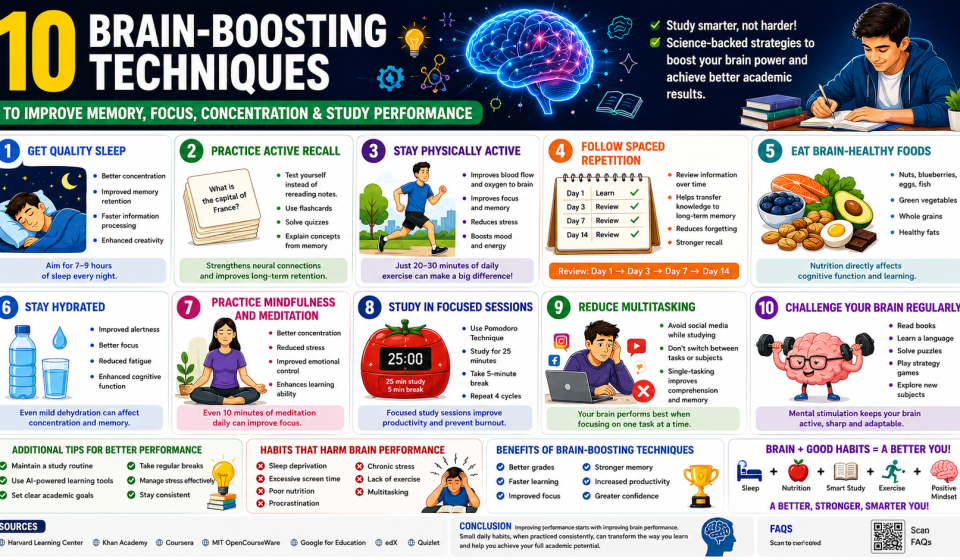

Discover 10 brain-boosting techniques that improve memory, focus, concentration, and study performance. Learn science-backed strategies to study smarter and achieve better academic results.
Success in academics is not just about studying harder—it’s about helping your brain perform at its best. Your brain is the most powerful learning tool you have, and with the right habits, you can improve memory, concentration, learning speed, and overall academic performance.
Whether you’re preparing for exams, completing assignments, or learning new skills, these brain-boosting techniques can help you maximize your study results.
Why Brain Health Matters for Students
A healthy and active brain helps students:
- Learn faster
- Remember information longer
- Stay focused
- Improve problem-solving skills
- Reduce mental fatigue
- Perform better in exams
Small daily habits can have a significant impact on cognitive performance.
1. Get Quality Sleep Every Night
Sleep is essential for memory formation and learning.
Benefits include:
- Better concentration
- Improved memory retention
- Faster information processing
- Enhanced creativity
Students should aim for 7–9 hours of sleep every night for optimal brain performance.
2. Practice Active Recall
Active Recall is one of the most effective study techniques.
Instead of rereading notes:
- Test yourself
- Use flashcards
- Solve quizzes
- Explain concepts from memory
This strengthens neural connections and improves long-term retention.
3. Stay Physically Active
Exercise increases blood flow and oxygen supply to the brain.
Effective activities include:
- Walking
- Running
- Cycling
- Yoga
- Sports
Just 20–30 minutes of daily exercise can improve focus and memory.
4. Follow the Spaced Repetition Method
Reviewing information over time helps transfer knowledge into long-term memory.
Example schedule:
- Day 1: Learn
- Day 3: Review
- Day 7: Review
- Day 14: Review
This method reduces forgetting and strengthens recall.
5. Eat Brain-Healthy Foods
Nutrition directly affects cognitive function.
Brain-friendly foods include:
- Nuts
- Blueberries
- Eggs
- Fish
- Green vegetables
- Whole grains
A balanced diet supports learning and mental performance.
6. Stay Hydrated
Even mild dehydration can affect concentration and memory.
Benefits of drinking enough water:
- Improved alertness
- Better focus
- Reduced fatigue
- Enhanced cognitive function
Keep a water bottle nearby while studying.
7. Practice Mindfulness and Meditation
Mindfulness improves attention and mental clarity.
Benefits include:
- Better concentration
- Reduced stress
- Improved emotional control
- Enhanced learning ability
Even 10 minutes of meditation daily can make a noticeable difference.
8. Study in Focused Sessions
Long study sessions often reduce effectiveness.
Try the Pomodoro Technique:
- Study for 25 minutes
- Take a 5-minute break
- Repeat four cycles
Focused study sessions improve productivity and prevent burnout.
9. Reduce Multitasking
The brain performs best when focusing on one task at a time.
Avoid:
- Checking social media while studying
- Watching videos during revision
- Switching between multiple subjects frequently
Single-tasking improves comprehension and memory.
10. Challenge Your Brain Regularly
Mental stimulation helps keep the brain active and adaptable.
Examples:
- Reading books
- Learning a language
- Solving puzzles
- Playing strategy games
- Exploring new subjects
Continuous learning strengthens cognitive abilities.
Additional Tips for Better Brain Performance
Students can further improve learning by:
- Maintaining a study routine
- Using AI-powered learning tools
- Setting clear academic goals
- Taking regular breaks
- Managing stress effectively
Consistency is the key to long-term improvement.
Common Habits That Harm Brain Performance
Avoid these habits:
- Sleep deprivation
- Excessive screen time
- Poor nutrition
- Procrastination
- Chronic stress
- Lack of exercise
- Multitasking
These behaviors can negatively impact memory and concentration.
Benefits of Brain-Boosting Techniques
Students who adopt these habits often experience:
- Better grades
- Faster learning
- Improved focus
- Stronger memory
- Increased productivity
- Greater confidence
A healthy brain creates a strong foundation for academic success.
Sources
Conclusion
Improving study performance starts with improving brain performance. By getting enough sleep, exercising regularly, eating nutritious foods, practicing Active Recall, and using effective learning techniques, students can significantly enhance their memory, concentration, and academic results. These brain-boosting habits may seem simple, but when practiced consistently, they can transform the way you learn and help you achieve your full academic potential.
Frequently Asked Questions (FAQs)
What are brain-boosting techniques?
Brain-boosting techniques are habits and strategies that improve memory, focus, concentration, and cognitive performance.
How can students improve brain performance?
Students can improve brain performance through quality sleep, exercise, healthy nutrition, hydration, and effective study methods.
Does sleep help with studying?
Yes. Sleep strengthens memory consolidation, concentration, and learning ability.
What foods improve brain function?
Nuts, fish, eggs, berries, vegetables, and whole grains support healthy brain function.
What is Active Recall?
Active Recall is a study method where students retrieve information from memory through self-testing.
Can exercise improve academic performance?
Yes. Exercise increases blood flow to the brain and improves focus, memory, and cognitive function.
How does hydration affect learning?
Proper hydration improves concentration, alertness, and mental performance.
Is meditation useful for students?
Yes. Meditation reduces stress and improves attention and concentration.
What is the Pomodoro Technique?
A productivity method that involves studying for 25 minutes followed by a 5-minute break.
Why is multitasking bad for studying?
Multitasking reduces concentration, learning efficiency, and memory retention.