
Compare online learning and traditional education to discover which is better for students. Learn about the advantages, disadvantages, learning flexibility, classroom experience, costs, and career opportunities.
Education has changed significantly over the past decade, giving students more learning options than ever before. Along with traditional classroom education, online learning has become a popular choice for students of all ages. Modern technology has made it possible to attend classes, complete assignments, interact with teachers, and earn certifications from anywhere with an internet connection. As educational institutions continue to adopt digital learning platforms, many students and parents wonder whether online learning or traditional education offers the better path to academic success.
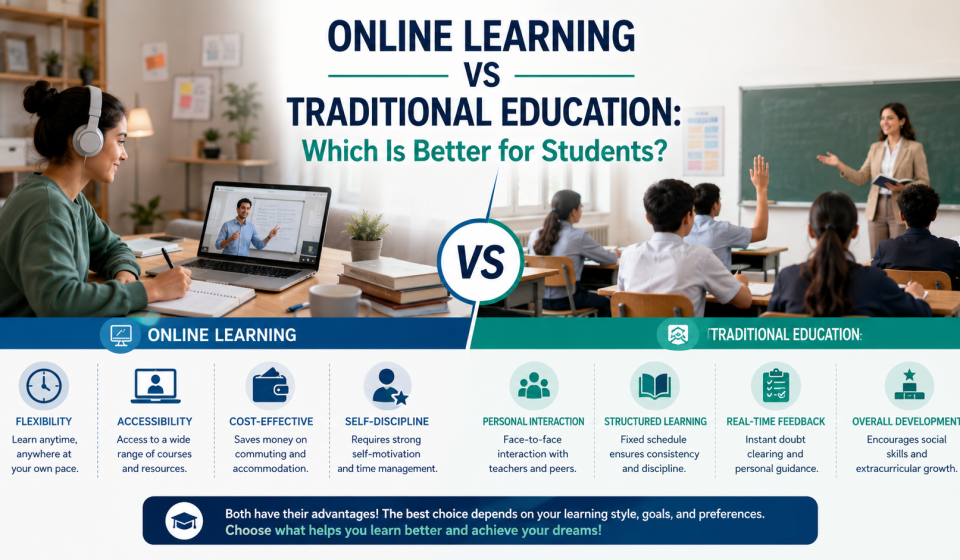
Both online learning and traditional education have their own strengths and challenges. While online learning provides flexibility and convenience, traditional classroom education offers face-to-face interaction, structured learning, and direct guidance from teachers. The best choice depends on a student’s learning style, academic goals, personal responsibilities, and available resources. Understanding the differences between these two educational approaches helps students make informed decisions that support both their academic performance and future career aspirations.
What Is Online Learning?
Online learning is a method of education where students use digital platforms and internet-based technologies to attend classes, complete coursework, and communicate with instructors remotely.
Online learning typically includes:
- Live virtual classes
- Recorded video lectures
- Online assignments
- Digital study materials
- Discussion forums
- Virtual assessments
- Interactive learning platforms
- Online certification programs
Students can often learn from any location with an internet connection.
What Is Traditional Education?
Traditional education takes place in physical classrooms where students attend scheduled classes and interact directly with teachers and classmates.
Traditional education generally includes:
- Classroom lectures
- Face-to-face discussions
- Practical laboratory sessions
- Group activities
- School examinations
- Campus facilities
- Extracurricular activities
- In-person teacher support
This approach provides a structured and supervised learning environment.
Advantages of Online Learning
Online education has become increasingly popular because of its flexibility and accessibility.
Major benefits include:
- Flexible study schedules
- Learn from any location
- Access to global courses
- Lower travel costs
- Self-paced learning
- Recorded lectures for revision
- Wide variety of learning resources
- Convenient skill development
Students can balance education with work or personal responsibilities.
Advantages of Traditional Education
Traditional classrooms continue to provide valuable learning experiences that many students prefer.
Benefits include:
- Direct teacher interaction
- Immediate feedback
- Structured learning environment
- Better classroom discipline
- Practical learning opportunities
- Strong social interaction
- Teamwork development
- Campus activities
Many students benefit from the motivation of a classroom setting.
Flexibility Comparison
One of the biggest differences between the two systems is flexibility.
Online learning offers:
- Study anytime
- Learn from home
- Adjustable schedules
- Self-paced progress
- Easy access to recorded lessons
Traditional education offers:
- Fixed class schedules
- Regular attendance
- Structured routines
- Consistent learning environment
Students who need flexibility often prefer online education.
Learning Experience
Each learning method provides a different educational experience.
Online learning focuses on:
- Independent learning
- Digital collaboration
- Virtual discussions
- Self-discipline
- Technology-based instruction
Traditional education emphasizes:
- Classroom participation
- Face-to-face communication
- Hands-on activities
- Immediate teacher guidance
- Group learning experiences
Learning preferences vary from student to student.
Cost Comparison
Education costs are another important consideration.
Online learning may reduce expenses related to:
- Transportation
- Accommodation
- Printed materials
- Campus fees
- Daily commuting
Traditional education often includes additional costs for:
- Transportation
- Uniforms
- Campus facilities
- Printed textbooks
- Hostel accommodation
However, actual costs depend on the institution and program.
Student Interaction
Interaction plays an important role in academic and personal development.
Online learning includes:
- Virtual discussions
- Video conferences
- Online group projects
- Email communication
Traditional education offers:
- Face-to-face conversations
- Classroom discussions
- Group activities
- Campus networking
- Student clubs
In-person interaction often helps students develop stronger communication skills.
Technology Requirements
Online education depends heavily on technology.
Students usually need:
- Reliable internet connection
- Laptop or computer
- Smartphone or tablet
- Learning management platforms
- Basic digital skills
Traditional education requires fewer technology resources during daily classroom learning.
Career Opportunities
Both learning methods can prepare students for successful careers when offered by recognized educational institutions.
Important factors include:
- Course quality
- Accredited institution
- Practical experience
- Skill development
- Communication abilities
- Problem-solving skills
- Continuous learning
- Professional certifications
Employers often value knowledge and skills more than the learning format itself.
Which Learning Method Is Better?
The answer depends on each student’s individual circumstances.
Online learning is ideal for students who:
- Need flexible schedules
- Work while studying
- Prefer self-paced learning
- Live far from educational institutions
- Want access to international courses
Traditional education is better for students who:
- Prefer classroom interaction
- Need structured guidance
- Enjoy practical learning
- Benefit from face-to-face communication
- Want an active campus experience
Many students now choose a blended learning approach that combines both methods.
Tips for Choosing the Right Option
Before making a decision, consider the following:
- Learning style
- Career goals
- Budget
- Time availability
- Internet access
- Course quality
- Accreditation
- Personal responsibilities
Choosing the right learning environment improves academic success and long-term career development.
Source Links
Conclusion
Both online learning and traditional education offer valuable opportunities for students to gain knowledge, develop skills, and prepare for successful careers. Online learning provides flexibility, convenience, and access to a wide variety of educational resources, making it an excellent option for students who require adaptable study schedules. Traditional education, on the other hand, offers structured classroom instruction, direct interaction with teachers, practical learning experiences, and stronger opportunities for social development. Each method has unique strengths that can support different learning preferences and academic goals.
Rather than asking which option is universally better, students should focus on choosing the learning method that best matches their personal needs, career objectives, and lifestyle. Some learners thrive in independent online environments, while others perform better in traditional classrooms. As technology continues to transform education, blended learning models that combine online flexibility with classroom interaction are becoming increasingly popular. By selecting the right educational approach and staying committed to continuous learning, students can achieve academic success and build a strong foundation for their future careers.
Frequently Asked Questions (FAQs)
1. What is the main difference between online learning and traditional education?
Online learning takes place through digital platforms, while traditional education involves face-to-face classroom instruction.
2. Is online learning as effective as traditional education?
Yes. When students stay disciplined and courses are well designed, online learning can be highly effective for many subjects.
3. Which learning method is more flexible?
Online learning offers greater flexibility because students can often study from anywhere and follow more adaptable schedules.
4. What are the benefits of traditional education?
Traditional education provides direct teacher interaction, structured learning, classroom discussions, practical activities, and social engagement.
5. Is online education more affordable?
In many cases, online learning reduces transportation, accommodation, and other campus-related expenses, although costs vary by institution.
6. Which option is better for working students?
Online learning is generally more suitable for working students because of its flexible schedules.
7. Do employers accept online qualifications?
Yes, many employers recognize online qualifications from accredited and reputable educational institutions.
8. Can students develop communication skills through online learning?
Yes. Virtual discussions, presentations, group projects, and online collaboration help students build communication skills.
9. What should students consider before choosing a learning method?
Students should evaluate their learning style, career goals, budget, schedule, internet access, and the quality of the educational program.
10. Is blended learning a good option?
Yes. Blended learning combines the flexibility of online education with the interaction and structure of traditional classroom learning, offering benefits from both approaches.