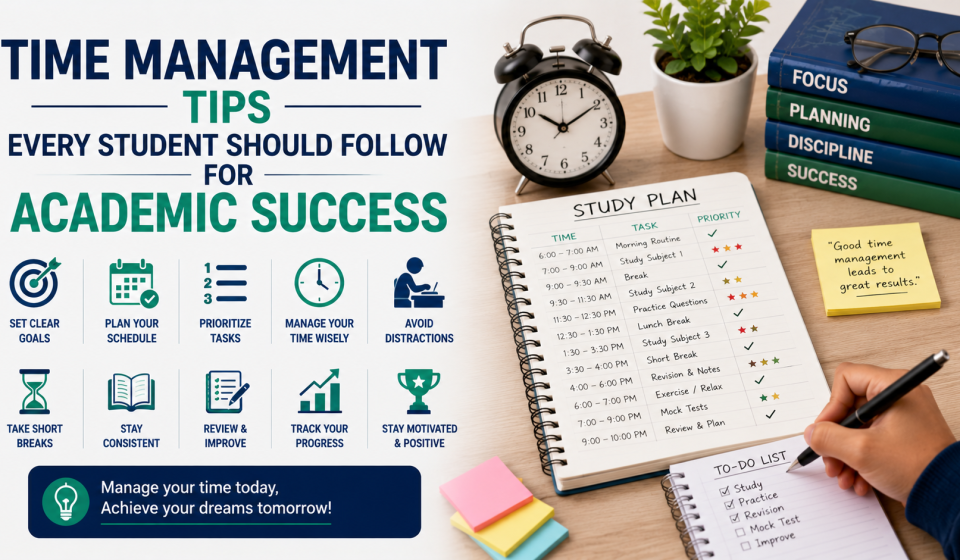

Discover the best time management tips every student should follow for academic success. Learn how to organize your schedule, increase productivity, reduce stress, and achieve better exam results.
Time management is one of the most valuable skills every student can develop. Whether you are studying in school, college, or preparing for competitive exams, managing your time effectively allows you to complete assignments, prepare for tests, participate in extracurricular activities, and still have enough time to relax. Many students struggle with balancing multiple responsibilities, which often leads to stress, missed deadlines, and poor academic performance. Learning how to organize your daily schedule can make studying more productive and less overwhelming.
Academic success is not determined by studying for long hours but by using available time wisely. Students who plan their day, set realistic goals, avoid distractions, and maintain a consistent routine often perform better than those who study without a plan. Effective time management improves concentration, boosts confidence, reduces last-minute pressure, and creates healthy study habits that benefit students throughout their educational journey and future careers.
Why Time Management Is Important for Students
Time management helps students stay organized and focused while reducing unnecessary stress.
Major benefits include:
- Better academic performance
- Reduced stress
- Increased productivity
- Improved concentration
- Better work-life balance
- More time for revision
- Higher confidence
- Better decision-making
Students who manage their time effectively are more likely to achieve their academic goals.
Set Clear Academic Goals
Every successful study plan begins with clear and achievable goals.
Your goals may include:
- Completing daily assignments
- Improving grades
- Finishing the syllabus on time
- Preparing for competitive exams
- Developing new skills
- Reading additional learning materials
- Completing projects before deadlines
- Maintaining consistent study habits
Clear goals provide motivation and direction.
Create a Daily Study Schedule
A structured timetable helps students use every hour efficiently.
Your daily schedule should include:
- Morning revision
- School or college classes
- Homework
- Practice sessions
- Short breaks
- Physical activity
- Revision time
- Adequate sleep
Following a regular routine builds discipline and consistency.
Prioritize Important Tasks
Not every task has the same level of importance. Learn to complete high-priority work first.
Prioritize:
- Upcoming exams
- Assignment deadlines
- Difficult subjects
- Project submissions
- Revision sessions
- Practice tests
Completing important work first reduces unnecessary pressure.
Break Large Tasks Into Smaller Goals
Large assignments can seem overwhelming if not divided into manageable parts.
For example:
- Divide chapters into topics
- Study one concept at a time
- Complete one assignment section daily
- Revise one subject each evening
Small achievements increase motivation and reduce procrastination.
Avoid Procrastination
Delaying work often creates stress and reduces learning quality.
Ways to overcome procrastination include:
- Start with simple tasks
- Set study timers
- Remove distractions
- Reward yourself after completing tasks
- Follow a fixed routine
- Stay accountable
Taking immediate action is the best way to build productive habits.
Limit Distractions While Studying
Distractions reduce concentration and waste valuable study time.
Common distractions include:
- Social media
- Mobile phone notifications
- Television
- Gaming
- Unnecessary internet browsing
- Noisy environments
Create a quiet and organized study space to improve focus.
Use Effective Study Techniques
Smart study methods improve learning and save time.
Helpful techniques include:
- Active reading
- Note-taking
- Mind mapping
- Flashcards
- Practice questions
- Group discussions
- Self-testing
- Regular revision
Using different techniques keeps learning interesting and effective.
Practice Regular Revision
Revision strengthens memory and improves confidence before examinations.
Effective revision habits include:
- Daily review sessions
- Weekly revision
- Monthly revision
- Solving practice papers
- Reviewing notes
- Revisiting difficult topics
Regular revision reduces last-minute exam pressure.
Learn to Say No
Students sometimes spend too much time on unnecessary activities.
Avoid:
- Excessive social media
- Unplanned outings
- Long gaming sessions
- Unnecessary distractions
- Poor study habits
Protecting your study time helps maintain academic progress.
Take Regular Breaks
Continuous studying without breaks can reduce concentration.
Healthy break ideas include:
- Walking for a few minutes
- Stretching exercises
- Drinking water
- Deep breathing
- Listening to relaxing music
Short breaks refresh the mind and improve productivity.
Maintain a Healthy Lifestyle
Good physical and mental health directly affects learning ability.
Healthy habits include:
- Eating nutritious meals
- Sleeping 7–8 hours
- Exercising regularly
- Staying hydrated
- Managing stress
- Maintaining a positive attitude
Healthy students generally perform better academically.
Review Your Progress Regularly
Evaluate your performance every week to identify strengths and areas for improvement.
Ask yourself:
- Did I complete my study goals?
- Which subjects need more attention?
- Am I following my timetable?
- What improvements can I make?
Regular self-assessment helps you stay on track.
Common Time Management Mistakes
Many students lose valuable study time because of poor planning.
Avoid these mistakes:
- Studying without a timetable
- Ignoring deadlines
- Multitasking excessively
- Skipping revision
- Staying up too late
- Procrastinating
- Overloading your schedule
- Ignoring your health
Correcting these habits improves productivity and academic success.
Source Links
Conclusion
Time management is one of the most powerful skills students can develop to achieve academic success. By setting clear goals, following a structured study schedule, prioritizing important tasks, avoiding distractions, and maintaining consistent revision habits, students can improve their productivity and reduce unnecessary stress. Good time management not only helps students perform better in examinations but also builds discipline, responsibility, and confidence that will benefit them throughout their personal and professional lives.
Success in academics is the result of smart planning, consistent effort, and effective use of time rather than simply studying for long hours. Students who maintain healthy routines, review their progress regularly, and stay committed to their goals are better prepared to overcome challenges and achieve long-term success. Developing strong time management habits today creates a solid foundation for future learning, career growth, and lifelong achievement.
Frequently Asked Questions (FAQs)
1. Why is time management important for students?
Time management helps students stay organized, complete tasks on time, reduce stress, and improve academic performance.
2. How can I create an effective study schedule?
Plan your daily activities, allocate time for each subject, include revision sessions, and allow time for breaks and relaxation.
3. What are the biggest time management mistakes students make?
Common mistakes include procrastination, poor planning, skipping revision, multitasking, and allowing distractions to interrupt study time.
4. How can I avoid procrastination while studying?
Break tasks into smaller goals, remove distractions, follow a timetable, and start with the most important assignments.
5. How many hours should a student study each day?
The ideal study time depends on individual needs, but focused and consistent study sessions are generally more effective than long, unplanned hours.
6. Why are study breaks important?
Short breaks help refresh the mind, improve concentration, reduce fatigue, and increase overall productivity.
7. How does revision improve academic performance?
Revision strengthens memory, reinforces concepts, identifies weak areas, and improves confidence before examinations.
8. What study techniques save time?
Active reading, note-taking, mind mapping, flashcards, practice tests, and self-assessment are effective time-saving study techniques.
9. How can students stay motivated to follow their study plan?
Setting realistic goals, tracking progress, celebrating achievements, and maintaining a positive mindset help students stay motivated.
10. What are the long-term benefits of good time management?
Good time management improves academic success, reduces stress, builds discipline, increases productivity, and prepares students for future career responsibilities.