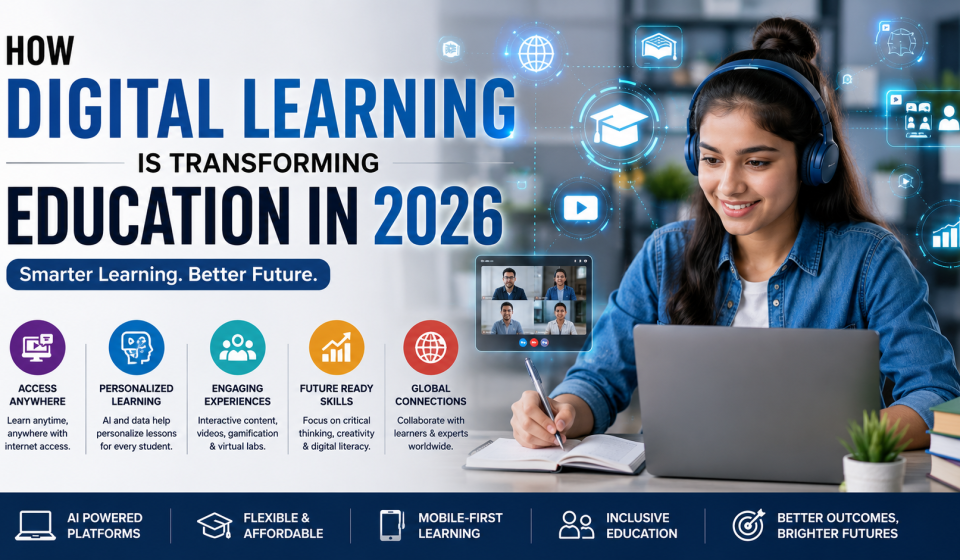

Discover how digital learning is transforming education in 2026. Learn about online education, AI-powered learning, virtual classrooms, personalized learning, educational technology, and the future of modern education.
Digital learning has become one of the most significant developments in modern education. In 2026, students are no longer limited to traditional classrooms because technology has made learning more accessible, flexible, and interactive than ever before. From online courses and virtual classrooms to artificial intelligence, educational apps, and cloud-based learning platforms, digital education is changing how students gain knowledge and develop new skills. Whether studying from home, attending hybrid classes, or accessing global educational resources, learners now have more opportunities to achieve academic success regardless of their location.
Educational institutions are also embracing digital transformation by integrating smart technologies into their teaching methods. Teachers can create interactive lessons, monitor student progress, provide personalized feedback, and encourage collaborative learning using digital tools. At the same time, students can learn at their own pace, revisit recorded lectures, participate in virtual discussions, and access thousands of learning resources with just a few clicks. As technology continues to evolve, digital learning is preparing students for a future where adaptability, digital literacy, and lifelong learning are essential for academic achievement and career success.
What Is Digital Learning?
Digital learning refers to the use of technology and internet-based platforms to support education and skill development.
Digital learning includes:
- Online classes
- Virtual classrooms
- Educational apps
- Learning management systems
- Interactive videos
- Digital textbooks
- AI-powered learning tools
- Online assessments
It allows students to learn anytime and from almost anywhere.
Why Digital Learning Is Growing in 2026
Several factors have accelerated the adoption of digital education worldwide.
Major reasons include:
- Greater internet accessibility
- Affordable digital devices
- Growth of artificial intelligence
- Flexible learning schedules
- Increased demand for online education
- Global access to learning resources
- Remote learning opportunities
- Continuous technological innovation
These developments have made education more accessible for millions of learners.
Personalized Learning Experiences
Technology allows education to become more personalized than traditional classroom instruction.
Personalized learning offers:
- Individual learning pace
- Customized study plans
- Adaptive quizzes
- AI-generated recommendations
- Progress tracking
- Personalized feedback
- Flexible lesson scheduling
- Skill-based learning paths
Students receive learning experiences suited to their individual needs.
Artificial Intelligence in Education
Artificial intelligence is transforming the way students learn and teachers teach.
AI supports education by:
- Explaining difficult concepts
- Answering questions instantly
- Creating study plans
- Generating practice quizzes
- Providing writing assistance
- Recommending learning resources
- Supporting language learning
- Automating administrative tasks
AI improves efficiency while supporting personalized education.
Virtual Classrooms
Virtual classrooms have become a standard learning environment for many institutions.
Benefits include:
- Live online lectures
- Interactive discussions
- Real-time collaboration
- Screen sharing
- Digital assignments
- Online attendance
- Recorded sessions
- Flexible participation
Students can interact with teachers regardless of location.
Interactive Learning Technologies
Modern educational tools make learning more engaging.
Examples include:
- Educational games
- Interactive simulations
- Virtual laboratories
- Augmented reality activities
- Virtual reality experiences
- Multimedia lessons
- Digital whiteboards
- Gamified quizzes
Interactive learning improves student engagement and knowledge retention.
Benefits for Students
Digital learning provides many advantages for learners of all ages.
Key benefits include:
- Flexible schedules
- Self-paced learning
- Global educational access
- Improved digital literacy
- Better collaboration
- Lower learning costs
- Easy access to study materials
- Continuous skill development
Students can learn according to their own pace and goals.
Benefits for Teachers
Teachers also benefit from digital transformation.
Advantages include:
- Faster lesson planning
- Automated assessments
- Progress monitoring
- Better communication
- Digital resource sharing
- Interactive teaching methods
- Personalized student support
- Professional development opportunities
Technology helps educators deliver more effective instruction.
Challenges of Digital Learning
Although digital education offers many benefits, some challenges still exist.
Common challenges include:
- Internet connectivity issues
- Digital distractions
- Screen fatigue
- Limited practical experiences
- Technology costs
- Cybersecurity concerns
- Reduced face-to-face interaction
- Digital skill gaps
Addressing these challenges improves the learning experience.
Skills Students Need in the Digital Age
To succeed in modern education, students should develop important digital and professional skills.
Essential skills include:
- Digital literacy
- Critical thinking
- Communication
- Problem-solving
- Collaboration
- Time management
- Information evaluation
- Adaptability
These abilities prepare students for future careers.
The Future of Digital Education
Digital learning is expected to continue evolving over the coming years.
Future trends may include:
- Smarter AI tutors
- More immersive virtual reality lessons
- Personalized learning platforms
- Intelligent assessments
- Global virtual classrooms
- Advanced educational analytics
- Improved accessibility
- Lifelong online learning opportunities
Technology will continue making education more flexible, inclusive, and effective.
Source Links
Conclusion
Digital learning is transforming education by making knowledge more accessible, personalized, and engaging for students around the world. Through online courses, virtual classrooms, artificial intelligence, interactive educational platforms, and cloud-based resources, learners now have greater flexibility to study according to their own needs and schedules. Teachers also benefit from advanced digital tools that improve lesson delivery, student engagement, and academic assessment. Together, these innovations are creating a more connected and efficient educational environment.
As technology continues to evolve throughout 2026 and beyond, digital learning will play an even greater role in shaping the future of education. Students who develop strong digital literacy, critical thinking, communication, and self-learning skills will be better prepared for higher education and future careers. By embracing educational technology responsibly while maintaining academic integrity and a commitment to continuous learning, students can unlock new opportunities for personal growth, academic excellence, and long-term professional success.
Frequently Asked Questions (FAQs)
1. What is digital learning?
Digital learning is the use of technology, internet platforms, and digital tools to support teaching, learning, and skill development.
2. Why is digital learning becoming more popular in 2026?
Improved internet access, affordable devices, AI-powered tools, and flexible learning options have increased the popularity of digital education.
3. How does artificial intelligence help students?
AI helps explain concepts, create study plans, generate quizzes, improve writing, answer questions, and provide personalized learning support.
4. What are the benefits of virtual classrooms?
Virtual classrooms provide flexible learning, live interaction with teachers, recorded lectures, online collaboration, and access from almost any location.
5. What skills are important for digital learning?
Digital literacy, communication, critical thinking, problem-solving, adaptability, collaboration, and time management are essential skills.
6. What challenges do students face with digital learning?
Common challenges include internet issues, distractions, screen fatigue, cybersecurity concerns, and limited hands-on learning experiences.
7. Can digital learning replace traditional classrooms?
Digital learning complements traditional education, but many students benefit from a combination of both through blended learning.
8. Is digital learning suitable for all age groups?
Yes. Digital learning platforms offer educational resources for school students, college learners, professionals, and lifelong learners.
9. How can students make the most of digital learning?
Create a study schedule, participate actively in online classes, use reliable learning resources, practice regularly, and minimize distractions.
10. What is the future of digital education?
The future includes more AI-powered learning, immersive virtual reality classrooms, personalized education, smarter assessments, and increased global access to quality learning.