
Discover the most common study mistakes students make and learn practical ways to avoid them. Improve your study habits, time management, revision techniques, and exam preparation for better academic success.
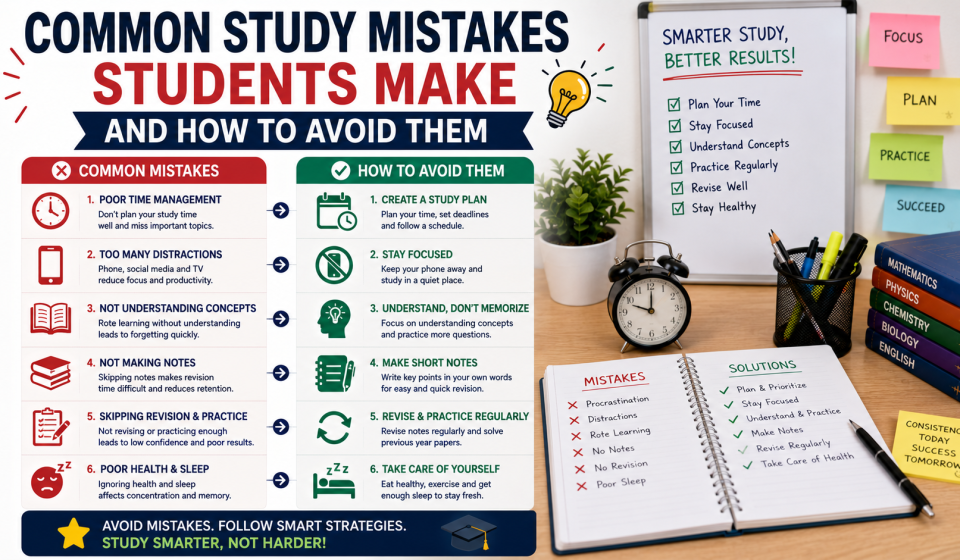
Every student wants to achieve good grades, but many unknowingly develop study habits that reduce productivity and affect academic performance. Studying for long hours without a proper plan, skipping revision, procrastinating, and relying on last-minute preparation are just a few of the mistakes that prevent students from reaching their full potential. Success in academics is not determined by how much time you spend studying but by how effectively you use that time. Understanding common study mistakes is the first step toward building better learning habits and improving examination results.
Good study habits help students learn faster, remember information for longer periods, and approach exams with greater confidence. By identifying ineffective learning methods and replacing them with proven study strategies, students can improve concentration, manage time efficiently, reduce stress, and perform better in school, college, and competitive examinations. Whether you are preparing for daily classes or major entrance exams, avoiding common study mistakes can make your learning journey more productive and enjoyable.
Why Avoiding Study Mistakes Is Important
Even small study mistakes can have a significant impact on academic performance over time.
Benefits of avoiding poor study habits include:
- Better concentration
- Improved memory
- Higher examination scores
- Better time management
- Reduced stress
- Increased confidence
- Greater productivity
- Long-term academic success
Building effective study habits creates a strong foundation for lifelong learning.
Mistake 1: Studying Without a Plan
Many students begin studying without setting clear goals or creating a timetable.
How to avoid it:
- Create a daily study schedule
- Set realistic goals
- Divide subjects into manageable sections
- Track your progress
- Allocate time for revision
A structured plan keeps your preparation organized.
Mistake 2: Procrastinating
Delaying important tasks often leads to last-minute pressure and incomplete preparation.
Ways to overcome procrastination:
- Start with small tasks
- Set deadlines
- Use study timers
- Remove distractions
- Reward yourself after completing goals
Taking immediate action helps build consistency.
Mistake 3: Cramming Before Exams
Trying to memorize everything the night before an exam is rarely effective.
Better approach:
- Study regularly
- Revise daily
- Review weekly
- Prepare summary notes
- Practice important questions
Consistent learning improves long-term memory.
Mistake 4: Ignoring Revision
Many students focus only on learning new topics while forgetting to revise earlier lessons.
Effective revision methods include:
- Daily review sessions
- Weekly revision
- Monthly revision
- Flashcards
- Mind maps
- Practice quizzes
Revision strengthens understanding and recall.
Mistake 5: Passive Reading
Simply reading textbooks repeatedly without engaging with the material limits learning.
Use active learning techniques such as:
- Taking notes
- Summarizing concepts
- Solving questions
- Teaching others
- Self-testing
- Creating diagrams
Active learning improves retention and understanding.
Mistake 6: Poor Time Management
Without proper time management, students often struggle to complete the syllabus.
Improve your schedule by:
- Prioritizing important tasks
- Following a timetable
- Setting daily goals
- Avoiding multitasking
- Tracking study hours
Managing time effectively reduces stress before exams.
Mistake 7: Studying With Too Many Distractions
Mobile phones, social media, television, and noisy environments reduce concentration.
Create a productive study environment by:
- Turning off notifications
- Keeping your phone away
- Studying in a quiet place
- Organizing study materials
- Using a comfortable workspace
A distraction-free environment increases productivity.
Mistake 8: Skipping Practice Questions
Many students spend too much time reading and too little time applying what they learn.
Practice regularly by:
- Solving textbook exercises
- Attempting previous year papers
- Taking mock tests
- Completing online quizzes
- Reviewing incorrect answers
Practice improves speed, accuracy, and confidence.
Mistake 9: Neglecting Health
Poor health habits reduce concentration and memory.
Healthy habits include:
- Eating nutritious meals
- Drinking enough water
- Sleeping 7–8 hours
- Exercising regularly
- Taking short breaks
- Managing stress
Good health supports better academic performance.
Mistake 10: Comparing Yourself With Others
Comparing your progress with classmates can reduce confidence and motivation.
Instead:
- Focus on personal improvement
- Celebrate small achievements
- Learn from mistakes
- Set your own goals
- Track individual progress
Everyone learns at a different pace.
Build Effective Study Habits
Successful students develop habits that support continuous improvement.
Helpful habits include:
- Studying consistently
- Following a timetable
- Revising regularly
- Asking questions
- Staying organized
- Practicing daily
- Maintaining discipline
- Staying motivated
Strong habits lead to long-term academic success.
Benefits of Avoiding Common Study Mistakes
Replacing ineffective habits with better learning strategies offers many advantages.
Major benefits include:
- Higher grades
- Better concentration
- Improved confidence
- Greater productivity
- Better problem-solving skills
- Reduced exam anxiety
- Stronger learning habits
- Better career preparation
These improvements help students succeed both academically and professionally.
Source Links
Conclusion
Avoiding common study mistakes is one of the simplest ways to improve academic performance and reduce unnecessary stress. Students who create study plans, revise regularly, practice actively, manage their time effectively, and maintain healthy routines are better prepared to understand concepts and perform confidently during examinations. Small improvements in daily study habits can produce significant long-term results and help students achieve their educational goals.
Academic success is not about perfection but about continuous improvement. Every student can strengthen their learning process by recognizing ineffective habits and replacing them with proven study strategies. Staying consistent, maintaining discipline, and focusing on steady progress will not only improve examination scores but also develop valuable life skills such as organization, self-motivation, and critical thinking. These habits prepare students for success in higher education, competitive exams, and future careers.
Frequently Asked Questions (FAQs)
1. What is the biggest study mistake students make?
One of the biggest mistakes is studying without a proper plan or timetable, which often leads to poor time management.
2. Why is procrastination harmful to students?
Procrastination increases stress, reduces preparation time, and often results in lower academic performance.
3. How often should students revise their lessons?
Daily revision, weekly reviews, and monthly revision sessions help improve memory and understanding.
4. Is passive reading an effective study method?
No. Active learning methods such as note-taking, self-testing, and solving practice questions are generally more effective.
5. Why are practice questions important?
Practice questions improve understanding, increase problem-solving speed, and build confidence before exams.
6. How can students improve concentration while studying?
Study in a quiet environment, remove distractions, take regular breaks, and maintain healthy lifestyle habits.
7. Does sleep affect academic performance?
Yes. Adequate sleep improves concentration, memory, learning ability, and overall academic performance.
8. How can students stop comparing themselves with others?
Focus on personal progress, set realistic goals, celebrate achievements, and remember that everyone learns differently.
9. What are the benefits of good study habits?
Good study habits improve productivity, confidence, academic performance, time management, and long-term learning success.
10. How can students build better study habits?
Create a study schedule, revise consistently, practice regularly, stay organized, avoid distractions, and maintain discipline.