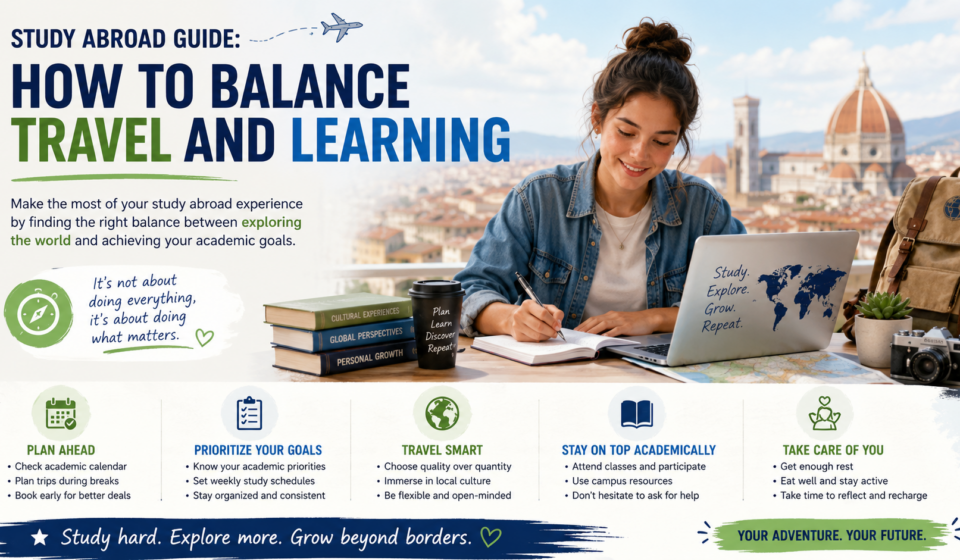

Studying abroad is one of the most transformative experiences a student can have. You get to immerse yourself in a new culture, learn a language, make lifelong friends from around the world, and gain a global perspective that stays with you forever. But it’s also academically challenging. Between the excitement of exploration and the realities of a new educational system, many study abroad students struggle to balance travel and academics. This guide shows you how to do both brilliantly.
Why Study Abroad Is Worth It
Beyond the obvious academic credits, studying abroad develops skills that employers consistently value: adaptability, cross-cultural communication, independence, and problem-solving under pressure.
Academic and Career Benefits
Many programs offer unique courses not available at your home institution. Studying in a specialized location — film in Los Angeles, fashion in Milan, international relations in Geneva — can give your career an early edge.
Personal Growth
Navigating life in a foreign country, even temporarily, builds resilience and confidence in ways that are hard to replicate. You’ll surprise yourself with what you’re capable of.
Preparing for Academic Success Abroad
Preparation before you leave dramatically increases your chances of academic success while abroad.
Understand the Academic Culture
Different countries have different academic norms. Some expect constant class participation; others are lecture-based. Some grade primarily on final exams; others weigh continuous assessment. Research your destination’s academic style before you arrive.
Bring the Right Supplies
Don’t assume the textbooks or materials you need will be available locally. Coordinate with your host institution in advance about required materials and whether digital versions are available.
Creating a Study Routine While Traveling
The biggest academic mistake study abroad students make is assuming they’ll study ‘when there’s nothing to do.’ There’s always something to do abroad.
Set Non-Negotiable Study Hours
Decide before each week which hours are dedicated to studying and which are for exploration.
Protecting study hours prevents academic panic at the end of the semester.
Use Mornings for Study
Many adventures happen in the afternoon and evening. Morning study sessions let you protect academic time while keeping your evenings free for cultural experiences.
Coping with Language Barriers in Class
If your program is taught in a foreign language or attended by non-native English speakers, additional challenges arise.
Sit Near Native Speakers
Position yourself near students who are fluent in the language of instruction. You’ll absorb vocabulary and expressions naturally, and you’ll have study partners who can help you understand complex material.
Record Lectures When Permitted
If allowed, recording lectures lets you replay sections you didn’t fully understand in real time. Review recordings within 24 hours while memory is still fresh.
Making the Most of Academic Resources Abroad
Host institutions often have resources that are underused by international students.
Visit the Library and Writing Center
International students often avoid these resources out of shyness or unfamiliarity. Libraries have databases you may not have access to at home, and writing centers can help with assignments in a new academic culture.
Connect with Professors
Introduce yourself to your professors early. Express your enthusiasm and let them know you’re an international student. Most are delighted to support motivated international students.
Conclusion
Studying abroad is one of the most rewarding academic decisions you can make — but it requires intentionality and balance. Protect your study time, adapt to the local academic culture, use all available resources, and embrace the challenge. The combination of real-world cultural immersion and serious academic work creates a kind of learning that simply can’t happen in a classroom back home.
Frequently Asked Questions (FAQs)
Q1: How do I stay academically focused while studying abroad?
A: Create a weekly study schedule before you travel and protect those hours. Treat academic commitments like non-negotiable appointments.
Q2: Is it hard to study abroad academically?
A: It can be, especially adjusting to a new academic system. Preparation, flexibility, and using support resources make it manageable.
Q3: How do I handle language barriers in a study abroad program?
A: Take language classes, practice daily, record lectures for review, and partner with native speakers for study groups.
Q4: Can I travel on weekends while studying abroad?
A: Yes, with planning. Keep weekdays for academics and use weekends for shorter trips. Avoid traveling during major assignment or exam periods.
Q5: What should I pack for studying abroad?
A: Essential study materials, power adapters, noise-canceling headphones, a laptop, and any textbooks you know you’ll need.