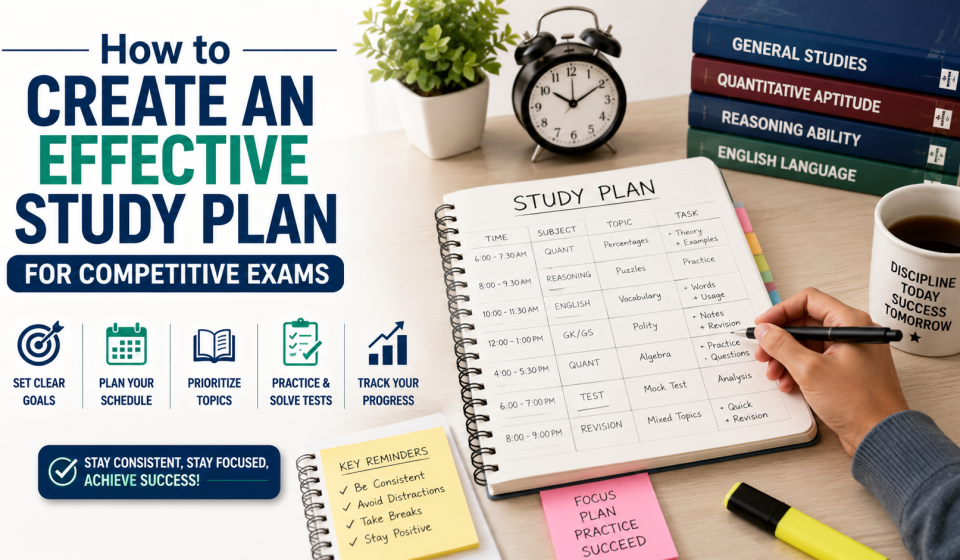

Learn how to create an effective study plan for competitive exams. Discover proven study strategies, time management tips, revision techniques, and exam preparation methods to improve your performance.
Preparing for competitive exams requires more than studying for long hours. Success depends on having a well-structured study plan that helps you cover the entire syllabus, manage your time efficiently, and revise important topics regularly. Whether you are preparing for government exams, entrance tests, banking exams, engineering admissions, medical entrance exams, or other competitive examinations, an organized study schedule allows you to stay focused and make consistent progress. A proper study plan also reduces stress by breaking large goals into smaller, achievable tasks.
An effective study plan helps students balance learning, revision, mock tests, and rest without feeling overwhelmed. Instead of studying randomly, students can prioritize important subjects, strengthen weak areas, and monitor their improvement over time. Combined with discipline, regular practice, healthy habits, and a positive mindset, a smart study plan can significantly increase confidence and improve exam performance. By following a structured approach, students can prepare more efficiently and maximize their chances of achieving excellent results.
Why a Study Plan Is Important
A study plan provides direction and helps students stay organized throughout their exam preparation.
Benefits of having a study plan include:
- Better time management
- Improved concentration
- Complete syllabus coverage
- Regular revision
- Reduced exam stress
- Better learning consistency
- Higher confidence
- Improved exam performance
A planned approach makes preparation more effective and less stressful.
Understand the Exam Pattern
Before creating your study plan, understand every detail about the examination.
Important information includes:
- Exam syllabus
- Number of subjects
- Question pattern
- Marking scheme
- Exam duration
- Difficulty level
- Previous year question trends
- Important topics
Knowing the exam structure helps you prepare strategically.
Set Clear Study Goals
Divide your preparation into realistic short-term and long-term goals.
Examples include:
- Complete one chapter each day
- Finish one subject every month
- Solve practice questions daily
- Revise weekly
- Take one mock test every weekend
- Improve weak subjects
- Increase test scores gradually
- Complete the syllabus before the exam
Clear goals help maintain motivation throughout preparation.
Create a Daily Study Schedule
A balanced daily timetable ensures that every subject receives sufficient attention.
Your study schedule should include:
- Morning revision
- Learning new topics
- Practice questions
- Short study breaks
- Mock test practice
- Evening revision
- Reading notes
- Relaxation time
Consistency is more important than studying for extremely long hours.
Prioritize Important Subjects
Not every subject requires the same amount of preparation. Focus first on subjects that carry more marks or need additional practice.
Prioritization should consider:
- Subject difficulty
- Exam weightage
- Personal strengths
- Weak areas
- Available preparation time
- Revision requirements
Giving extra attention to difficult subjects improves overall performance.
Divide the Syllabus Into Small Sections
Breaking large topics into smaller sections makes studying easier and more manageable.
For each subject:
- Divide chapters into topics
- Study one topic at a time
- Make summary notes
- Practice related questions
- Revise completed topics regularly
Small achievements help maintain motivation.
Practice Previous Year Question Papers
Previous exam papers help students understand the exam format and identify frequently asked topics.
Benefits include:
- Better time management
- Improved question-solving skills
- Understanding important topics
- Increased confidence
- Reduced exam anxiety
- Familiarity with question patterns
Regular practice improves speed and accuracy.
Take Mock Tests Regularly
Mock tests simulate the actual examination environment.
Mock tests help students:
- Measure preparation level
- Improve speed
- Build confidence
- Identify weak areas
- Improve accuracy
- Develop time management skills
- Reduce exam pressure
- Track progress
Review your mistakes after every mock test to continue improving.
Develop Effective Revision Habits
Revision is one of the most important parts of exam preparation.
Effective revision techniques include:
- Revising daily
- Weekly revision sessions
- Monthly revision plans
- Reviewing summary notes
- Solving revision questions
- Flashcards
- Mind maps
- Practice quizzes
Frequent revision strengthens memory and improves recall during exams.
Improve Time Management
Good time management helps students complete the syllabus without unnecessary pressure.
Useful time management strategies include:
- Set study priorities
- Follow a timetable
- Avoid procrastination
- Use study timers
- Complete difficult tasks first
- Minimize distractions
- Review daily progress
- Maintain consistency
Proper planning allows more time for revision and practice.
Create a Distraction-Free Study Environment
Your study environment directly affects concentration and productivity.
A good study space should have:
- Comfortable seating
- Good lighting
- Minimal noise
- Organized study materials
- Stable internet if required
- Limited mobile phone usage
- Proper ventilation
- Clean surroundings
A peaceful environment improves focus and learning efficiency.
Maintain Physical and Mental Health
Healthy students perform better during competitive exams.
Healthy habits include:
- Balanced nutrition
- Regular exercise
- Adequate sleep
- Drinking enough water
- Managing stress
- Taking short study breaks
- Practicing relaxation techniques
- Maintaining a positive mindset
Good health improves concentration, memory, and productivity.
Stay Motivated Throughout Preparation
Competitive exam preparation can take several months. Staying motivated is essential for long-term success.
Ways to stay motivated include:
- Celebrate small achievements
- Track your progress
- Study with positive people
- Read motivational stories
- Visualize your goals
- Stay consistent
- Avoid comparing yourself with others
- Focus on continuous improvement
Motivation combined with discipline leads to better results.
Common Mistakes to Avoid
Many students make mistakes that reduce the effectiveness of their preparation.
Avoid these mistakes:
- Studying without a plan
- Ignoring weak subjects
- Skipping revision
- Studying for very long hours without breaks
- Depending only on reading
- Avoiding mock tests
- Poor time management
- Neglecting health
Avoiding these habits improves preparation quality.
Source Links
Conclusion
Creating an effective study plan is one of the most important steps toward success in competitive exams. A structured schedule helps students organize their preparation, manage time wisely, cover the complete syllabus, and revise consistently. By setting realistic goals, practicing previous year question papers, taking regular mock tests, and focusing on continuous improvement, students can prepare more confidently and perform better on exam day.
Success in competitive exams is not determined by how many hours you study but by how effectively you use your time. Maintaining discipline, staying motivated, following healthy habits, and reviewing your progress regularly will help you stay on track throughout your preparation journey. With dedication, smart planning, and consistent effort, every student can improve their knowledge, strengthen their confidence, and move closer to achieving their academic and career goals.
Frequently Asked Questions (FAQs)
1. Why is a study plan important for competitive exams?
A study plan helps organize preparation, improve time management, reduce stress, and ensure complete syllabus coverage.
2. How many hours should I study each day?
The ideal study time varies, but consistent and focused study sessions with regular breaks are generally more effective than studying for very long hours.
3. How can I manage multiple subjects effectively?
Create a balanced timetable, prioritize important subjects, rotate topics regularly, and revise each subject consistently.
4. How often should I revise during exam preparation?
Daily revision, weekly reviews, and monthly revision sessions help strengthen memory and improve retention.
5. Are mock tests necessary?
Yes. Mock tests improve time management, identify weak areas, increase confidence, and simulate the actual exam experience.
6. How can I improve concentration while studying?
Study in a quiet environment, eliminate distractions, follow a timetable, take short breaks, and maintain healthy habits.
7. Should I solve previous year question papers?
Yes. Previous papers help you understand the exam pattern, identify important topics, and improve problem-solving speed.
8. How can I stay motivated during long-term preparation?
Set small goals, celebrate progress, track improvements, maintain a positive mindset, and stay focused on your career objectives.
9. What should I do if I fall behind my study schedule?
Review your timetable, adjust your priorities, focus on important topics, and return to a consistent routine without becoming discouraged.
10. What is the biggest mistake students make during competitive exam preparation?
One of the biggest mistakes is studying without a proper plan while ignoring revision, mock tests, time management, and overall health.