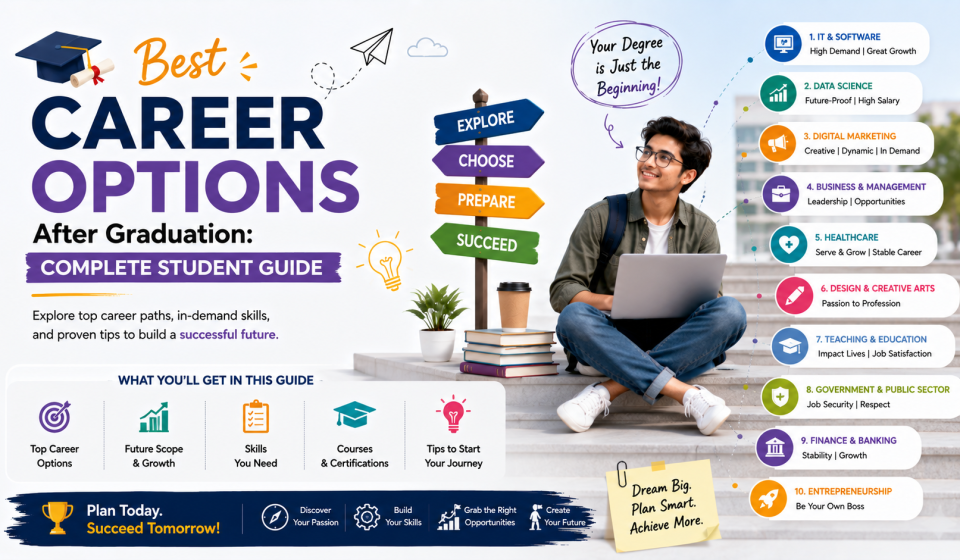

Explore the best career options after graduation in this complete student guide. Learn about high-demand careers, higher education choices, government jobs, entrepreneurship, and tips for choosing the right career path.
Graduation is an important milestone that opens the door to numerous career opportunities. However, many students feel uncertain about what to do next. Some choose to pursue higher education, while others begin working, prepare for competitive examinations, or even start their own businesses. With so many options available, selecting the right career path can seem overwhelming. Making an informed decision requires understanding your interests, strengths, career goals, and the opportunities available in today’s job market.
The job market in 2026 continues to evolve with advancements in technology, healthcare, finance, education, and digital industries. Employers are looking for candidates who possess not only technical knowledge but also communication, problem-solving, and adaptability skills. By exploring different career options and planning carefully, graduates can choose a path that offers personal satisfaction, financial stability, and long-term professional growth.
Why Career Planning After Graduation Is Important
Choosing the right career after graduation helps you build a strong foundation for future success.
Career planning allows you to:
- Set clear professional goals
- Identify suitable career paths
- Develop relevant skills
- Improve employability
- Increase job satisfaction
- Plan long-term growth
Proper planning helps reduce confusion and supports better career decisions.
Understand Your Interests and Strengths
Before choosing a career, evaluate your personal interests and abilities.
Ask yourself:
- Which subjects do I enjoy the most?
- What skills do I perform well?
- What type of work motivates me?
- Do I prefer technical, creative, or management roles?
- What are my long-term career goals?
Knowing yourself makes it easier to choose a fulfilling profession.
1. Pursue Higher Education
Many graduates continue their education to gain specialized knowledge and improve career opportunities.
Popular higher education options include:
- Master’s Degree
- MBA
- M.Tech
- M.Sc
- M.Com
- MA
- Professional Certifications
- Postgraduate Diploma Programs
Advanced education can lead to better job roles and higher earning potential.
2. Prepare for Government Jobs
Government jobs remain a popular choice because of their stability, benefits, and career growth.
Common opportunities include:
- Civil Services
- Banking
- Railways
- Public Sector Undertakings (PSUs)
- State Government Services
- Defence Services
Most government positions require candidates to pass competitive examinations.
3. Join the Private Sector
Private companies offer diverse career opportunities across multiple industries.
Popular sectors include:
- Information Technology
- Healthcare
- Finance
- Manufacturing
- Marketing
- Human Resources
- Education
- Retail
Private sector jobs often provide faster career progression and skill development.
4. Build a Career in Information Technology
Technology continues to create strong employment opportunities worldwide.
Popular IT careers include:
- Software Developer
- Data Analyst
- Cybersecurity Specialist
- Cloud Engineer
- Artificial Intelligence Engineer
- Web Developer
- Mobile App Developer
- Database Administrator
Technology professionals remain in high demand across industries.
5. Explore Digital Marketing
Digital marketing has become an essential business function.
Career options include:
- SEO Specialist
- Content Writer
- Social Media Manager
- Email Marketing Executive
- PPC Specialist
- Digital Marketing Analyst
This field offers opportunities for both employment and freelancing.
6. Consider Entrepreneurship
Some graduates choose to start their own businesses.
Entrepreneurship offers opportunities to:
- Build innovative products
- Create employment
- Solve market problems
- Develop leadership skills
- Achieve financial independence
Careful planning and market research are essential before starting a business.
7. Choose Freelancing or Remote Work
Remote work has expanded career opportunities across the world.
Popular freelance careers include:
- Graphic Design
- Content Writing
- Web Development
- Video Editing
- Virtual Assistance
- Digital Marketing
- Translation
- Online Tutoring
Freelancing provides flexibility and the opportunity to work with international clients.
8. Build a Career in Healthcare
Healthcare remains one of the fastest-growing sectors.
Career opportunities include:
- Nursing
- Medical Laboratory Technology
- Healthcare Administration
- Public Health
- Physiotherapy
- Clinical Research
Healthcare professionals contribute to improving community well-being.
9. Teaching and Education
Education offers rewarding careers for graduates who enjoy helping others learn.
Career options include:
- School Teacher
- College Lecturer
- Online Tutor
- Academic Counselor
- Educational Content Developer
Teaching combines knowledge sharing with continuous learning.
10. Develop Professional Skills
Regardless of your chosen career, employers value transferable skills.
Essential skills include:
- Communication
- Leadership
- Teamwork
- Problem-solving
- Critical thinking
- Digital literacy
- Time management
- Adaptability
Continuous skill development supports long-term career growth.
Tips for Choosing the Right Career
Keep these recommendations in mind:
- Research different career options.
- Understand industry trends.
- Gain practical experience through internships.
- Seek guidance from mentors.
- Continue learning new skills.
- Build a professional network.
- Stay open to new opportunities.
Thoughtful planning leads to better career decisions.
Common Mistakes to Avoid
Avoid these career planning mistakes:
- Following others without research
- Choosing only based on salary
- Ignoring personal interests
- Overlooking skill development
- Avoiding internships
- Failing to update your resume
Learning from these mistakes can improve your career journey.
Benefits of Choosing the Right Career
Selecting the right career path provides many long-term advantages.
These include:
- Greater job satisfaction
- Better career growth
- Improved financial stability
- Higher confidence
- Continuous learning opportunities
- Strong professional network
- Better work-life balance
- Increased employability
- Personal fulfillment
- Long-term success
Source Links
Conclusion
Graduation marks the beginning of an exciting new chapter filled with opportunities for learning, growth, and professional success. Whether you choose higher education, government services, private sector employment, entrepreneurship, freelancing, or a specialized career in technology or healthcare, the right decision depends on your interests, strengths, and long-term goals. Taking time to research different options and develop valuable skills will help you build a rewarding and sustainable career.
Success after graduation is not determined by the first job you accept but by your willingness to continue learning, adapting, and improving throughout your professional journey. By staying focused, gaining practical experience, and making informed career choices, you can achieve long-term success and create a fulfilling future.
Frequently Asked Questions (FAQs)
1. What are the best career options after graduation?
Popular options include higher education, government jobs, private sector employment, information technology, healthcare, digital marketing, entrepreneurship, freelancing, and teaching.
2. Should I study further after graduation?
It depends on your career goals. Higher education can improve specialization and open additional career opportunities in certain fields.
3. Are government jobs a good career choice?
Yes. Government jobs often provide stability, competitive salaries, benefits, and long-term career growth.
4. Is freelancing a reliable career option?
Freelancing can provide flexible work opportunities and income, especially for professionals with in-demand digital skills.
5. Which industries have strong career opportunities in 2026?
Technology, healthcare, finance, renewable energy, digital marketing, artificial intelligence, cybersecurity, and education continue to show strong growth.
6. What skills do employers look for after graduation?
Employers value communication, teamwork, problem-solving, adaptability, leadership, digital literacy, and time management.
7. How important are internships after graduation?
Internships provide practical experience, improve professional skills, and increase employability.
8. Can I start a business after graduation?
Yes. Many graduates choose entrepreneurship, but success requires planning, market research, financial management, and continuous learning.
9. How can I choose the right career path?
Assess your interests, strengths, career goals, job market trends, and opportunities before making a decision.
10. What is the key to long-term career success?
Continuous learning, skill development, adaptability, networking, and a commitment to professional growth are essential for lasting career success.